In the realm of industrial automation, process control, and scientific research, the demand for reliable distance measurement under extreme conditions is paramount. Low temperature laser distance sensors have emerged as a critical technology, enabling precise, non-contact measurement in environments where conventional sensors would falter or fail. These specialized sensors are engineered to maintain high accuracy, stability, and performance in temperatures that can plunge well below freezing, often reaching ranges of -40°C to -60°C and beyond.
The core principle of operation remains based on laser triangulation or time-of-flight (ToF) methods. In laser triangulation, a laser diode projects a visible or infrared spot onto the target surface. The reflected light is focused onto a position-sensitive detector (PSD) or a CMOS/CCD array. The position of the light spot on the detector shifts proportionally to the distance to the target, allowing for precise calculation. Time-of-flight sensors measure the phase shift or the direct time delay between an emitted laser pulse and its reflection. For low-temperature applications, every component in this optical and electronic chain must be meticulously selected and calibrated.
The primary challenge in cryogenic or low-temperature environments is not merely the operational temperature itself, but the associated physical effects. Standard electronic components, such as oscillators, microprocessors, and memory chips, can experience timing drift, reduced efficiency, or complete failure. Lubricants in mechanical adjustment parts can solidify. Laser diodes exhibit wavelength shift and output power variation with temperature, directly impacting measurement accuracy. Furthermore, thermal contraction of sensor housing and internal optics can misalign the entire system.

To combat these challenges, low-temperature laser sensors incorporate several key design features. First, component selection is critical. Industrial-grade or military-specification (MIL-SPEC) components rated for extended temperature ranges are used. The laser diode is often housed in a thermoelectric cooler (TEC) module, which actively stabilizes its temperature, ensuring consistent wavelength and output power. The optical path is designed with materials having low coefficients of thermal expansion, such as specific grades of stainless steel or invar, to minimize alignment drift.
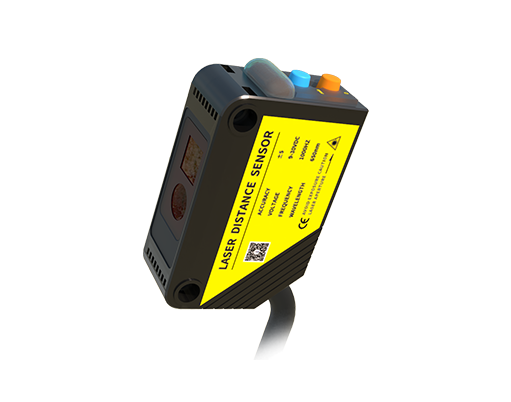
Second, sophisticated electronic compensation algorithms are embedded in the sensor's firmware. These algorithms use data from integrated temperature sensors placed at strategic points within the device (e.g., near the laser diode, on the main processor, on the detector array) to dynamically adjust measurement values in real-time. This software-based thermal compensation corrects for residual effects that hardware design cannot entirely eliminate.
Third, robust housing and sealing are essential. Enclosures are typically made from anodized aluminum or stainless steel, providing both mechanical strength and thermal management. High-grade ingress protection (IP67, IP69K) is standard to prevent condensation, icing, and contamination from water, dust, or chemicals commonly present in cold industrial settings like food freeze tunnels, outdoor winter logistics, or polar research stations.
Applications for these rugged sensors are diverse. In the aerospace industry, they are used for alignment and gap measurement on aircraft and spacecraft assemblies in unheated hangars or during high-altitude testing. In the energy sector, they monitor equipment and structural integrity in arctic oil and gas facilities. In logistics, they guide automated vehicles in deep-freeze warehouses. Scientific applications include positioning equipment in cryogenic chambers for material science or physics experiments. Their non-contact nature is particularly valuable for measuring fragile, hot, or moving targets that cannot be touched, even in the cold.
When selecting a low-temperature laser distance sensor, engineers must consider several specifications beyond the standard measuring range and resolution. The guaranteed operating temperature range and storage temperature range are paramount. The temperature coefficient, usually expressed in µm/°C or % of reading/°C, quantifies the residual measurement drift per degree of temperature change even after compensation. Start-up time and thermal stability time—how long the sensor needs to reach its specified accuracy after a cold start—are crucial for dynamic processes. Vibration and shock resistance ratings are also vital, as cold environments often coincide with mechanical stress.
Maintenance in such environments focuses on ensuring optical clarity. Windows and lenses must be kept free of frost, ice, or condensate. Heated front windows or air purge connections are common optional features to address this issue. Regular calibration checks, potentially using traceable standards at multiple temperature set points, are recommended to maintain long-term accuracy.
In conclusion, low-temperature laser distance sensors represent a fusion of precision optics, hardened electronics, and intelligent software. They transform challenging, frigid environments from measurement dead zones into domains of reliable data acquisition. As industries continue to push operations into more extreme climates and conditions, the evolution of these sensors—toward even wider temperature ranges, higher accuracy, and greater robustness—will remain a key enabler for innovation, safety, and efficiency in the automated world.