Proximity sensors are indispensable components in modern industrial automation, robotics, and safety systems. Their primary function is to detect the presence or absence of an object without physical contact, typically using electromagnetic fields, light, or sound. While specifications often highlight detection range, accuracy, and response time, one critical factor that profoundly influences all these parameters is operating temperature. Understanding the relationship between proximity sensors and temperature is essential for ensuring system reliability, longevity, and accuracy.
All electronic components, including the oscillators, amplifiers, and signal processing circuits within a proximity sensor, have inherent temperature dependencies. The core sensing element—whether it's an inductive coil, a capacitive plate, or an infrared LED and phototransistor—exhibits changes in its electrical properties with temperature fluctuations. For instance, in inductive sensors, the coil's inductance and resistance can vary, potentially altering the oscillation frequency and damping characteristics that define the sensing field. This can lead to a phenomenon known as temperature drift, where the effective sensing distance changes even if the target object remains stationary. A sensor calibrated at room temperature (25°C / 77°F) may have a significantly different switching point in a cold storage facility at -30°C (-22°F) or near a furnace at 85°C (185°F).
Manufacturers specify a guaranteed operating temperature range, such as -25°C to 70°C. Operating a sensor outside this range can lead to multiple failure modes. At high temperatures, components may degrade faster, solder joints can weaken, and plastic housings might deform. Excessive heat can also cause internal thermal noise to increase, reducing the signal-to-noise ratio and making the sensor prone to false triggering. In extreme cases, permanent damage to semiconductors occurs. Conversely, extremely low temperatures can cause materials to become brittle, leading to cracking. Batteries in self-powered sensors lose capacity, and lubricants in mechanically adjustable sensors can solidify. Condensation is another risk when moving a cold sensor into a warm, humid environment, potentially causing short circuits.
The environment itself presents thermal challenges. Sensors installed on moving machinery like CNC tool heads or injection molding units are subject to heat generated by motors and friction. Those in food processing may endure frequent washdowns with hot water or steam, creating thermal shock. Outdoor applications face direct solar radiation, which can elevate housing temperatures far above ambient air temperature. It is not just the ambient air temperature that matters; the temperature of the target object can also be a factor. A very hot metallic object can induce eddy currents more readily, potentially increasing the nominal sensing distance for an inductive sensor, while a frozen object might have different dielectric or reflective properties.
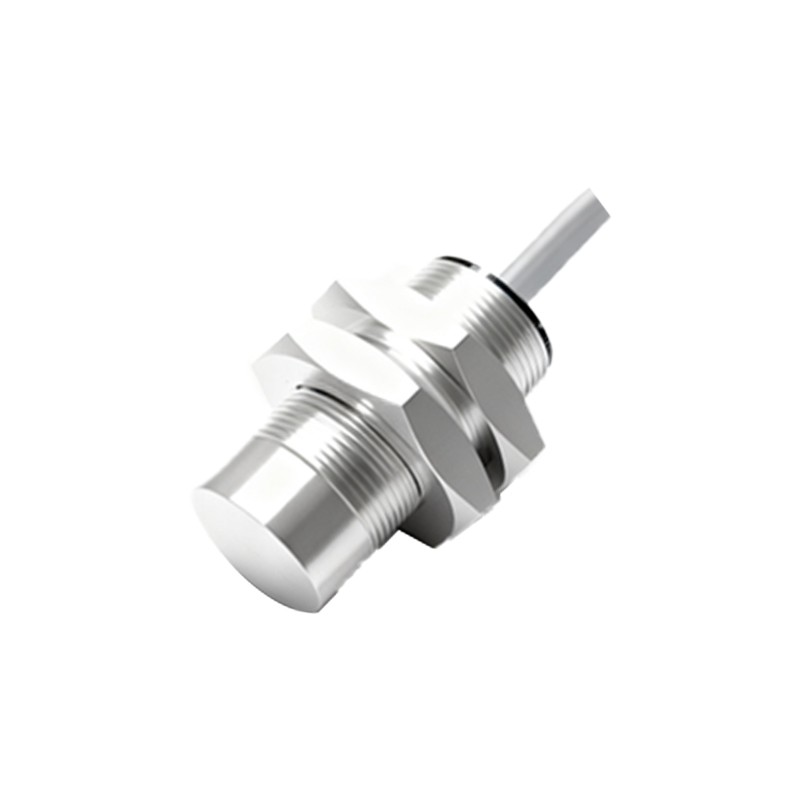
To mitigate temperature effects, engineers employ several strategies. The first is proper sensor selection. Choosing a sensor with a temperature range that exceeds the application's expected minimum and maximum by a safety margin is crucial. For harsh environments, sensors with robust housings (e.g., stainless steel) and high IP (Ingress Protection) ratings are preferred. Secondly, installation considerations are vital. Mounting sensors away from direct heat sources, using thermal barriers or heat sinks, and ensuring adequate airflow can dramatically reduce thermal stress. For applications requiring high precision across a wide temperature range, sensors with built-in temperature compensation are available. These advanced units contain internal temperature sensors and microprocessors that actively adjust the sensing threshold to counteract drift, maintaining a consistent switching point.
Regular maintenance and monitoring form the final defense. Periodically checking sensor performance at temperature extremes during system commissioning can prevent future failures. Using infrared thermometers to monitor sensor housing temperature during operation can provide early warning of overheating. For critical processes, implementing redundancy or using sensors with diagnostic outputs that signal overtemperature conditions adds an extra layer of security.
In conclusion, temperature is not a secondary specification but a primary design constraint for proximity sensor applications. Ignoring its impact risks measurement inaccuracy, unreliable operation, and premature system failure. A thorough analysis of the thermal environment—both static and dynamic—combined with careful product selection, intelligent installation, and proactive maintenance, ensures that proximity sensors perform their non-contact detection duties faithfully, regardless of the thermal challenges they face. This holistic approach maximizes uptime and protects valuable assets in any automated system.