In the realm of industrial automation and precision measurement, proximity sensors play a pivotal role. Among the diverse types available, the dual-line proximity sensor stands out for its unique operational characteristics and reliability. This article delves into the fundamentals, working principles, key applications, and critical factors for selecting the right dual-line proximity sensor for your needs.
At its core, a proximity sensor is a device that detects the presence or absence of an object within a specific range without physical contact. The "dual-line" designation refers to a specific wiring and output configuration. Unlike a simple two-wire sensor, a dual-line sensor typically incorporates two distinct signal lines, often enabling more advanced functionalities such as complementary outputs (e.g., Normally Open and Normally Closed signals simultaneously), diagnostic capabilities, or enhanced noise immunity. It's crucial to distinguish this from basic 2-wire AC/DC sensors, which are primarily for simple on/off switching. Dual-line configurations are frequently associated with 3-wire DC sensors where two wires are for power supply (V+ and V-) and the third is the switched output signal, but the term can also describe sophisticated sensors with dual, independent output channels.
The working principle depends on the underlying technology. The most common types used in dual-line configurations are inductive and capacitive sensors. Inductive dual-line proximity sensors generate an electromagnetic field. When a metallic object enters this field, it induces eddy currents within the object, causing a change in the sensor's internal oscillation amplitude. This change is detected and processed by the internal circuitry, which then switches the state of its output lines. These sensors are ideal for detecting metals like steel, aluminum, and copper at short ranges. Capacitive dual-line sensors, on the other hand, can detect both metallic and non-metallic objects (plastics, liquids, wood) by sensing changes in capacitance caused by the object's dielectric properties entering the sensor's electrostatic field.
The advantages of utilizing a well-designed dual-line proximity sensor are significant. They offer high switching accuracy and repeatability, which is essential for precise positioning tasks in assembly lines or robotics. Their solid-state design, with no moving mechanical parts, ensures long operational life and resilience in harsh environments characterized by vibration, dust, or moisture (given appropriate IP ratings). The dual-output capability provides flexibility for control logic, allowing one system to trigger two different actions or provide a fail-safe verification signal. Furthermore, many modern dual-line sensors feature short-circuit and overload protection, reverse polarity protection, and LED status indicators, simplifying installation and maintenance.
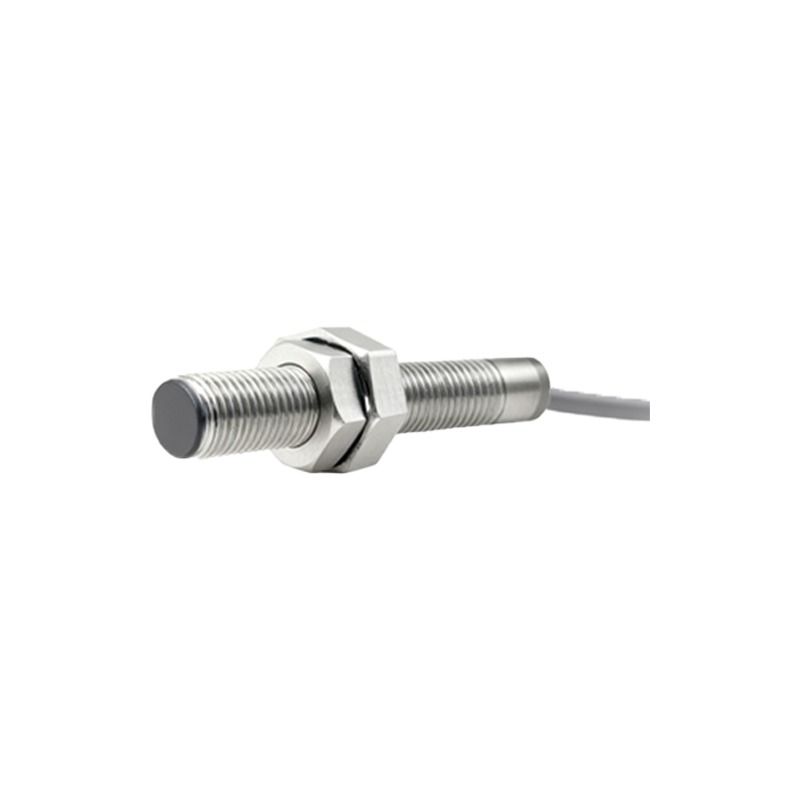
Applications for dual-line proximity sensors are vast and span numerous industries. In automotive manufacturing, they are deployed for part presence verification, robot arm end-position detection, and checking door or hood closures. Packaging machinery relies on them to count products, control fill levels, and detect labels or film breaks. In material handling and logistics, these sensors monitor conveyor belt operations, detect pallet positions, and ensure safe crane movement. They are also integral to automated storage and retrieval systems (AS/RS) for precise positioning of shuttles and lifts.
Selecting the appropriate dual-line proximity sensor requires careful consideration of several parameters. First, identify the target material (metal, plastic, liquid) to choose between inductive or capacitive technology. The sensing distance, or nominal range, must be specified, keeping in mind that practical mounting and environmental factors often require a safety margin—typically using 60-80% of the nominal range. The electrical characteristics are paramount: operating voltage (e.g., 10-30V DC), output type (PNP-sourcing or NPN-sinking), and current rating must match the control system's PLC or input module. The housing material (often nickel-plated brass, stainless steel, or PBT plastic) should be chosen based on the environment, considering factors like chemical exposure, temperature extremes, and potential for physical impact. Finally, the connection method (pre-wired cable or quick-disconnect connector) and protection class (IP67 or IP69K for washdown areas) are critical for ensuring long-term reliability.
Installation and wiring demand attention to detail. Always refer to the manufacturer's datasheet. Ensure the sensor is mounted securely without misalignment to the target. For inductive sensors, note that different metals have correction factors (e.g., mild steel is 1.0, while stainless steel may be 0.6-0.8, reducing the effective sensing range). Maintain adequate clearance between multiple sensors to prevent mutual interference. Proper shielding and routing of cables away from high-power lines are essential to prevent electromagnetic interference from causing false triggering.
In conclusion, dual-line proximity sensors are sophisticated, versatile components that form the sensory backbone of modern automated systems. Their ability to provide reliable, non-contact detection with enhanced output flexibility makes them indispensable for improving efficiency, safety, and precision in countless industrial processes. By understanding their principles and