In the realm of industrial automation and machine control, proximity sensors are indispensable components for non-contact detection. Among the diverse range of sensors available, the red square proximity switch sensor with a three-wire configuration stands out for its robust design, reliability, and ease of integration. This article delves into the technical specifications, operational principles, wiring methodologies, and key application considerations for this specific sensor type.
The defining characteristic of this sensor is its housing: a compact, square-shaped body typically constructed from durable engineering plastics or metals like nickel-plated brass, finished in a highly visible red color. This color often signifies a specific function or output type, commonly associated with PNP (sourcing) outputs in many manufacturer's coding systems, though this is not a universal standard and must always be verified against the datasheet. The three-wire design is the most prevalent for DC-powered proximity sensors, providing a clear and stable interface for power and signal.
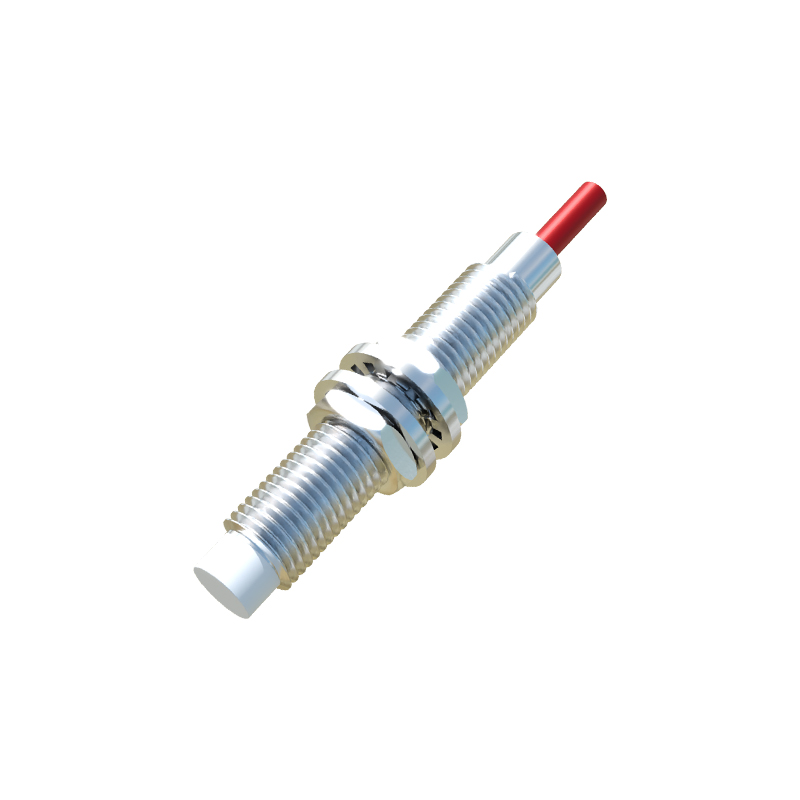
The core technology behind these inductive proximity sensors is based on electromagnetic fields. Inside the red square housing lies an oscillator circuit that generates a high-frequency alternating magnetic field at the active face (sensing surface). When a metallic target (typically ferrous metals like steel or iron, and sometimes non-ferrous metals depending on the sensor type) enters this field, eddy currents are induced in the target. This causes a change in the oscillation amplitude, which is detected by a threshold circuit. This detection triggers a change in the state of the solid-state output switch.
The three wires are crucial for operation:
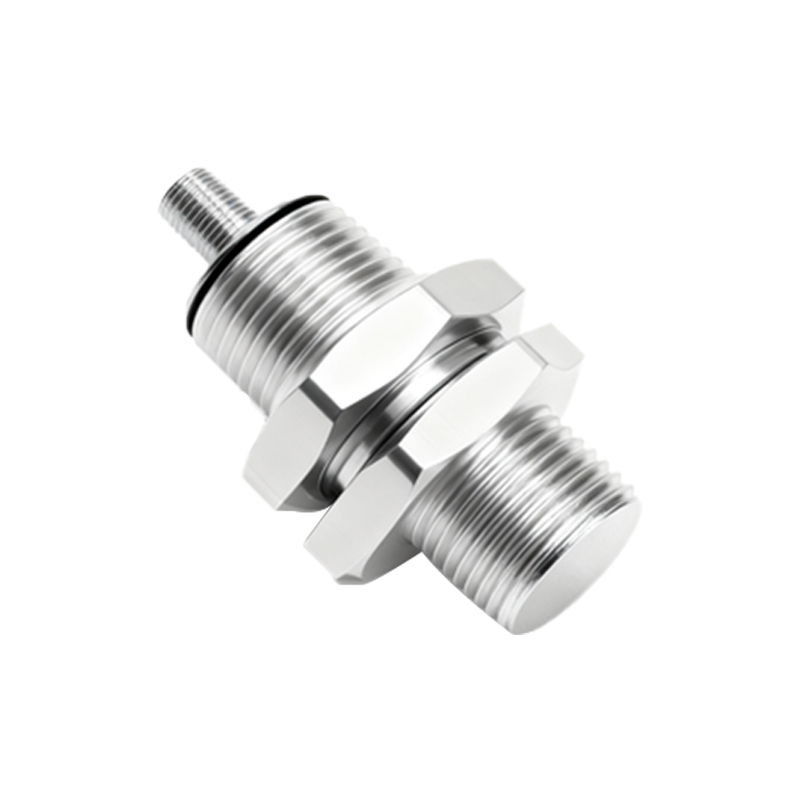
1. Brown Wire (+V / L+): This is the positive power supply line. It must be connected to the positive terminal of the DC power source. Common operating voltages range from 10-30V DC, with 12V DC and 24V DC being industry standards.
2. Blue Wire (0V / L- / COM): This is the negative power supply line or common ground. It must be connected to the negative terminal of the DC power source.
3. Black Wire (Output / Signal): This is the switched output line. Its behavior depends on whether the sensor is PNP or NPN.
For a PNP (Sourcing) Sensor: In the active state (target detected), the black wire switches to connect internally to the positive supply (brown wire), sourcing current to the load (e.g., a PLC input, relay coil).
For an NPN (Sinking) Sensor: In the active state, the black wire switches to connect internally to the negative supply (blue wire), sinking current from the load.
It is imperative to confirm the sensor's output type (PNP vs. NPN) and ensure compatibility with the control system's input module. Incorrect wiring can lead to malfunction or damage.
Key technical parameters to consider when selecting and applying a red square three-wire proximity sensor include:
Sensing Distance: The nominal operating distance (Sn) for which the sensor is rated, e.g., 5mm, 8mm, 15mm. It is critical to maintain an installation gap to prevent physical damage and account for target material and size factors.
Output Type: As mentioned, PNP (NO/NC) or NPN (NO/NC). The "Normally Open" (NO) configuration is most common, where the output is OFF without a target and ON when a target is present.
Switching Frequency: The maximum number of on/off cycles per second, determining its suitability for high-speed counting or positioning applications.
Housing Material and Protection Rating: The IP (Ingress Protection) rating, such as IP67 or IP68, indicates the level of protection against dust and water, making these sensors ideal for harsh industrial environments like machining centers, material handling systems, and automated assembly lines.
Electrical Connection: Options include pre-wired cables of fixed lengths or quick-disconnect (M8 or M12) connectors for easy maintenance and replacement.
In practical application, these sensors are widely used for position detection of machine parts, end-of-travel limits, counting objects on conveyors, and verifying the presence of tools or workpieces. Their square shape allows for easy mounting with brackets and provides multiple sensing face orientations. The red color enhances visibility for maintenance personnel during troubleshooting.
Installation best practices involve ensuring a clean sensing face free of metal chips or debris, maintaining the recommended lateral and axial distances from other metal objects to prevent electromagnetic interference, and using shielded cables in electrically noisy environments. Always refer to the manufacturer's specific installation manual for precise details.
In conclusion, the red square three-wire proximity switch sensor is a versatile, robust, and critical component in modern industrial control systems. Its standardized wiring,