In the realm of industrial automation and process control, the precise measurement of position and detection of object presence is paramount. Among the myriad of sensing solutions available, analog proximity switches integrated with displacement sensor technology stand out for their versatility and accuracy. Unlike their digital counterparts that provide a simple on/off signal, these devices offer a continuous, proportional output signal that corresponds directly to the distance of a target object. This article delves into the operational principles, key types, applications, and selection criteria for these sophisticated sensors.
At their core, analog proximity switches are non-contact sensors that detect the presence or absence of a target and, crucially, measure its distance. They function by generating an electromagnetic field or a beam of light. When a target enters this field, it causes a change in the sensor's internal properties—such as the oscillation amplitude in an inductive sensor or the light intensity in a photoelectric sensor. This change is not merely tripped at a threshold but is continuously measured. An internal circuit then converts this measured change into a standardized analog output signal, typically 0-10V DC or 4-20mA. The voltage or current level is directly proportional to the distance between the sensor face and the target. For instance, at the minimum sensing distance, the output might be 10V, and at the maximum, it might be 0V, or vice versa, depending on the configuration.
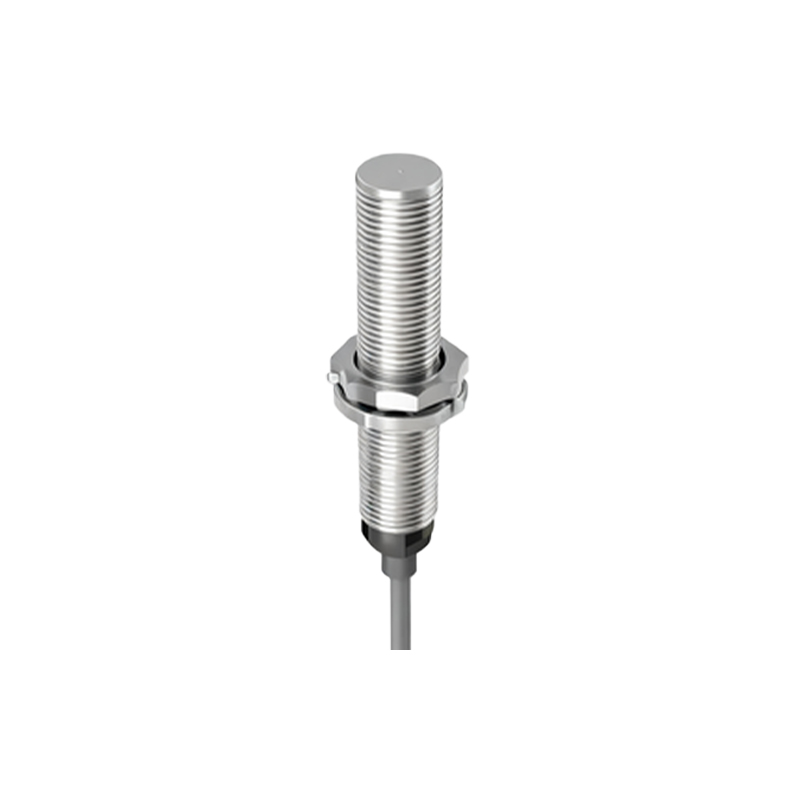
Several technologies enable this analog displacement sensing. Inductive analog proximity switches are the most common for detecting metallic objects. They generate an oscillating electromagnetic field. The eddy currents induced in a metallic target dampen the oscillation, and the degree of damping is proportional to the distance. These sensors are robust, resistant to environmental contaminants like dust and oil, and are ideal for harsh industrial environments. Capacitive analog sensors, on the other hand, can detect both metallic and non-metallic materials (plastics, wood, liquids) by measuring changes in capacitance caused by the target entering the electrostatic field. Photoelectric analog sensors use a light emitter and receiver. The amount of reflected or transmitted light received changes with distance, providing the analog signal. Ultrasonic analog sensors measure the time-of-flight of sound waves to determine distance and are excellent for detecting objects of varying materials and under challenging conditions like fog or dust.
The applications for analog displacement proximity switches are extensive and critical. They are indispensable in position feedback systems, such as monitoring the precise position of a cylinder rod, a robotic arm's gripper, or a valve stem. In thickness and diameter control during continuous production processes (e.g., paper, plastic film, metal sheets), these sensors provide real-time, continuous measurement for immediate process adjustment. They are used for level sensing in tanks and silos, where the continuous output indicates the exact fill level rather than just high or low alarms. Vibration monitoring on rotating machinery often employs these sensors to measure the minute displacement of a shaft, providing early warning of misalignment or bearing wear. Furthermore, they enable sophisticated tasks like edge guiding in web processing and tension control in winding applications.
Selecting the right analog proximity switch requires careful consideration of several parameters. First, the sensing range must be appropriate for the application, with a sufficient margin. The type of output signal (voltage or current) must be compatible with the programmable logic controller (PLC) or data acquisition system. The 4-20mA current loop is often preferred for its inherent noise immunity and ability to indicate a wire break (0mA). Linearity and repeatability are critical accuracy specifications; high linearity ensures the output signal is a straight-line function of distance, while high repeatability guarantees consistent measurements. Environmental factors such as temperature extremes, presence of chemicals, or washdown requirements dictate the needed housing material (often stainless steel) and ingress protection (IP) rating. Finally, the target material, size, and shape will determine whether an inductive, capacitive, photoelectric, or ultrasonic sensor is the optimal choice.
In conclusion, analog proximity switches with displacement sensing capabilities are powerful tools that bridge the gap between simple presence detection and precise metrology. By providing a continuous stream of positional data, they empower control systems to achieve higher levels of automation, quality control, and predictive maintenance. For engineers designing systems where position, thickness, vibration, or level is a critical variable, understanding and leveraging these sensors is key to developing robust, efficient, and intelligent industrial solutions.