In the demanding world of industrial automation, proximity sensors are indispensable components, providing non-contact detection of metallic and non-metallic objects. Their performance directly impacts the efficiency, safety, and uptime of machinery. Therefore, rigorous durability testing is not merely a quality check but a critical investment in operational reliability. This article delves into the core methodologies and standards that define comprehensive durability testing for proximity sensors.
Durability, in this context, encompasses a sensor's ability to withstand prolonged exposure to its operational environment while maintaining specified performance parameters. Testing is designed to simulate years of service life within a condensed timeframe, identifying potential failure modes before deployment. The primary testing categories include mechanical, environmental, and electrical endurance.
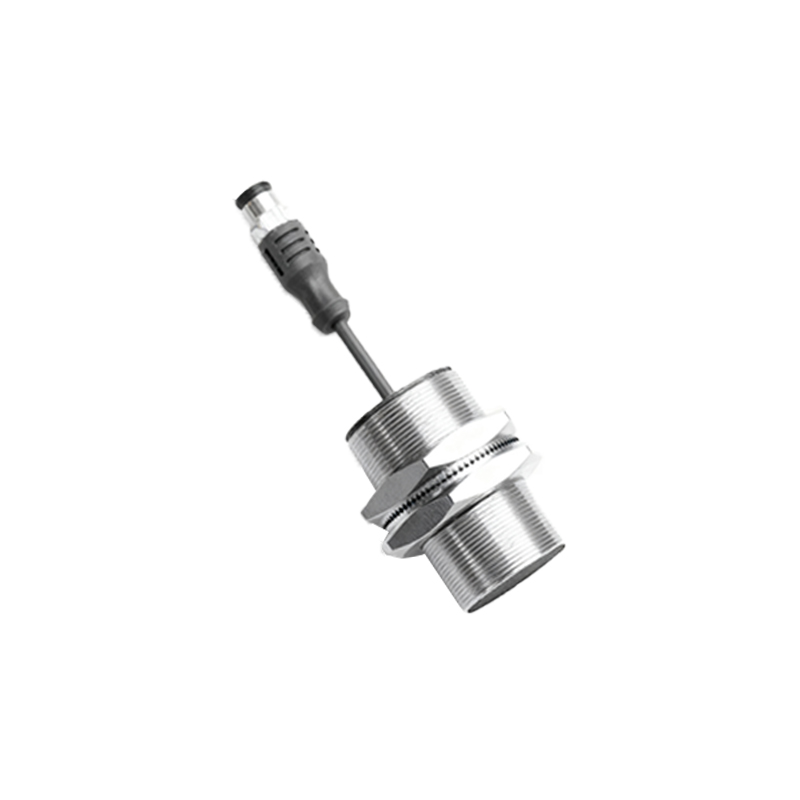
Mechanical durability testing focuses on the sensor's physical robustness. A key test is the housing strength and ingress protection (IP) rating validation. Sensors are subjected to vibration tests per standards like IEC 60068-2-6 to simulate transportation and operational stresses. Shock tests (IEC 60068-2-27) assess resilience to sudden impacts. Furthermore, cyclic mechanical stress is applied to the sensing face and housing to test for material fatigue, crack formation, or seal degradation. For threaded barrel sensors, torque resistance tests ensure the housing does not deform during installation.
Environmental testing exposes the sensor to extreme conditions it might encounter. This involves temperature cycling (e.g., from -25°C to 70°C or wider ranges per specification) to evaluate thermal expansion effects on seals and internal components. Humidity and corrosion tests, such as salt spray testing per ISO 9227, are crucial for sensors used in washdown or marine environments. Resistance to chemicals like oils, coolants, and cleaning agents is also verified by immersion or splash testing.
Electrical endurance is paramount. This involves long-term switching durability tests, where the sensor is cycled at its maximum rated switching frequency and load for millions of operations. The test monitors parameters like switching point drift, output signal integrity, and current consumption. Surge immunity and electrostatic discharge (ESD) tests (per IEC 61000-4-5 and IEC 61000-4-2) ensure the sensor can withstand voltage transients common in industrial settings. Additionally, tests for short-circuit protection and overload endurance validate the robustness of the output stage.
Beyond standardized tests, application-specific testing is vital. For example, a sensor destined for a welding cell undergoes tests against spatter adhesion and electromagnetic interference from welding currents. Sensors in food and beverage plants face tests with high-pressure, high-temperature steam cleaning.
The data collected from these tests—failure rates, parameter drift, and identified weak points—feeds directly into design improvements. It allows manufacturers to enhance sealing technologies, select more resilient housing materials, and design more robust electronic circuits. For the end-user, understanding the depth of a manufacturer's durability testing provides confidence in mean time between failures (MTBF) predictions and total cost of ownership.
In conclusion, comprehensive durability testing transforms a proximity sensor from a simple component into a reliable partner for industrial automation. It bridges the gap between theoretical specifications and real-world performance, ensuring that these critical devices deliver consistent, long-term service even in the most challenging environments. Specifiers and engineers should prioritize sensors from manufacturers that transparently adhere to rigorous, multi-faceted testing protocols.