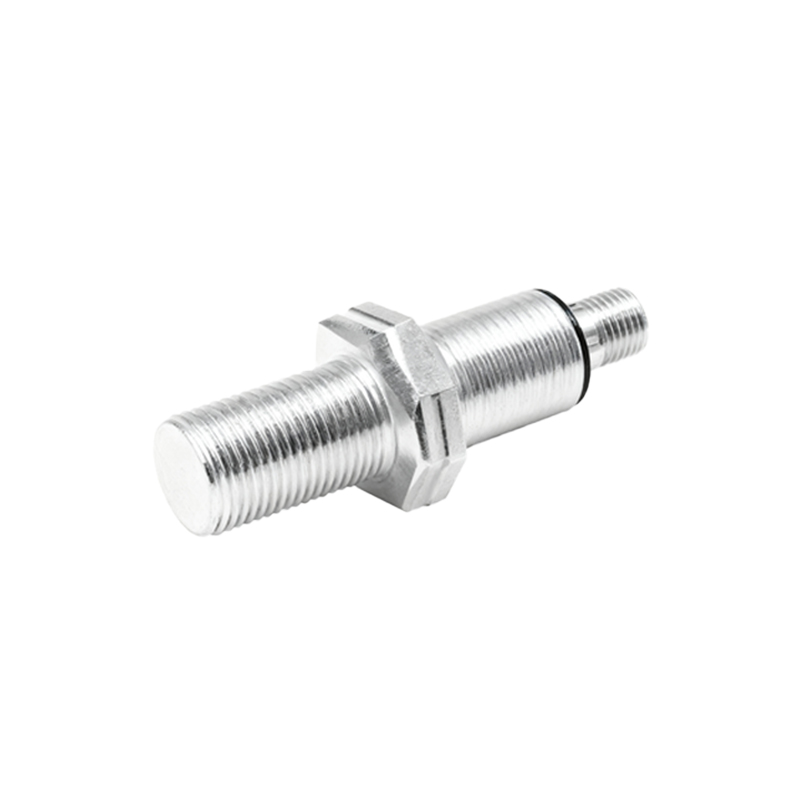
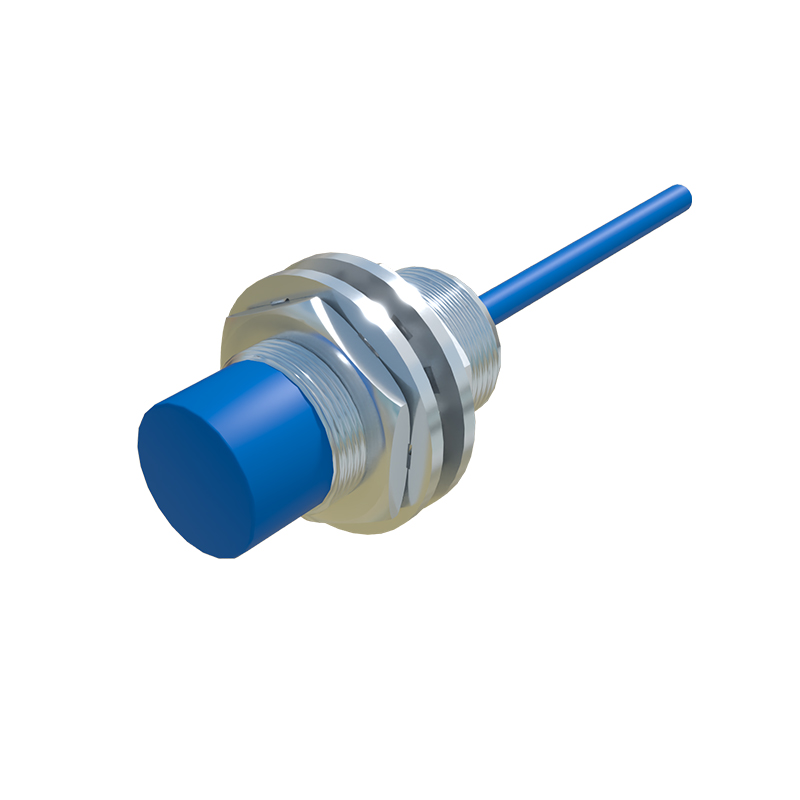
In the realm of industrial automation and control systems, proximity sensors play a pivotal role in detecting the presence or absence of objects without physical contact. Among the various types available, the 4-wire proximity sensor stands out due to its versatility and reliable performance. This article delves into the fundamental working principle of 4-wire proximity sensors, exploring their construction, operation, and typical applications in modern engineering.
A 4-wire proximity sensor is an electronic device designed to sense metallic or non-metallic objects within a specified range. As the name implies, it features four distinct wires: two for power supply and two for the output signal. This configuration allows for separate power and output circuits, enabling enhanced flexibility in wiring and compatibility with different control systems. The sensor operates based on electromagnetic or capacitive principles, depending on the target material. For inductive sensors, which detect metallic objects, a high-frequency oscillating circuit generates an electromagnetic field. When a metal object enters this field, eddy currents are induced, causing a change in the oscillation amplitude. This change is detected by the sensor's circuitry, triggering the output switch. Capacitive sensors, on the other hand, detect both metallic and non-metallic objects by measuring changes in capacitance caused by the object's dielectric properties.
The internal architecture of a 4-wire proximity sensor typically includes an oscillator, a demodulator, a trigger circuit, and an output switching element. The oscillator produces a continuous high-frequency signal, while the demodulator converts any amplitude variations into a DC voltage. This voltage is then processed by the trigger circuit, which activates the output when it exceeds a predefined threshold. The output stage commonly employs a solid-state switch, such as a transistor or a relay, providing either a normally open (NO) or normally closed (NC) contact. The four wires are color-coded for easy identification: usually, brown and blue for power (positive and negative DC), and black and white for the output signals. This color standardization simplifies installation and reduces wiring errors in complex industrial setups.
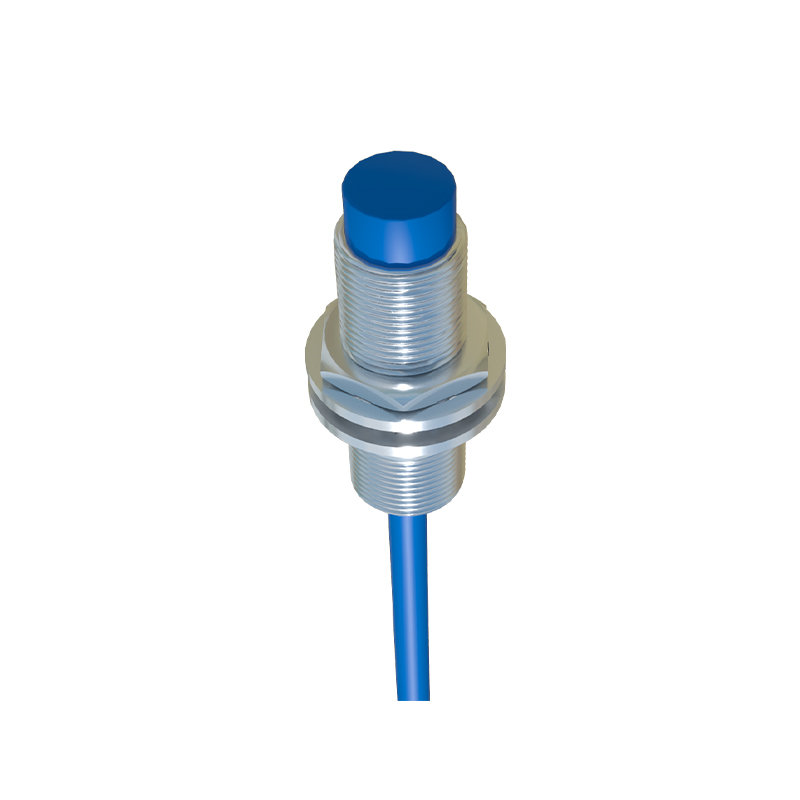
One of the key advantages of 4-wire sensors is their ability to provide both sourcing (PNP) and sinking (NPN) output configurations, depending on the wiring arrangement. This dual capability makes them adaptable to various programmable logic controllers (PLCs) and other control devices. Additionally, the separate power and output wires minimize electrical interference, ensuring stable operation in noisy environments. These sensors are known for their high switching speed, long service life, and resistance to environmental factors like dust, moisture, and vibration. Common applications include position sensing in conveyor systems, object detection in packaging machinery, and safety interlocks in automotive assembly lines.
When selecting a 4-wire proximity sensor, engineers must consider parameters such as sensing distance, output type, voltage rating, and housing material. Proper installation is crucial to avoid false triggers; for instance, maintaining adequate clearance from other metal surfaces and ensuring correct polarity. Regular maintenance, though minimal, involves checking for physical damage and cleaning the sensing face to prevent performance degradation. With advancements in technology, modern 4-wire sensors now incorporate features like short-circuit protection, temperature compensation, and LED indicators for status monitoring.
In summary, the 4-wire proximity sensor is an indispensable component in automation, offering precise non-contact detection with robust design. Its four-wire setup provides operational flexibility, making it suitable for diverse industrial challenges. Understanding its principle helps optimize system integration and enhance overall efficiency in manufacturing and process control.