In the realm of industrial automation and control systems, proximity sensors are indispensable components for detecting the presence or absence of an object without physical contact. Among the fundamental decisions an electrical engineer or system designer must make is selecting the correct electrical configuration: normally open (NO) or normally closed (NC). This choice is not merely a matter of preference but a critical design parameter that impacts safety, logic, wiring, and system behavior. Understanding the distinction and appropriate application of each is paramount for robust system design.
At its core, the terms "normally open" and "normally closed" describe the state of the sensor's output switch (typically a solid-state or relay output) when the sensor is in its non-actuated or "normal" state. This "normal" state is defined as the condition when the target object is not within the sensor's detection range. It is a resting state, not a powered state. This is a crucial point of clarification. The "normal" condition is independent of whether the sensor itself is powered on or off; it refers purely to the mechanical or electrical state of the output contacts relative to the absence of a target.
A Normally Open (NO) Proximity Sensor has an output circuit that is open (i.e., high impedance, no continuity) when no target is present. When a target enters the sensing field, the output switch closes, completing the circuit and allowing current to flow. In a typical sourcing (PNP) or sinking (NPN) DC sensor, this means the output signal line switches to either supply voltage (for PNP NO) or 0V/common (for NPN NO) upon detection. NO sensors are often described as having a "make" contact upon actuation.
Conversely, a Normally Closed (NC) Proximity Sensor has an output circuit that is closed (i.e., low impedance, continuity exists) when no target is present. When a target enters the sensing field, the output switch opens, breaking the circuit and stopping current flow. For a PNP NC sensor, the output signal line is at supply voltage when idle and switches "off" (opens) when detecting a target. For an NPN NC sensor, the output is at 0V/common when idle and opens upon detection. NC sensors are often described as having a "break" contact upon actuation.
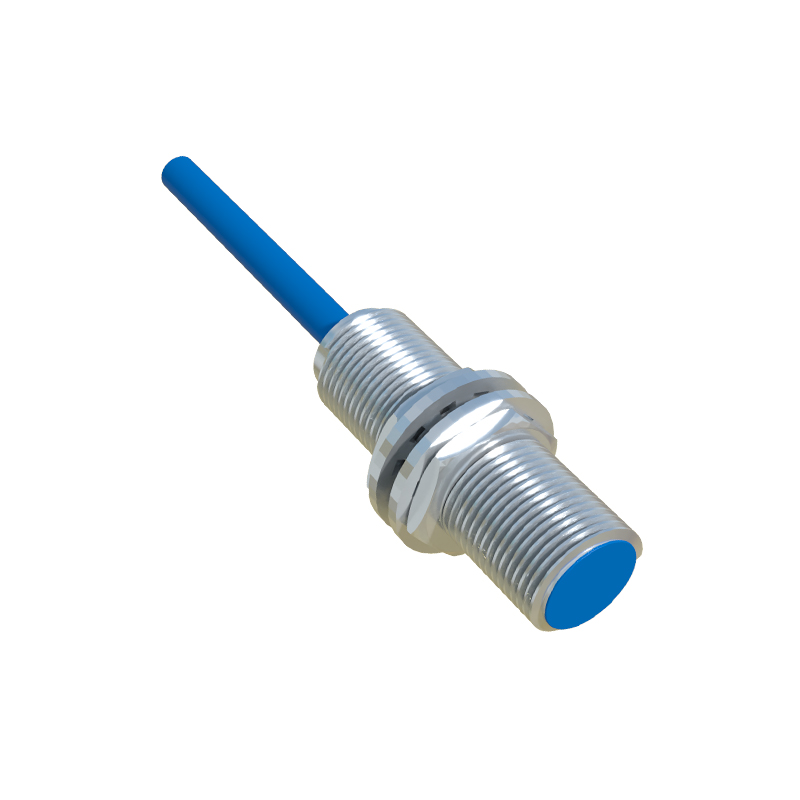
The selection between NO and NC is primarily driven by safety considerations and control logic design. This is where the concept of "fail-safe" design becomes central.
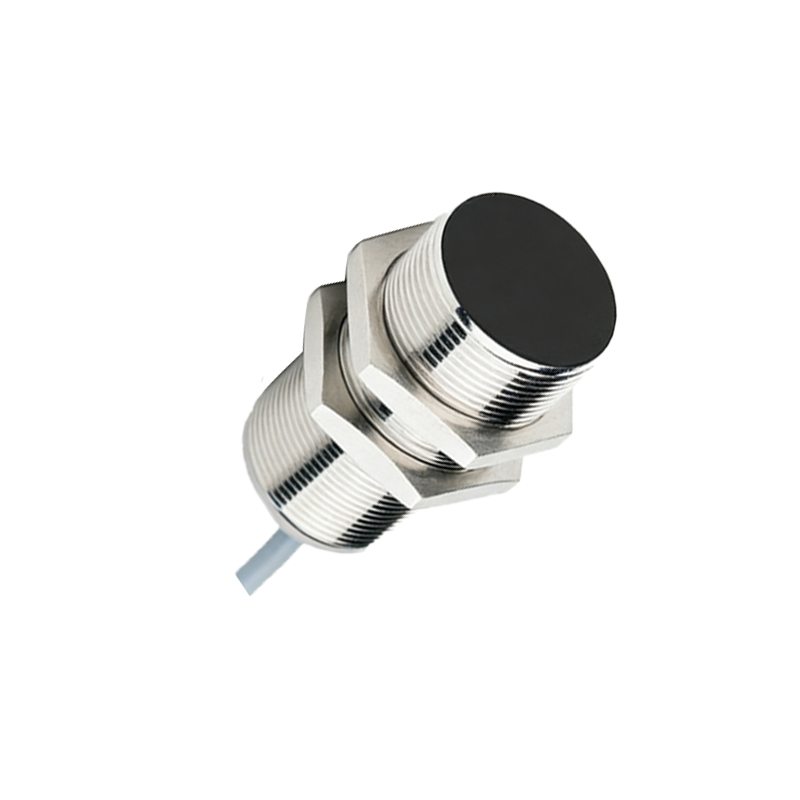
Safety and Fail-Safe Design: In many critical applications, the safe state of a machine or process is to stop. An NC configuration is frequently employed for safety-critical detection, such as in guard door monitoring or emergency stop circuits. Why? Because a fault condition—like a wire break, loss of sensor power, or sensor failure—will cause the NC circuit to open, mimicking the actuated state (target present) and triggering a machine halt. This is a "fail-safe" design: a failure causes the system to enter a safe state. If an NO sensor were used for such a safety function, a wire break would leave the circuit permanently open (non-actuated state), and the control system would be unaware of the fault, potentially allowing a hazardous condition to persist.

Control Logic and Wiring Efficiency: The choice also simplifies PLC (Programmable Logic Controller) programming and can reduce wiring complexity. Often, the desired action in a control sequence dictates the choice. For instance, if you want a conveyor to run only when a part is present, using an NO sensor might provide a straightforward "start" signal. However, if you want a conveyor to stop when an object reaches a certain point, an NC sensor might provide a more intuitive "stop" signal in its actuated state. In ladder logic, an NO sensor contact is typically represented as a normally open instruction (--| |--), while an NC sensor is represented as a normally closed instruction (--|/|--). Using the physically correct sensor can make the program more intuitive and reduce the need for logical inverters (NOT commands).
Practical Considerations and Misconceptions: It is a common misconception that one type is more reliable than the other. Both NO and NC configurations, when implemented with quality components, offer equal reliability. The key is correct application. Another point is that many modern programmable sensors allow the user to select the output mode (NO, NC, or both) via software or a dip switch, offering great flexibility. However, for fixed-configuration sensors, the choice must be made at the time of purchase.
Wiring diagrams must be consulted carefully. Connecting an NC sensor into a circuit designed for an NO sensor will result in inverted logic, which could be dangerous. Always verify the sensor's datasheet,