Glass proximity sensors represent a critical component in modern industrial automation, particularly in sectors like automotive manufacturing, packaging, and electronics assembly. Their primary function is to detect the presence or absence of transparent or translucent glass objects without physical contact. Understanding the underlying principles is essential for engineers to select, install, and troubleshoot these sensors effectively.
The core technology behind most glass proximity sensors is based on modulated infrared (IR) light. Unlike standard inductive or capacitive sensors designed for metals or other materials, these sensors must overcome the challenge of transparency. A standard diffuse sensor might fail because its emitted light beam passes directly through clear glass, preventing a reliable reflection back to the receiver. Glass proximity sensors solve this problem through sophisticated optical design and signal processing.
A typical sensor consists of an IR light-emitting diode (LED) and a phototransistor or photodiode receiver, housed in a single unit. The key differentiator is the modulation of the emitted IR light at a specific high frequency. The sensor's electronics are tuned to recognize only light modulated at this exact frequency. This design provides high immunity to ambient light interference from factory lighting, which is usually constant or modulated at different frequencies.
The detection principle relies on the refraction and reflection properties of glass. When no target is present, the modulated IR light beam disperses into the environment. When a glass object enters the detection zone, several optical interactions occur. While a significant portion of light may transmit through the glass, a fraction is reflected and refracted at the air-glass interfaces due to the change in the refractive index. Even clear glass reflects approximately 4% of incident light at each surface (per Fresnel equations). For thicker glass or glass with subtle impurities, coatings, or surface textures, this reflected signal can be stronger.
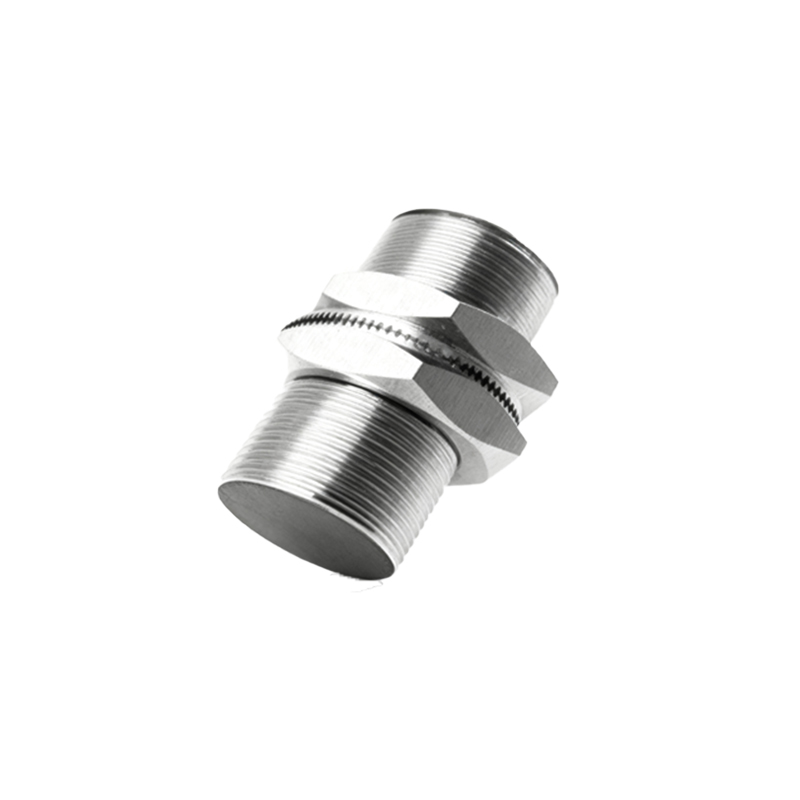
The sensor's receiver is strategically positioned and finely calibrated to capture this weak, modulated return signal. The received signal is then amplified and filtered by the internal circuitry. The filter eliminates DC components from ambient light and any AC components not matching the sensor's specific modulation frequency. Only the correctly modulated signal, originating from the sensor's own LED and reflected by the target, is processed. When this signal strength exceeds a predefined threshold, the sensor's output switch (PNP, NPN, or analog) changes state, indicating "target present."
Several factors influence reliable detection:
1. Thickness and Composition: Thicker glass or glass with a higher iron content (e.g., green glass) typically provides a stronger reflection signal. Very thin, perfectly clear glass poses the greatest challenge.
2. Angle of Incidence: The sensor is often positioned perpendicular to the glass surface to maximize the retro-reflective component back to the receiver.
3. Surface Condition: Dust, moisture, or fingerprints on the glass can actually increase detection reliability by scattering and reflecting more light toward the sensor.
4. Background Suppression: Advanced models incorporate background suppression technology. They use triangulation principles or time-of-flight measurement to evaluate the distance of the reflecting object, allowing them to ignore reflections from distant background surfaces and only detect glass within a precise, adjustable range.
5. Polarization Filters: Some high-end sensors use polarized lenses. The emitted light is polarized in one plane. Specular reflections from shiny glass surfaces tend to preserve this polarization, while diffuse reflections from background objects scramble it. The receiver has a cross-polarized filter, blocking the directly reflected beam and allowing it to detect only the depolarized light scattered from the glass surface or edges, improving discrimination.
Applications are widespread. In bottling plants, they verify the presence of glass bottles on filling lines. In automotive assembly, they confirm the installation of windshields or windows. In appliance manufacturing, they detect glass panels on ovens or washing machines.
For optimal performance, engineers must carefully consider the sensor's specified "glass detection distance," which is typically much shorter than its standard sensing range for opaque objects. Proper alignment, stable mounting, and regular lens cleaning are crucial maintenance practices. Environmental factors like heavy condensation or buildup of opaque contaminants can cause false readings.
In conclusion, glass proximity sensors operate on the refined principle of modulated infrared light reflection and advanced signal filtering. They are engineered to exploit the minimal reflective properties of transparent materials. Their reliability hinges on precise optical engineering to distinguish the faint, characteristic signature of glass from environmental optical noise, enabling robust non-contact detection in demanding industrial environments.