In the dynamic world of industrial automation and control systems, proximity sensors are indispensable components. Selecting the right sensor for an application often begins with deciphering its model number. This alphanumeric code is not a random sequence; it is a concise language that conveys critical information about the sensor's specifications, functionality, and physical characteristics. Understanding this nomenclature is crucial for engineers, technicians, and procurement specialists to ensure optimal system performance and compatibility.
A typical proximity sensor model number is structured into distinct segments, each representing a specific attribute. While conventions vary by manufacturer, a common pattern includes details on sensing technology, physical form, sensing distance, output type, connection method, and housing material. For instance, a model like "PRM12-4DN08-PNP" can be systematically broken down. The prefix "PRM" might indicate the product family or series. "12" often denotes the housing diameter in millimeters. "4" could specify the nominal sensing distance in millimeters. "DN" may represent a cylindrical, non-flush mountable design. "08" might refer to the thread type or electrical connection. Finally, "PNP" clearly states the output transistor type, defining the switching logic.
The first critical element encoded is the sensing technology. Common abbreviations include 'IN' for inductive sensors (detecting metallic objects), 'CA' for capacitive sensors (detecting both metallic and non-metallic materials), and 'US' for ultrasonic sensors. Inductive sensors are further categorized by their mounting style: flush-mounted (often coded 'F' or shielded) and non-flush mounted ('N' or unshielded). Flush-mounted sensors can be installed flush with a metal surface without false triggering, whereas non-flush types offer longer sensing ranges.
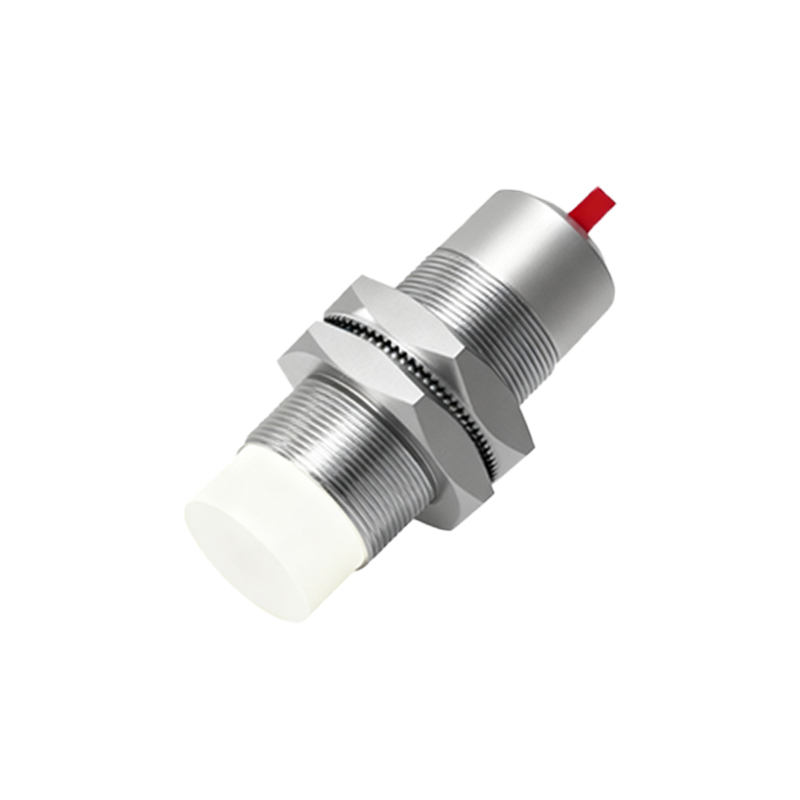
The physical dimensions are almost always specified. The housing diameter, such as M8, M12, M18, or M30, is a key identifier for the mechanical installation. The length of the sensor body may also be implied or explicitly part of the code. The nominal sensing distance, a vital performance parameter, is usually given in millimeters (e.g., 2mm, 4mm, 8mm, 15mm). It is essential to note that this is the rated operating distance under standardized conditions; actual performance can be affected by the target material and environmental factors.
Output configuration is another fundamental characteristic detailed in the model number. The output type is either digital switching ('D'), analog ('A'), or IO-Link compatible ('IOL'). The switching logic is defined by the transistor type: PNP (sourcing) or NPN (sinking). This must match the controller's input card requirements. Some models also specify the output function, such as Normally Open (NO) or Normally Closed (NC). The connection method is also indicated, whether it's a pre-wired cable (e.g., 2m), a quick-disconnect (QD) plug (like M12 connectors), or terminal connections.
Additional features are often embedded in extended suffixes or specific series codes. These can include housing material (stainless steel 'SS', nickel-plated brass, or plastic), ingress protection rating (IP67, IP68, IP69K for washdown environments), specific approvals (UL, CE, ATEX for hazardous areas), and special functions like short-circuit protection, reverse polarity protection, or temperature range indicators. For example, a suffix like '-E2' might indicate enhanced environmental resistance, or '-Q' could denote a quick-connect version.
Understanding these codes empowers professionals to make precise selections. It prevents costly mismatches in electrical interfaces, mechanical fit, or performance expectations. When a model number is ambiguous, consulting the manufacturer's datasheet or catalog is imperative. These documents provide the definitive decoding key for that specific product line and elaborate on performance curves, target material factors, and detailed dimensional drawings.
In summary, the model number of a proximity sensor is a compact technical datasheet. It systematically reveals the sensor's core identity—how it senses, its size, its range, its electrical interface, and its robustness. Mastering this industrial shorthand is not merely an academic exercise; it is a practical skill that enhances efficiency in system design, troubleshooting, and maintenance, ensuring reliable operation in demanding automation environments.