In the realm of industrial automation and electrical engineering, proximity sensors are indispensable components. They are non-contact devices designed to detect the presence or absence of an object within a specified sensing range without any physical contact. Their applications span from simple object counting on conveyor belts to complex safety interlocking in heavy machinery. However, the term "proximity sensor" encompasses a variety of technologies, each with distinct operating principles, advantages, and limitations. Understanding these differences is crucial for selecting the right sensor for a specific application, ensuring reliability, efficiency, and cost-effectiveness.
The primary function of any proximity sensor is to convert information about the presence or distance of a target object into an electrical signal. This signal is then processed by a control system, such as a PLC (Programmable Logic Controller). The core differentiation lies in the physical principle used for detection. The most common types include Inductive, Capacitive, Ultrasonic, Photoelectric, and Magnetic (Reed Switch or Hall Effect) sensors.
Inductive proximity sensors are arguably the most prevalent in industrial settings, particularly in manufacturing. They generate an electromagnetic field and detect the eddy current losses caused when a metallic target enters this field. Consequently, they are exclusively used for detecting ferrous and non-ferrous metals. Key characteristics include a relatively short sensing range (typically up to 60mm for standard models), high switching frequency, robustness in harsh environments (resistant to dust, dirt, and moisture), and insensitivity to non-metallic objects. They are ideal for applications like detecting metal parts, position verification of machine components, or as limit switches.
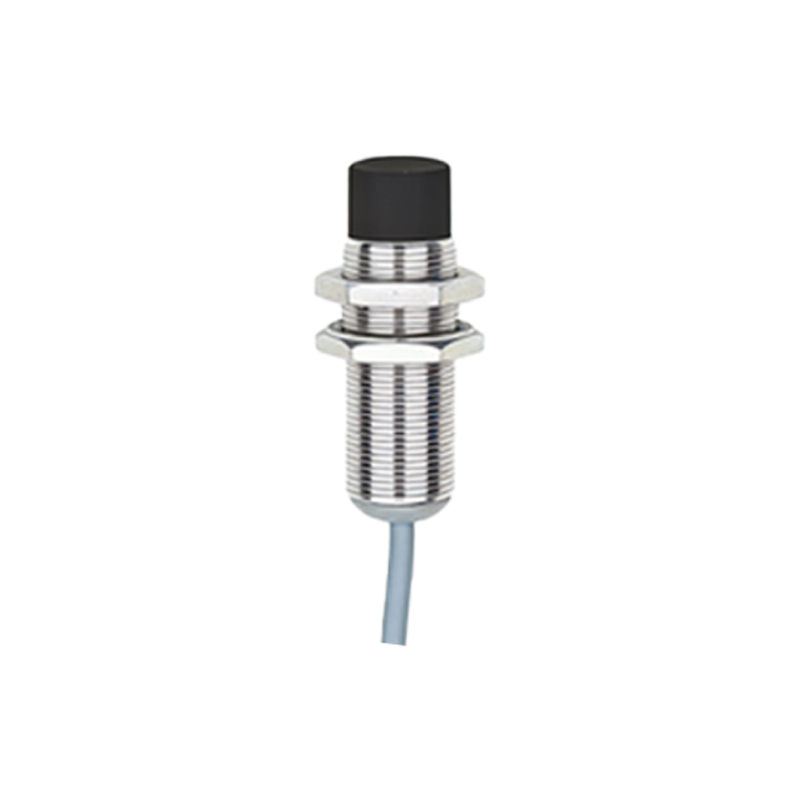
Capacitive proximity sensors, on the other hand, can detect both metallic and non-metallic materials, including liquids, powders, plastics, and wood. They operate by generating an electrostatic field and sensing the change in capacitance when a target object enters this field. The dielectric constant of the target material significantly influences the sensing distance. These sensors are perfect for applications involving level detection of liquids or granular materials, detecting filled vs. empty containers, or sensing materials through non-metallic walls. However, they can be susceptible to environmental factors like humidity and temperature variations.
Ultrasonic sensors utilize sound waves beyond the human hearing range. They emit high-frequency ultrasonic pulses and measure the time it takes for the echo to return from a target object. This time-of-flight principle allows them to measure distance accurately, not just detect presence. They are excellent for detecting objects of virtually any material, shape, or color, and are effective in challenging environments with dust, smoke, or fog. Common applications include distance measurement, level sensing in tanks, and object detection on palletizers. Their limitations include a slower response time compared to inductive sensors and potential interference from air turbulence or extreme temperature gradients.
Photoelectric sensors operate on the principle of light transmission. An emitter sends out a beam of light (visible, infrared, or laser), and a receiver detects the change in the received light intensity. They come in three main configurations: through-beam (separate emitter and receiver), retro-reflective (uses a reflector), and diffuse (reflective), where the target itself reflects the light back to the receiver. Photoelectric sensors offer very long sensing ranges (up to several meters for through-beam types) and can detect tiny objects. They are versatile but can be affected by ambient light, color, and surface reflectivity of the target. Applications are vast, including bottle counting on high-speed lines, web break detection, and door safety curtains.
Magnetic proximity sensors, such as reed switches or Hall-effect sensors, detect the presence of a magnetic field, typically from a permanent magnet attached to the moving target. Reed switches are simple, low-cost devices where contacts close in the presence of a magnet. Hall-effect sensors are solid-state and provide a digital or analog output proportional to the magnetic field strength. They are highly reliable for position sensing in cylinders (piston position detection), door/window security systems, and speed sensing (via gear tooth detection). Their operation is unaffected by non-magnetic materials but requires a magnet on the target.
Selecting the appropriate sensor involves a careful analysis of several parameters beyond just the target material. Engineers must consider the required sensing distance, environmental conditions (temperature, pressure, presence of contaminants), required output type (PNP/NPN, analog, IO-Link), switching frequency, electrical requirements, housing material (e.g., stainless steel for washdown areas), and installation constraints. For instance, an inductive sensor is unsuitable for detecting plastic bottles, just as a capacitive sensor might false-trigger in a humid environment if not properly adjusted.
In conclusion, the "difference" in proximity sensors is fundamentally a difference in physics. There is no universally superior technology; each excels in its niche. An inductive sensor's immunity to non-metals is its strength in metal stamping but a failure in packaging. An ultrasonic