In the realm of industrial automation and machine control, proximity sensing is a fundamental function. It involves detecting the presence or absence of an object within a specified range without any physical contact. This non-contact operation is crucial for enhancing reliability, speed, and safety in countless applications, from assembly lines and packaging machinery to robotics and material handling. While the term "proximity switch" is often used generically, it is typically implemented using specific sensor technologies, each with distinct operating principles, advantages, and ideal use cases. This article explores the primary sensor types employed as effective proximity switches.
Inductive Proximity Sensors
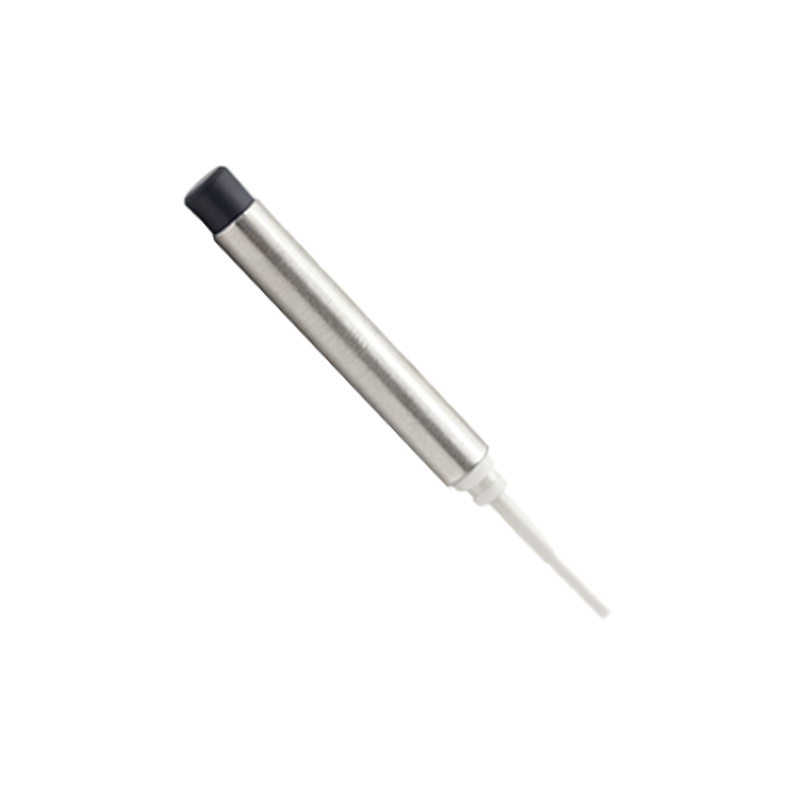
Inductive sensors are the workhorses for detecting metallic objects, primarily ferrous metals like steel and iron, though some models can sense non-ferrous metals like aluminum, copper, and brass at reduced ranges. Their operation is based on electromagnetic induction. The sensor generates an oscillating electromagnetic field from its active face. When a conductive metal object enters this field, eddy currents are induced on the object's surface, which in turn dampens the oscillation amplitude of the sensor's internal LC tank circuit. This change is detected by the sensor's circuitry, triggering a solid-state output signal (PNP or NPN). Key advantages include high switching frequency, robustness against environmental factors like dust, oil, and moisture (often rated IP67 or higher), and exceptional longevity due to the absence of moving parts. They are ideal for position sensing of metal parts, end-of-travel detection, and counting metallic objects.
Capacitive Proximity Sensors
Capacitive sensors can detect a much wider variety of materials, including metals, plastics, glass, wood, paper, and liquids. They function by measuring changes in capacitance. The sensor face acts as one plate of a capacitor, with the target object acting as the other plate, and the air gap as the dielectric. As an object approaches, the capacitance increases. The sensor's internal oscillator is tuned so that this increase triggers a change in the output state. A major benefit is their ability to sense through non-metallic walls or containers, making them perfect for level detection of powders, granules, or liquids inside tanks. They are also used for detecting filled bottles on a conveyor or the presence of non-metallic materials. Sensitivity adjustment is a common feature, allowing tuning to ignore certain materials (like a container wall) and detect the target material inside.
Photoelectric Sensors
Photoelectric sensors use light to detect objects. They consist of a light emitter (usually an LED producing visible red, infrared, or laser light) and a receiver. When the emitted light beam is interrupted or reflected by an object, the receiver detects the change, and the output switches. There are three main operational modes used for proximity sensing:
1. Through-Beam (Opposed): The emitter and receiver are separate units facing each other. An object is detected when it breaks the beam. This mode offers the longest sensing range and highest reliability.
2. Retroreflective: The emitter and receiver are in the same housing. A reflector is placed opposite the sensor. The object is detected when it interrupts the beam reflected back from the reflector.
3. Diffuse (Proximity Mode): The emitter and receiver are in the same housing. Detection occurs when light emitted by the sensor reflects off the target object back to the receiver. The sensing range depends on the object's color, reflectivity, and surface texture.
Photoelectric sensors are versatile for detecting objects of almost any material, color, or shape at longer distances than inductive or capacitive sensors. They are essential for transparent object detection, small part detection, and long-range applications.
Ultrasonic Sensors
Ultrasonic sensors operate on a principle similar to sonar. They emit high-frequency sound waves (inaudible to humans) and evaluate the echo received back. A timer measures the time between the emission and reception of the sound wave, calculating the distance to the target object. This makes them excellent not just for presence detection, but also for precise distance measurement and continuous level monitoring. They are largely unaffected by object color, transparency, or material (though soft, sound-absorbing materials can be challenging). Common applications include detecting transparent films or glass bottles, bulk solid level control in silos, and pallet detection in logistics. They can be sensitive to temperature variations, wind, and extreme surface angles.
Magnetic Sensors (Reed Switches & Hall Effect Sensors)
These sensors detect the presence of a magnetic field, typically from a permanent magnet attached to the moving target. Reed switches contain two ferromagnetic reeds sealed in a glass tube. When a magnet approaches, the reeds are attracted to each other, making contact and closing a circuit. They are simple and cost-effective but have mechanical moving parts, limiting