In the realm of industrial automation and control, the reliable detection of objects is paramount. Among the diverse sensor technologies available, proximity sensors stand out for their non-contact operation, durability, and precision. While many proximity sensors provide simple discrete (on/off) outputs, the 0-10V analog output variant offers a significant advantage: the ability to convey not just presence, but also information about distance or other measured parameters. This article delves into the technical specifics, applications, and selection criteria for 0-10V output proximity sensors.
Fundamentally, a 0-10V proximity sensor operates on the same principles as its digital counterparts, commonly using inductive, capacitive, or ultrasonic sensing technologies. An inductive sensor, for instance, generates an electromagnetic field. When a metallic target enters this field, it causes a change in the oscillation amplitude within the sensor's circuit. The key differentiator of the analog version lies in its signal conditioning electronics. Instead of triggering a simple switch at a predefined threshold, the sensor's internal circuitry linearly converts the change in the sensed parameter (like the distance to the target) into a proportional analog voltage signal. This signal typically varies between 0 Volts (representing no target or the target at the maximum sensing distance) and 10 Volts (representing the target at the minimum sensing distance or a full-scale condition). Some sensors may use a reversed scaling (10V for far, 0V for near), so consulting the datasheet is crucial.
The 0-10V analog signal standard is widely adopted in industrial environments due to its simplicity and robustness. It is relatively immune to electrical noise compared to very low-voltage signals, and it interfaces seamlessly with a vast array of programmable logic controllers (PLCs), distributed control systems (DCSs), and analog input modules. This compatibility allows for sophisticated monitoring and control strategies. For example, the sensor can provide continuous feedback on the position of a cylinder rod, the fill level of a tank (when used with a float), or the thickness of a material passing on a conveyor. The PLC can then use this precise voltage reading to make proportional control decisions, such as adjusting the speed of a motor, triggering an alarm before a limit is reached, or sorting items based on size.
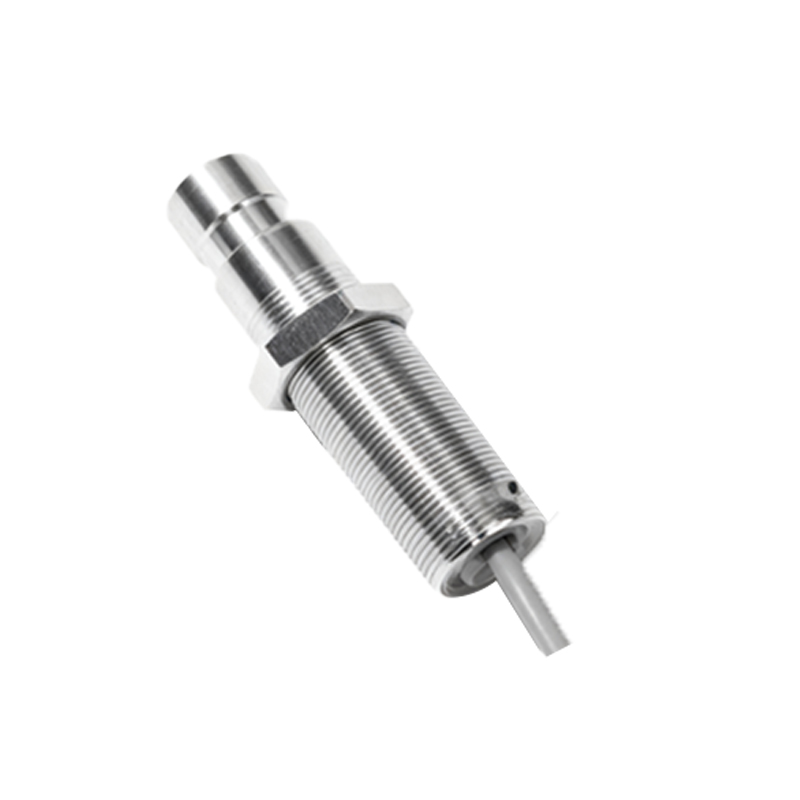
When selecting a 0-10V proximity sensor for an application, several key specifications must be evaluated. First, the sensing technology must match the target material: inductive for metals, capacitive for non-metals, liquids, or granular materials, and ultrasonic for a wide range of materials where distance measurement is needed. The sensing range is critical; the sensor must be capable of detecting the target within the required physical window. The linearity of the output is a primary performance metric, often expressed as a percentage deviation from a perfect straight line over the sensing range. High linearity ensures accurate distance-to-voltage correspondence. Resolution defines the smallest change in distance the sensor can detect and represent as a change in voltage. Response time indicates how quickly the sensor can reflect a change in the target's position in its output signal, which is vital for high-speed applications. Environmental factors such as temperature rating, IP (Ingress Protection) rating for dust and water resistance, and resistance to chemicals or welding spatter must also be considered to ensure long-term reliability.
Installation and wiring require attention to detail. Most 0-10V sensors are three-wire devices, requiring a DC power supply (commonly 10-30V DC), a ground connection, and the analog output wire. The output is typically sourced from the sensor (sourcing output). It is essential to use shielded cables, grounded at the controller end, to minimize electromagnetic interference on the analog signal. The load impedance of the receiving device (e.g., the PLC's analog input) must be within the sensor's specified range, usually above a certain kilo-ohm value, to avoid signal loading errors that distort the voltage reading.
In conclusion, 0-10V output proximity sensors bridge the gap between simple detection and precise, continuous measurement. They empower engineers to implement more intelligent, responsive, and efficient automated systems. By carefully matching the sensor's technical specifications—sensing principle, range, linearity, and environmental robustness—to the application's demands, one can ensure reliable performance and gain valuable process insights that discrete sensors cannot provide. Their integration into modern industrial networks remains a cornerstone of advanced process control and condition monitoring.