The landscape of industrial automation and smart systems is undergoing a profound transformation, driven significantly by innovations in sensing technology. Among these, proximity sensors stand as a cornerstone, enabling non-contact detection of objects with precision and reliability. This article delves into the latest technical developments in proximity sensor R&D, exploring the materials, methodologies, and integration strategies shaping the next generation of these critical components.
Historically, inductive and capacitive proximity sensors have dominated the market. Inductive sensors, detecting metallic objects via electromagnetic fields, have seen refinements in core materials like nanocrystalline alloys, which enhance sensitivity and thermal stability. Simultaneously, capacitive sensors, capable of detecting a wider range of materials including liquids and plastics, have benefited from advanced electrode designs and shielding techniques that drastically reduce false triggers from environmental contaminants. However, the frontier of R&D has expanded far beyond these traditional domains.
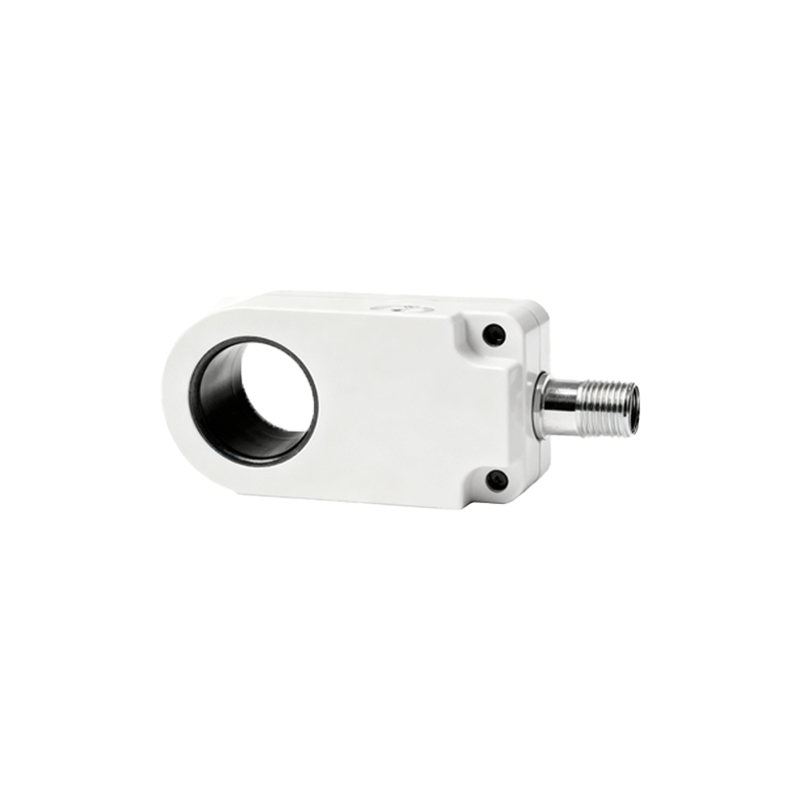
A primary area of intense focus is the development of high-frequency and ultra-high-frequency (UHF) inductive sensors. Operating at frequencies exceeding 1 MHz, these sensors offer unprecedented resolution for detecting small metallic parts, such as micro-screws or thin foils, which were previously challenging for standard models. This is achieved through sophisticated coil geometries etched onto printed circuit boards (PCBs) and the use of low-loss dielectric substrates. The signal processing algorithms, often embedded in application-specific integrated circuits (ASICs), utilize advanced digital filtering to distinguish target signals from background electrical noise, a common challenge in dense industrial environments.
Another revolutionary trend is the integration of multi-technology sensing heads. We are now seeing prototypes and early-market products that combine inductive, capacitive, and even optical principles within a single housing. This hybrid approach allows a single sensor to be dynamically configured via software for different tasks—detecting a metal gear in one cycle and a plastic container in the next. The key enabler here is micro-electromechanical systems (MEMS) fabrication, which allows for the miniaturization and co-location of disparate sensing elements. The data fusion from these elements is handled by onboard microcontrollers running complex sensor fusion algorithms, providing a more robust and context-aware detection signal.
The push towards Industry 4.0 and the Industrial Internet of Things (IIoT) has irrevocably changed sensor R&D priorities. Modern proximity sensors are no longer simple binary switches; they are intelligent data nodes. Embedded intelligence is now standard, with features like condition monitoring (reporting on internal temperature, vibration, or coil integrity), predictive maintenance alerts, and built-in IO-Link communication. IO-Link, in particular, has become a game-changer. It allows for bidirectional parameterization, real-time diagnostic data transmission, and seamless integration into higher-level control systems. R&D efforts are concentrated on making these smart features more power-efficient and cost-effective to deploy at scale.
Material science plays a pivotal role. For harsh environments—foundries, chemical plants, offshore platforms—sensor housing and face materials are critical. Research into novel polymers, ceramic coatings, and stainless-steel alloys with superior corrosion and abrasion resistance is ongoing. For instance, the use of PEEK (Polyether Ether Ketone) or PTFE-based compounds for sensor faces provides exceptional resistance to aggressive chemicals and extreme temperatures, ensuring long-term reliability where traditional materials would fail.
Furthermore, the demand for miniaturization continues unabated. Engineers are tasked with packing greater functionality into smaller form factors to fit into increasingly compact machinery. This drives innovation in 3D printing of sensor components, allowing for complex internal geometries for optimized magnetic or electric field shaping, and the use of system-in-package (SiP) designs that integrate the sensing element, ASIC, and communication interface into a single, tiny module.
Looking ahead, the convergence of sensing with artificial intelligence at the edge represents the next paradigm. Future proximity sensors will not only detect presence but also classify materials, estimate distance with sub-millimeter accuracy without traditional analog fall-off curves, and even identify surface defects by analyzing perturbations in the sensing field. This will require co-development of low-power AI accelerators and sophisticated machine learning models trained on vast datasets of sensor responses.
In conclusion, the R&D trajectory for proximity sensors is clear: greater intelligence, enhanced robustness, multi-functionality, and seamless connectivity. For engineers and system integrators, staying abreast of these developments is not optional but essential for designing the efficient, resilient, and data-rich automated systems of tomorrow. The humble proximity sensor is evolving into a sophisticated cyber-physical interface, a testament to the relentless innovation within the electrical and automation engineering fields.