In the realm of industrial automation, the interplay between sensing technologies and actuation components is fundamental to system functionality and efficiency. A common inquiry among engineers and technicians is whether proximity sensors and cylinders are related. The answer is unequivocally yes—they are intrinsically linked in countless automated systems, forming a critical partnership for precise motion control and feedback.
Proximity sensors are non-contact electronic devices designed to detect the presence or absence of a target object within a specified range without physical contact. They operate on various principles, including inductive, capacitive, and magnetic sensing. Inductive sensors, for instance, detect metallic objects, while magnetic sensors, often referred to as reed switches or Hall effect sensors, respond to magnetic fields. These sensors excel in harsh industrial environments, offering reliability, fast response times, and durability.
Cylinders, specifically pneumatic or hydraulic cylinders, are linear actuators that convert fluid pressure energy into mechanical motion. They consist of a piston moving within a cylindrical bore, generating force to push, pull, or lift loads. Cylinders are the workhorses of automation, driving processes like clamping, pressing, and positioning in manufacturing lines, packaging machinery, and robotic applications.
The relationship between proximity sensors and cylinders is primarily established through position sensing and control. In automated systems, it is crucial to know the exact position of a cylinder's piston rod to coordinate sequential operations, ensure safety, and provide feedback for process monitoring. Proximity sensors are strategically mounted on or near the cylinder body to detect the piston's position at specific points in its stroke—typically at the fully extended or fully retracted endpoints, and sometimes at intermediate points for mid-stroke positioning.
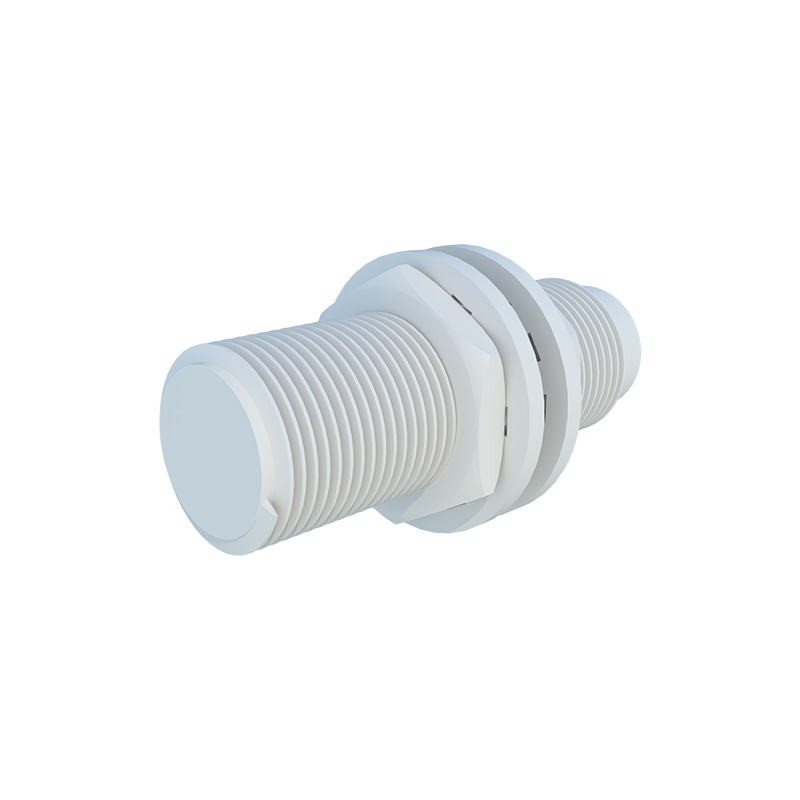
For pneumatic cylinders, magnetic proximity sensors are predominantly used. These cylinders often incorporate a permanent magnet embedded in the piston. As the piston moves, the magnet's field triggers a magnetic proximity sensor (like a reed switch or Hall effect sensor) mounted externally on the cylinder's barrel. This setup allows for non-invasive sensing without modifying the cylinder's internal structure or compromising its seal. The sensor sends a signal to the controller—such as a PLC (Programmable Logic Controller)—indicating whether the cylinder has reached a particular position. This feedback enables the PLC to execute the next step in the automation sequence, such as activating another cylinder, starting a timer, or controlling a valve.
Inductive proximity sensors are also employed, especially with non-magnetic metallic pistons or for detecting metallic flags attached to the cylinder rod. However, magnetic sensors remain the standard for integrated cylinder sensing due to their simplicity and effectiveness.
This synergy offers substantial benefits. First, it enhances system precision and repeatability by providing real-time positional data, reducing errors and improving product quality. Second, it boosts safety by confirming that moving components are in expected positions before initiating subsequent actions, preventing collisions or malfunctions. Third, it facilitates predictive maintenance; by monitoring sensor signals, operators can detect irregularities in cylinder movement—like sluggish response or failure to reach a position—indicating potential issues such as air leaks, seal wear, or contamination.
In complex automation setups, multiple proximity sensors might be used with a single cylinder for multi-position feedback, enabling advanced control schemes. For example, in a pick-and-place application, sensors can verify that a cylinder has fully retracted before a robot arm moves, ensuring synchronized operation.
Moreover, the integration is supported by standardized components. Many cylinder manufacturers offer models with built-in sensor slots or grooves compatible with industry-standard proximity sensors, simplifying installation and maintenance. Accessories like sensor brackets and adjustable mounting systems further streamline the integration process.
In summary, proximity sensors and cylinders are not merely related—they are complementary elements in automation architecture. The sensor provides the "eyes" for the system, offering critical feedback on the cylinder's "muscle" movement. This collaboration is essential for achieving the high levels of automation, efficiency, and intelligence demanded by modern Industry 4.0 and smart factory initiatives. Understanding this relationship is key for engineers designing, troubleshooting, or optimizing automated machinery, as it underscores the importance of reliable sensing in mechanical actuation systems.