Proximity sensors are indispensable components in modern automation, robotics, and consumer electronics. Their primary function is to detect the presence or absence of an object within a specific range without physical contact. While much attention is given to sensing range, output types, and housing materials, the electrical current characteristics—both the sensor's own consumption and its output current capability—are critical parameters that directly impact system design, efficiency, and reliability. A deep understanding of proximity sensor current is essential for engineers and technicians to ensure optimal integration and performance.
At its core, the current discussion for proximity sensors revolves around two main aspects: supply current (or operating current) and load current (or output current). The supply current refers to the amount of electrical current the sensor itself draws from the power source to function. This is a measure of the sensor's power consumption. Typically measured in milliamperes (mA), the supply current is a key factor in energy-conscious applications, especially in battery-operated devices like mobile phones, tablets, or portable industrial tools. Lower supply current translates to longer battery life and reduced heat generation. Modern inductive, capacitive, and photoelectric proximity sensors are designed with efficiency in mind, often incorporating low-power circuitry or sleep modes to minimize this draw when not actively sensing.
The load current, on the other hand, pertains to the maximum current the sensor's output circuit can safely switch or control. This is crucial when the sensor is directly connected to a load, such as a relay coil, a small solenoid, a PLC input, or an indicator lamp. Exceeding the specified maximum load current can lead to premature failure of the sensor's output transistor or solid-state switch. For example, a standard 3-wire DC proximity sensor with a transistor output might have a maximum load current rating of 200 mA. It is vital to ensure the connected device's inrush and steady-state current are within this limit, often requiring the use of an intermediate relay for higher-power loads.
The relationship between supply voltage and current is governed by Ohm's Law and the specific design of the sensor's internal electronics. Most proximity sensors operate within a defined voltage range (e.g., 10-30 VDC). Within this range, the supply current often remains relatively constant. However, factors like switching frequency (how often the sensor detects objects per second) can slightly influence the average current draw. A sensor rapidly cycling its output will consume marginally more power than one in a static state.
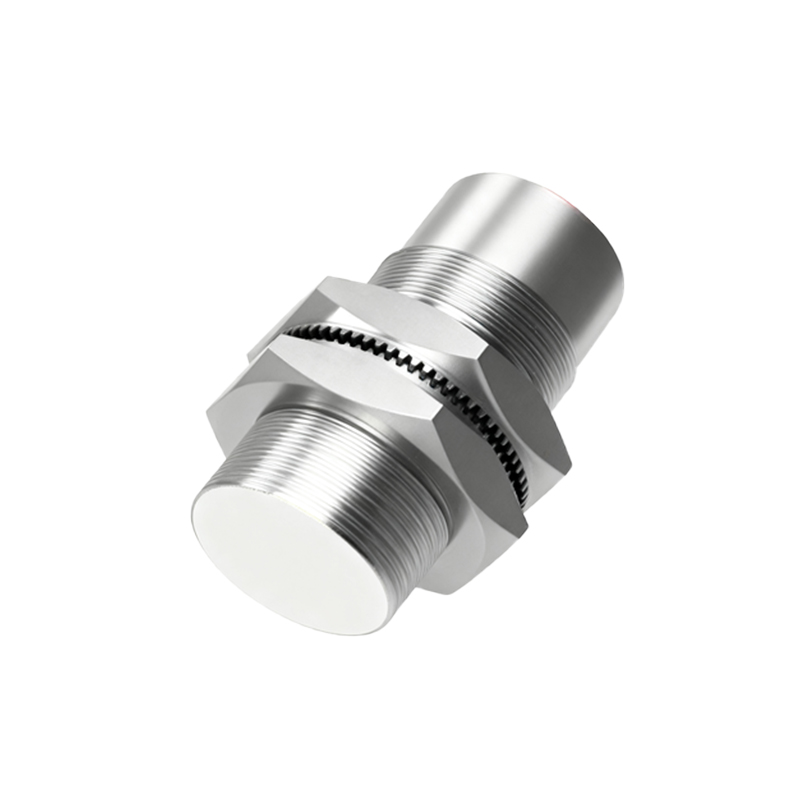
Current consumption also varies significantly between different sensing technologies. An inductive proximity sensor, which generates an electromagnetic field to detect metallic objects, typically has a higher supply current than a photoelectric sensor using an infrared LED. Similarly, sensors with analog current outputs (e.g., 4-20 mA) are designed to loop a precise current proportional to the sensing distance, which is a different concept entirely from a simple switch's current handling. This 4-20 mA signal is highly resistant to electrical noise over long cable runs, making it ideal for industrial process control.
In practical applications, careful consideration of current parameters prevents common system issues. Undersizing the power supply by not accounting for the total supply current of multiple sensors can lead to voltage drops and erratic operation. Conversely, connecting a load that draws too much current to a sensor's output can cause permanent damage. Engineers must always consult the sensor's datasheet for key specifications: nominal operating voltage, maximum supply current (often listed under "no-load" conditions), and maximum load current for the output type (PNP/NPN, NO/NC).
Furthermore, in safety-critical and high-reliability systems, understanding the leakage current of a proximity sensor in its "off" state is paramount. Even when switched off, a small amount of current (microamperes to a few milliamperes) may flow through the output. This leakage current must be lower than the minimum holding current of a connected relay or the trigger threshold of a PLC input to prevent unintended activation—a phenomenon known as "ghost switching."
In conclusion, moving beyond the basic concept of detection, a thorough grasp of both supply and load current characteristics empowers designers to build more robust, efficient, and reliable automated systems. From extending the operational life of portable equipment to ensuring the fail-safe operation of a complex manufacturing line, paying close attention to the nuances of proximity sensor current is not just a technical detail, but a fundamental practice in effective electromechanical design.