In the realm of industrial automation and control systems, proximity switches are indispensable components for non-contact object detection. Among the various configurations available, the three-wire ultra-short proximity switch has garnered significant attention for its compact design and reliable performance in space-constrained applications. This article delves into the technical intricacies, operational principles, and practical considerations surrounding these specialized sensors.
The fundamental architecture of a three-wire ultra-short proximity switch typically comprises a sensing element (often based on inductive, capacitive, or magnetic principles), an integrated oscillator circuit, a signal evaluation unit, and a solid-state switching output. The "three-wire" designation refers to the standard wiring scheme: one wire for the positive supply voltage (V+), one for the negative supply or ground (0V), and one for the output signal. This configuration is prevalent due to its simplicity and compatibility with standard PLC (Programmable Logic Controller) and relay interfaces. The "ultra-short" characteristic denotes a remarkably reduced sensing face-to-body length. Traditional proximity sensors might have a housing that extends significantly behind the sensing face, but ultra-short variants minimize this rear protrusion, sometimes to just a few millimeters. This design is crucial for installations where mounting depth is severely limited, such as within thin panels, compact machinery, robotic end-effectors, or mobile equipment.
From an operational standpoint, these switches function by generating an electromagnetic or electrostatic field at the active sensing surface. When a target object (metallic for inductive types, or any material for capacitive types) enters this field, it causes a detectable change—such as a shift in oscillation amplitude or frequency. The internal circuitry processes this change and triggers the output transistor to switch state, thereby providing a clean, bounce-free signal to the control system. The output can be either NPN (sinking) or PNP (sourcing), a critical selection parameter that must match the input circuit of the receiving device.
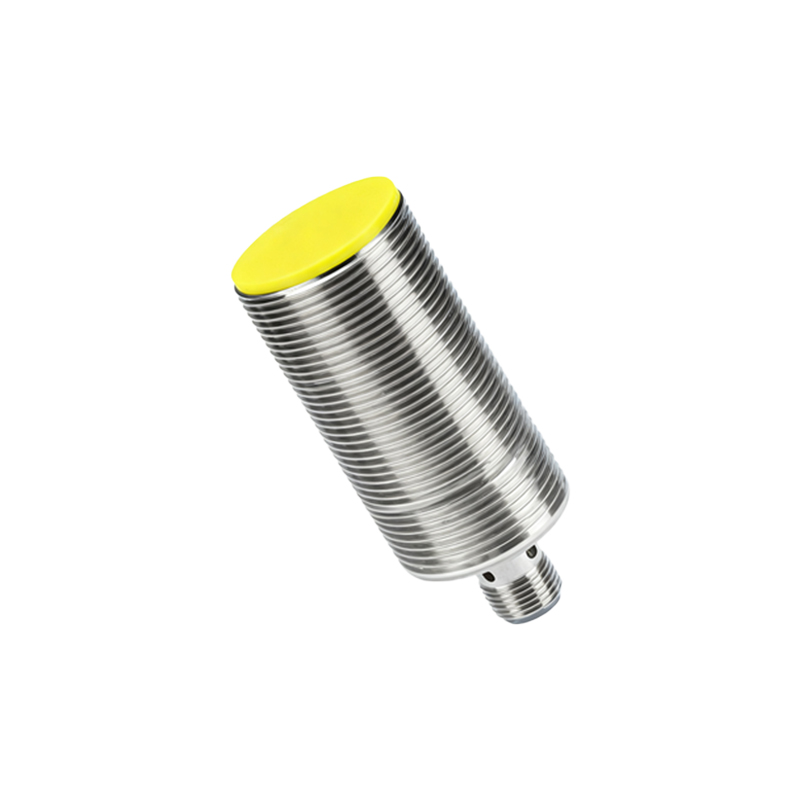
The advantages of employing ultra-short three-wire proximity switches are manifold. Their primary benefit is spatial efficiency, enabling installation in locations where conventional sensors would simply not fit. This can lead to more elegant machine designs and the ability to add sensing points in retrofitted equipment. Furthermore, the three-wire system offers inherent noise immunity compared to two-wire versions, as the separate supply and output lines reduce the chance of signal interference. The solid-state output ensures fast response times, often in the microsecond range, and a long operational life due to the absence of mechanical contacts subject to wear.
However, selecting and applying these sensors requires careful attention to several parameters. First, the sensing range is inherently limited by the compact form factor; it is typically shorter than that of a standard-sized sensor of the same technology. Engineers must verify that the required detection distance can be achieved. Second, mounting considerations are paramount. Many ultra-short models are designed for flush mounting, but non-flush mounting can sometimes offer a slightly increased range. The surrounding material (metal or non-metal) can also influence the sensing field, especially for inductive types. Third, environmental factors like temperature extremes, chemical exposure, and mechanical vibration must be accounted for, ensuring the chosen sensor's housing material and ingress protection (IP) rating are suitable for the application.
In practice, these sensors are widely deployed across industries. In automotive manufacturing, they are used for precise position verification of components on high-speed assembly lines. In packaging machinery, they detect the presence of products on conveyors with minimal clearance. In semiconductor fabrication, their compact size allows for integration within delicate wafer handling robots. The choice between inductive, capacitive, and magnetic versions depends on the target material and the specific environmental conditions.
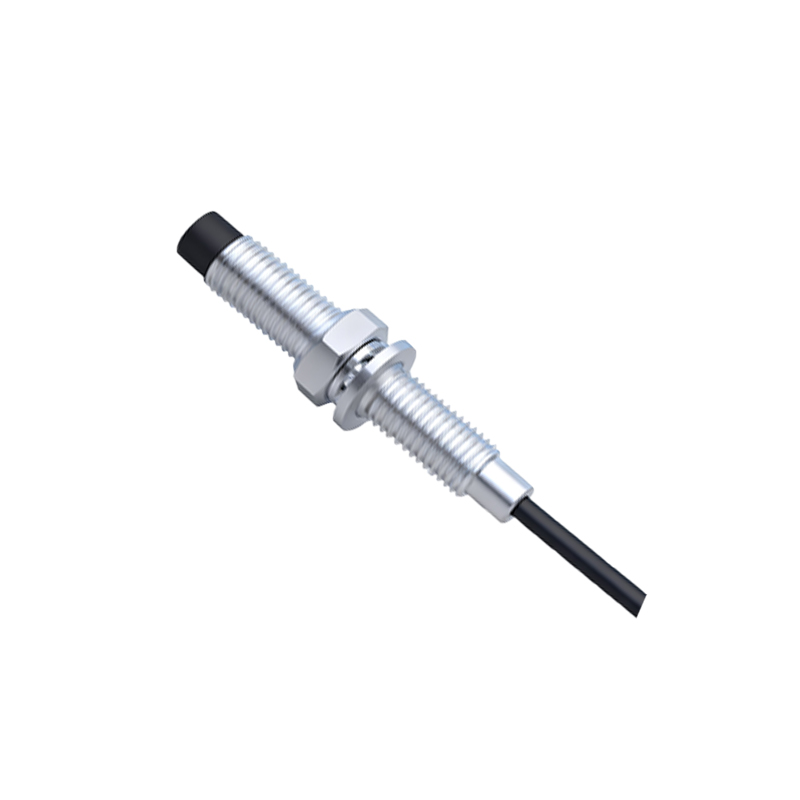
When integrating an ultra-short three-wire proximity switch, proper wiring is essential. Incorrect polarity can damage the sensor. It is also good practice to use shielded cables in electrically noisy environments and to install suppression diodes or modules when driving inductive loads like relays or solenoids to protect the sensor's output transistor from voltage spikes. Regular maintenance, though minimal, should include periodic checks for physical damage, accumulation of debris on the sensing face, and the stability of the output signal.
In conclusion, the three-wire ultra-short proximity switch represents a sophisticated solution for modern automation challenges where precision and space savings are critical. By understanding their design principles, key selection criteria, and application best practices, engineers and technicians can effectively leverage these devices to enhance system reliability, optimize machine layout, and enable new functionalities in even the most confined operational spaces. As technology advances, we can anticipate further miniaturization and enhanced performance features, solidifying their role as a cornerstone of efficient industrial sensing.