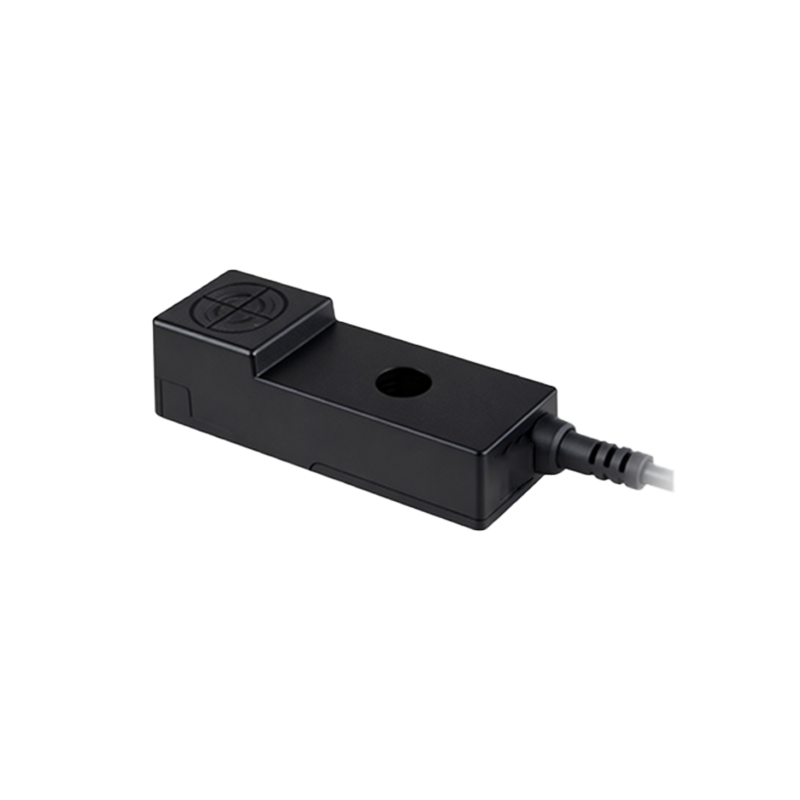
In the intricate world of industrial automation and motion control, precision and repeatability are paramount. Among the myriad of components that ensure these qualities, the origin proximity switch sensor stands as a fundamental and often unsung hero. This device plays a critical role in establishing a reliable reference point for automated systems, directly impacting their accuracy, safety, and overall efficiency.
An origin proximity switch sensor, often simply called a "home" or "reference" sensor, is a non-contact sensing device designed to detect the presence of a specific machine component—typically a moving part like a slide, carriage, or actuator—when it reaches a predefined "origin" or "zero" position. Unlike mechanical limit switches that require physical contact, proximity switches operate on principles such as electromagnetic induction, capacitance, or magnetism, offering greater longevity, speed, and reliability. The core function is to provide an absolute positional reference. Upon system startup or after a power loss, a machine's controller does not inherently know the exact position of its moving axes. The controller initiates a "homing" or "referencing" sequence, where the driven axis moves until the target triggers the origin sensor. This event signals the controller to record this position as the definitive zero point. All subsequent movements and coordinates are calculated relative to this established origin, ensuring that every operation starts from a known, consistent location.
The importance of this function cannot be overstated. First and foremost, it guarantees repeatable accuracy. In applications like CNC machining, robotic assembly, or precision packaging, a deviation of even a fraction of a millimeter from the intended start point can lead to catastrophic errors, scrapped parts, or compromised product quality. The origin sensor eliminates this drift by resetting the coordinate system to a fixed physical datum every cycle. Secondly, it is crucial for safety and error recovery. By defining a safe "home" position, often located away from operational zones, it provides a secure parking point for machinery during pauses, emergencies, or maintenance. Following an unexpected stoppage or fault, the homing routine using the origin sensor allows the system to re-initialize safely without risking collisions or out-of-bounds movements.
Several types of proximity switches are employed as origin sensors. Inductive sensors are common for detecting metal targets, using a high-frequency electromagnetic field. Magnetic sensors, including reed switches or Hall-effect sensors, are ideal for detecting permanent magnets embedded in moving parts, offering excellent resistance to contaminants like oil or dust. The choice depends on the operating environment, required sensing distance, target material, and required switching frequency. Modern origin sensors often integrate advanced features. Some provide a precise "window" or defined pulse within their sensing range, offering a more exact trigger point than a simple on/off signal. Others feature robust housing with high IP ratings for use in harsh conditions involving coolants, vibrations, or temperature extremes.
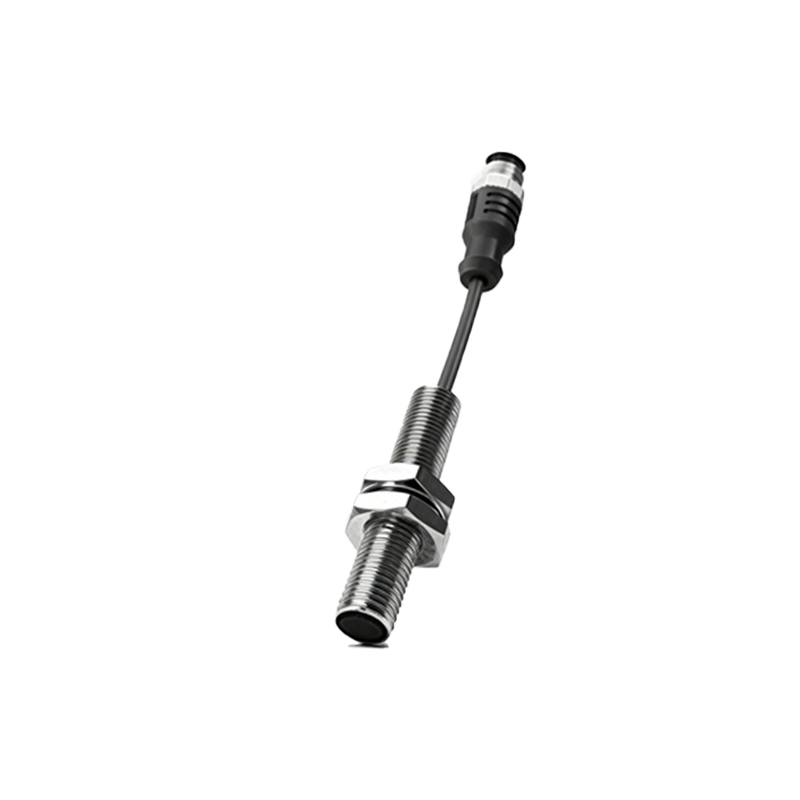
Integration with the broader control system is seamless. The sensor's output—typically a digital PNP or NPN signal—is wired directly to the programmable logic controller (PLC), motion controller, or CNC unit. The controller's software is then configured to execute the homing routine upon command. A well-designed system often employs a multi-sensor approach: the origin sensor provides the primary reference, while other limit switches define the physical travel boundaries, creating a layered safety and control network.
In practice, the reliability of the origin sensor directly influences machine uptime. A failed or misaligned sensor can prevent a machine from completing its homing sequence, rendering the entire system inoperable. Therefore, proper selection, installation, and maintenance are critical. Sensors must be mounted securely to prevent vibration-induced misalignment, and their sensing face must be correctly positioned relative to the target's path. Regular checks should be part of preventive maintenance schedules to ensure consistent operation.
From high-speed pick-and-place robots to massive gantry systems, the origin proximity switch sensor is the cornerstone of deterministic machine behavior. It transforms a system of relative movements into one governed by absolute spatial awareness. By providing that critical "you are here" marker on the machine's internal map, it enables the complex, coordinated, and precise dances of modern automation. Its role, though specific, is indispensable, forming the stable foundation upon which speed, complexity, and intelligence are built in today's industrial landscape.