In modern steel manufacturing, the quality and dimensional accuracy of steel billets are paramount. Traditional inspection methods often fall short in terms of speed, precision, and non-contact capability. This is where laser detection sensors have emerged as a transformative technology, offering unparalleled advantages for real-time monitoring and quality control in demanding industrial environments.
Laser detection sensors for steel billets operate primarily on the principle of laser triangulation or time-of-flight measurement. In a typical setup, a laser diode projects a focused beam of light onto the surface of a moving or stationary billet. A high-resolution CMOS or CCD sensor, positioned at a known angle, captures the reflection of this laser point or line. By calculating the displacement of the laser spot on the sensor array, the system can determine the exact distance to the billet surface with micron-level accuracy. For larger-scale dimensional checks, such as length or width, time-of-flight sensors measure the round-trip time of a laser pulse to calculate distance. These sensors are engineered to withstand extreme conditions, including high ambient temperatures, vibration, dust, and scale—common challenges in steel mills.

The applications of these sensors are diverse and critical to operational efficiency. One primary use is in dimensional gauging. As billets exit continuous casting machines or undergo rolling, laser sensors perform non-contact measurements of width, height, length, and cross-sectional area. This real-time data is fed directly into process control systems, allowing for immediate adjustments to rolling stands or cut-off machinery, thereby minimizing material waste and ensuring compliance with tight dimensional tolerances. Another vital application is surface defect detection. Advanced laser profilometry systems scan the billet surface with a laser line. Any deviations—such as cracks, seams, pits, or roll marks—create a distinct profile distortion. Sophisticated software algorithms analyze this 3D profile data to identify and classify defects, often marking their location for subsequent grinding or rejection. This proactive detection prevents defective products from progressing downstream, saving significant costs.
Furthermore, laser sensors play a crucial role in logistics and automation within the mill. They are used for billet counting, presence detection in furnaces or on transfer tables, and precise positioning for robotic handling systems. This enhances material tracking, improves inventory management, and reduces manual intervention, leading to a safer and more streamlined workflow.
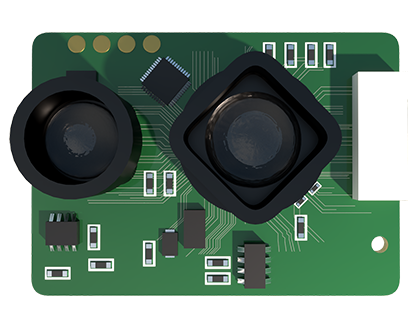
The benefits of integrating laser detection sensors are substantial. The most significant is the dramatic improvement in measurement precision and repeatability, far surpassing manual calipers or mechanical gauges. This directly translates to higher product quality and consistency. Secondly, the non-contact nature eliminates wear and tear on the sensor and prevents damage to the hot billet surface. It also enables measurements at production line speeds, facilitating 100% inspection without creating a bottleneck. Thirdly, the wealth of real-time data generated supports predictive maintenance and data-driven process optimization, contributing to overall equipment effectiveness (OEE).
When selecting a laser sensor for steel billet applications, several factors must be considered. The measurement range and stand-off distance must suit the installation environment. The required resolution and accuracy should match the tolerance specifications. Robustness is non-negotiable; sensors must have high IP ratings for dust/water ingress protection and often require integrated air purge or cooling systems to function in hot zones. The choice between a point sensor for single-point measurements and a line scanner for profile inspection depends on the specific task. Finally, the compatibility of the sensor's output with existing mill control networks (e.g., Profinet, EtherNet/IP) is essential for seamless integration.
In conclusion, laser detection sensors represent a cornerstone of Industry 4.0 in steel production. They provide the critical eyes for automated, intelligent manufacturing processes. By delivering exact, reliable, and instantaneous data on billet dimensions and surface conditions, they empower manufacturers to achieve new levels of quality control, operational efficiency, and cost reduction. As sensor technology continues to advance with faster processors and smarter algorithms, their role in ensuring the competitiveness and sustainability of the steel industry will only become more pronounced.