In the realm of industrial automation, the reliability and precision of sensing components are paramount. CARLO GAVAZAZZI, a globally recognized leader in control and automation components, offers an extensive portfolio of proximity sensors renowned for their durability, accuracy, and versatility. This guide delves into the key model series, their technical specifications, and best-practice application scenarios to aid engineers and system integrators in making informed selection decisions.
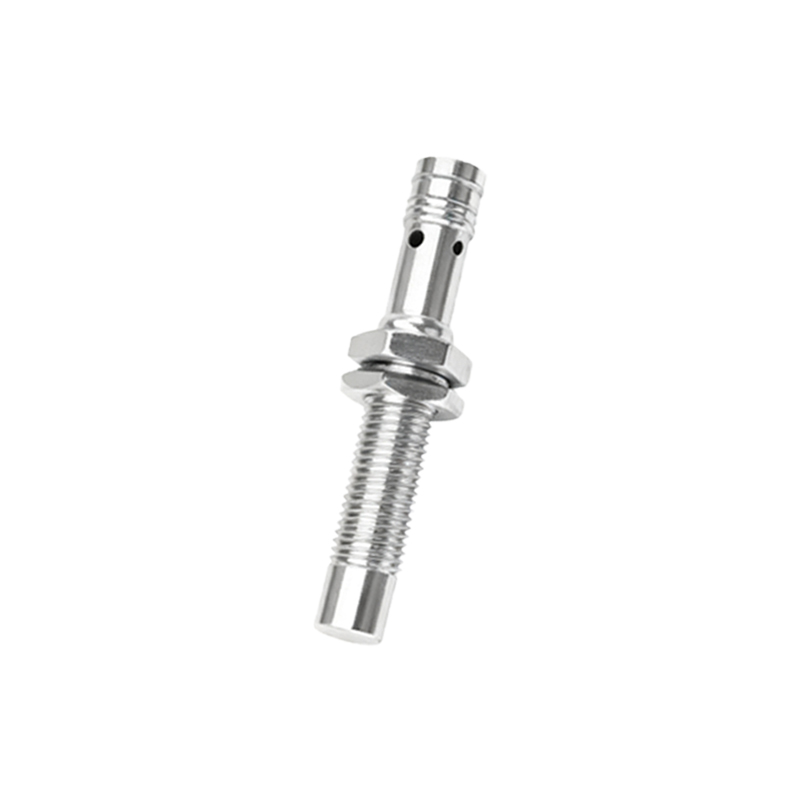
CARLO GAVAZZI proximity sensors are primarily categorized by their sensing technology and housing design. The most prominent series include the inductive, capacitive, and ultrasonic variants. Inductive sensors, such as the popular IM series, are designed for the non-contact detection of metallic objects. These models are celebrated for their high switching frequency and exceptional resistance to environmental contaminants like dust, oil, and coolant. Typical models within this line offer sensing ranges from 1.5mm to 15mm, with housing materials like nickel-plated brass or stainless steel (e.g., V4A/AISI 316L) for demanding applications in food processing or chemical industries. Key electrical characteristics often include PNP/NPN output configurations, DC 10-30V or 20-250V AC/DC supply voltages, and short-circuit and reverse polarity protection.
For non-metallic object detection—such as wood, glass, liquids, or granular materials—the CA series capacitive proximity sensors are the optimal choice. Their operating principle relies on detecting changes in the dielectric constant. These sensors are indispensable in level control applications for tanks, silos, or in packaging lines handling plastic or cardboard. Engineers must pay close attention to the dielectric constant of the target material and the potential influence of the container wall when selecting and installing these units. Many CA models feature adjustable sensitivity potentiometers, allowing fine-tuning directly on the installation site to avoid false triggers.
In applications requiring precise distance measurement or detection of objects regardless of material composition, the US series ultrasonic sensors provide a robust solution. These sensors emit high-frequency sound waves and measure the time of flight of the reflected echo. They are ideal for challenging environments with airborne particulates, steam, or where optical sensors would fail. Common applications include transparent bottle detection on conveyor belts, loop control in web processing, and parking assistance systems in automated guided vehicles (AGVs).
Beyond the core technology, CARLO GAVAZZI models are distinguished by their mechanical designs. Cylindrical threaded barrels (e.g., M8, M12, M18, M30) are standard for easy mounting, while rectangular or block-style housings offer alternative form factors for space-constrained installations. The protection rating is a critical specification; most industrial-grade models boast an IP67 or IP68 rating, ensuring reliable operation despite washdowns, temporary immersion, or exposure to harsh conditions.
When integrating a CARLO GAVAZZI proximity sensor, several application engineering principles must be observed. First, ensure the correct sensing distance is selected, considering the manufacturer's specified "rated operating distance" (Sn) and accounting for real-world factors like temperature drift and supply voltage tolerance. Second, in metallic environments, be mindful of the "mounting flush" or "non-flush" requirements to prevent shielding effects that can reduce the effective sensing range. Third, always adhere to the specified electrical load and connection diagrams to prevent damage to the sensor or the controller (PLC). Utilizing the correct cable gland and ensuring proper cable strain relief are often overlooked but vital for long-term reliability.
The evolution of these sensors continues with the integration of advanced diagnostics. Modern IO-Link compatible models from CARLO GAVAZZI facilitate digital parameter setting, real-time process data monitoring, and predictive maintenance alerts, seamlessly integrating into Industry 4.0 architectures. This digital layer adds tremendous value by reducing downtime and simplifying device replacement and configuration.
In conclusion, the selection of a CARLO GAVAZZI proximity sensor is a systematic process that balances the target material, environmental conditions, required sensing distance, electrical interface, and mechanical constraints. By leveraging the technical depth and proven reliability of these models, automation engineers can build more resilient, efficient, and intelligent systems. Always consult the latest official datasheets and application notes for precise specifications and installation guidelines before finalizing any design.