In the vast and intricate world of industrial automation and electronic control systems, proximity sensors stand as fundamental components, enabling machines to "sense" the presence or absence of objects without any physical contact. Their reliability, speed, and non-contact nature make them indispensable in applications ranging from assembly lines and robotics to consumer electronics and automotive systems. But what exactly is a proximity sensor, and how does it work? This article delves into the core principles behind these ubiquitous devices.
At its essence, a proximity sensor is a device that detects the presence of a nearby object, typically within a specified range, and converts this detection into an electrical signal. The key characteristic is its ability to perform this task without making physical contact with the target object. This non-contact operation eliminates mechanical wear and tear, allows for high-speed detection, and enables use in harsh environments where contact is impractical.
The working principle of a proximity sensor is not monolithic; it varies significantly depending on the underlying technology. The most common types include Inductive, Capacitive, Ultrasonic, and Photoelectric sensors. Each type operates on a distinct physical principle, making it suitable for different materials and applications.
1. Inductive Proximity Sensors
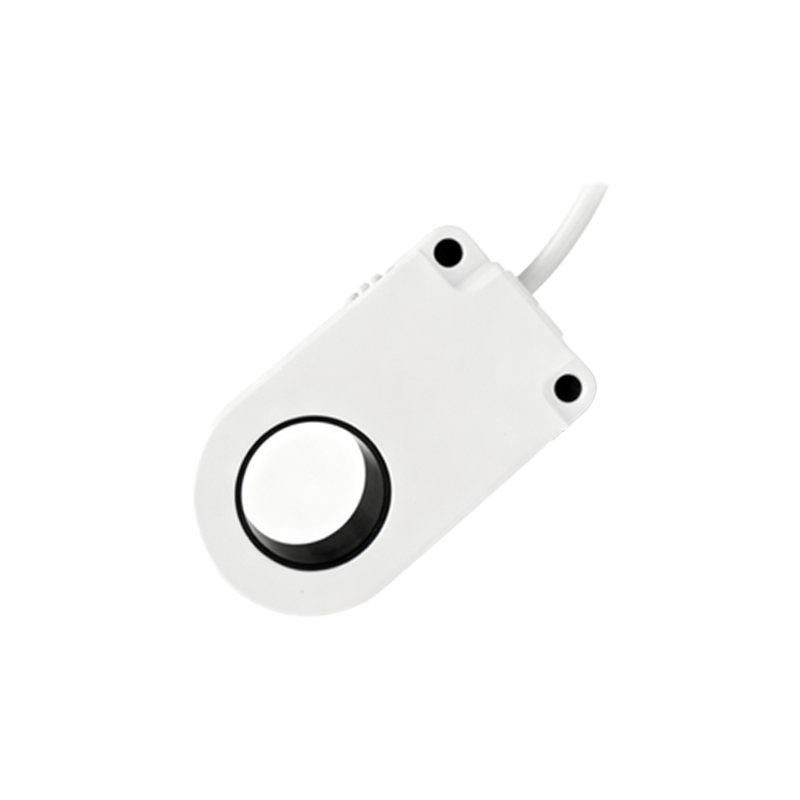
Inductive sensors are the workhorses for detecting metallic objects, primarily ferrous metals like steel and iron. Their operation is based on the principle of electromagnetic induction. The sensor contains a coil wound around a ferrite core, which forms part of an oscillator circuit. When an alternating current passes through this coil, it generates an oscillating electromagnetic field at the sensor's active face.
When a conductive metal object enters this alternating magnetic field, eddy currents are induced on the surface of the object. These eddy currents draw energy from the sensor's oscillating field, causing a change in the oscillation amplitude. An evaluation circuit within the sensor monitors this amplitude. Once the amplitude drop reaches a predetermined threshold (indicating the object is within the sensing range), the circuit triggers a switch, changing the sensor's output state (e.g., from OFF to ON). The sensor does not detect non-metallic materials, as they do not generate significant eddy currents.
2. Capacitive Proximity Sensors
Capacitive sensors have a broader detection capability. They can detect both metallic and non-metallic objects, including liquids, powders, plastics, and wood. Their operation is based on the principle of capacitance change. The sensor's active face acts as one plate of a capacitor, with the target object acting as the other plate, and the air gap between them as the dielectric.
The sensor generates an electrostatic field from its active face. When any material with a dielectric constant different from air enters this field, it alters the capacitance of the system. An internal circuit is tuned to oscillate at a specific frequency based on this capacitance. The presence of the target object increases the capacitance, which in turn changes the oscillation characteristics. This change is detected by the evaluation circuitry, which then switches the output state. The sensitivity can often be adjusted to ignore certain materials or to detect materials through thin non-metallic barriers.
3. Ultrasonic Proximity Sensors
These sensors use sound waves beyond the human hearing range (typically >20 kHz). They operate on the principle of sound wave reflection (echolocation). The sensor emits short bursts of ultrasonic pulses from a piezoelectric transducer. These pulses travel through the air and reflect off a target object. The sensor then listens for the returning echo with the same transducer or a separate receiver.
A timing circuit measures the time interval between the emitted pulse and the received echo. Since the speed of sound in air is known, the distance to the object can be calculated precisely (Distance = (Speed of Sound × Time)/2). Ultrasonic sensors are excellent for detecting objects of virtually any material, shape, or color, and are effective over longer ranges than inductive or capacitive types. They are, however, sensitive to environmental factors like temperature, humidity, and air turbulence, which can affect the speed of sound.
4. Photoelectric Sensors
While often categorized separately, photoelectric sensors are a major class of non-contact proximity devices. They operate by emitting a beam of light (visible, infrared, or laser) and detecting changes in the received light. In the context of proximity (diffuse) mode, the sensor emits light, and the target object reflects a portion of this light back to the sensor's receiver. The sensor detects the presence of the object based on the intensity of the reflected light. They are highly versatile and can detect small objects over moderate distances but can be affected by the object's color, reflectivity, and ambient light conditions.
In conclusion, the term "proximity sensor" encompasses a family of technologies united by their non-contact detection capability. The choice between inductive, capacitive, ultrasonic, or photoelectric types depends critically on the application requirements: the material of the