Proximity sensors are a cornerstone technology in modern industrial automation and electrical engineering. Fundamentally, a proximity sensor is a non-contact device that detects the presence or absence of an object within a specified sensing range without any physical contact. These sensors operate by emitting an electromagnetic field, beam, or ultrasonic wave and then detecting changes in the field or return signal caused by the target object. The core principle is based on the interaction between the sensor's emitted energy and the target material.
The primary function of a proximity sensor is to convert information about the presence or absence of an object into an electrical signal. This signal is typically a simple ON/OFF switch, making these sensors ideal for applications like counting, positioning, inspection, and safety interlocking. Their non-contact nature is their most significant advantage, leading to virtually no wear and tear, high reliability, long operational life, and the ability to detect objects that are fragile, hot, or coated with substances.
There are several main types of proximity sensors, each suited to different materials and applications. Inductive proximity sensors are the most common in industrial settings. They generate an oscillating electromagnetic field and detect the eddy current losses induced in a conductive metal target. Consequently, they are used exclusively for detecting metallic objects, primarily ferrous metals like steel and iron, though special versions can detect non-ferrous metals. Their sensing range is relatively short, typically from a few millimeters to about 60 millimeters. Common applications include detecting the position of a metal part on a conveyor, monitoring machine tool positions, and as limit switches in automated machinery.
In contrast, capacitive proximity sensors can detect both metallic and non-metallic materials, including liquids, powders, plastics, and wood. They function by generating an electrostatic field and sensing the change in capacitance when any material with a dielectric constant different from air enters the field. This makes them versatile for tasks like liquid level detection in non-metallic tanks, detecting filled vs. empty bottles on a line, or sensing the presence of granular materials. Their sensing range is similar to inductive types but can be influenced by environmental factors like humidity.

For longer-range detection, photoelectric sensors use a beam of light (visible, infrared, or laser). They consist of a light emitter and a receiver. When an object interrupts or reflects this light beam, the receiver detects the change and triggers an output. These are excellent for detecting objects at distances from a few centimeters to several meters and can sense virtually any material, provided it is not completely transparent to the specific wavelength used. They are widely used in packaging, material handling, and safety light curtains.
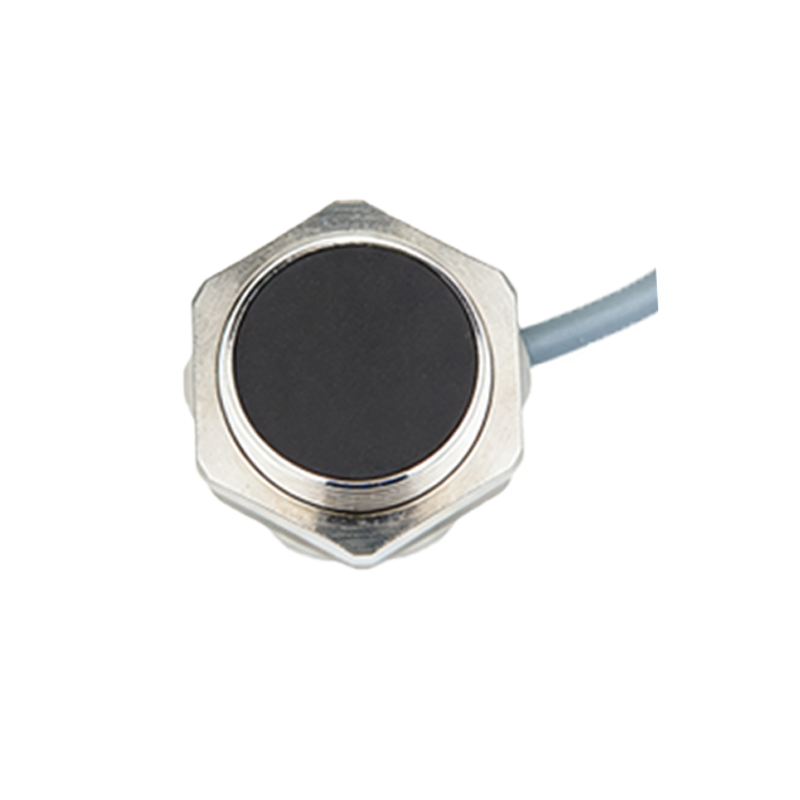
Ultrasonic proximity sensors operate on a principle similar to sonar. They emit high-frequency sound waves and measure the time it takes for the echo to return. This allows them to detect objects of any material, color, or transparency, and they are particularly effective for distance measurement and level sensing of bulk materials or liquids, even in dusty or steamy environments where photoelectric sensors might fail.
Key selection criteria for an electrical engineer include the target material, required sensing distance, environmental conditions (temperature, dust, moisture), output type (PNP/NPN, analog, IO-Link), switching frequency, and mounting requirements. Proper installation is critical; factors like flush (shielded) vs. non-flush (unshielded) mounting for inductive sensors, or avoiding mutual interference when mounting multiple sensors side-by-side, must be considered.
In summary, proximity sensors are indispensable components in automated systems. From the inductive sensor ensuring a robotic gripper has picked up a metal component, to the capacitive sensor confirming a plastic bottle is filled, to the photoelectric sensor guarding a hazardous area, they provide the essential "eyes" for machines. Understanding their operating principles, types, and application nuances is crucial for designing efficient, reliable, and safe electrical control systems in any industry embracing automation.