In the realm of automation and smart technology, proximity sensors are indispensable components that enable machines to "sense" the presence or absence of nearby objects without any physical contact. Understanding the core principle behind these devices is key to leveraging their capabilities across countless industries. At its heart, a proximity sensor operates by emitting an electromagnetic field, beam of electromagnetic radiation, or ultrasonic sound wave, and then looking for changes in the field or return signal. The object being detected, often termed the target, interacts with this emitted signal, and this interaction is converted by the sensor into an electrical signal that triggers a specific output.
The fundamental working principle varies based on the underlying technology, leading to several main types. Inductive proximity sensors are among the most common. They generate an oscillating electromagnetic field from a coil wound around a ferrite core at the sensing face. When a metallic target enters this field, eddy currents are induced on the metal's surface. These currents draw energy from the oscillator, causing its amplitude to decrease. This change is detected by the sensor's circuitry, which then switches the output state. These sensors are ideal for detecting metals and are widely used in industrial automation for tasks like counting, positioning, and safety interlocks.
Capacitive proximity sensors, on the other hand, can detect both metallic and non-metallic objects, including liquids, powders, and plastics. They function based on the principle of capacitance. The sensor forms one plate of a capacitor, the target object forms the other plate, and the air gap acts as the dielectric. As a target approaches the sensing face, it alters the dielectric constant and thus the capacitance of the system. An internal oscillator is tuned to trigger only when this capacitance reaches a specific threshold, subsequently changing the output state. This makes them perfect for level detection in tanks or detecting filled packages on a conveyor line.
Photoelectric sensors use light, typically infrared, visible red, or laser. The basic principle involves an emitter that projects a light beam and a receiver that detects it. In the most common "through-beam" configuration, the object is detected when it interrupts the beam traveling from the separate emitter to the receiver. A "retro-reflective" type uses a reflector to bounce the beam back, and detection occurs when the beam is blocked. Finally, a "diffuse" or "proximity-mode" sensor has both emitter and receiver in the same housing; it detects the target by the light reflected directly off the target itself. These sensors offer long detection ranges and are excellent for small object detection.
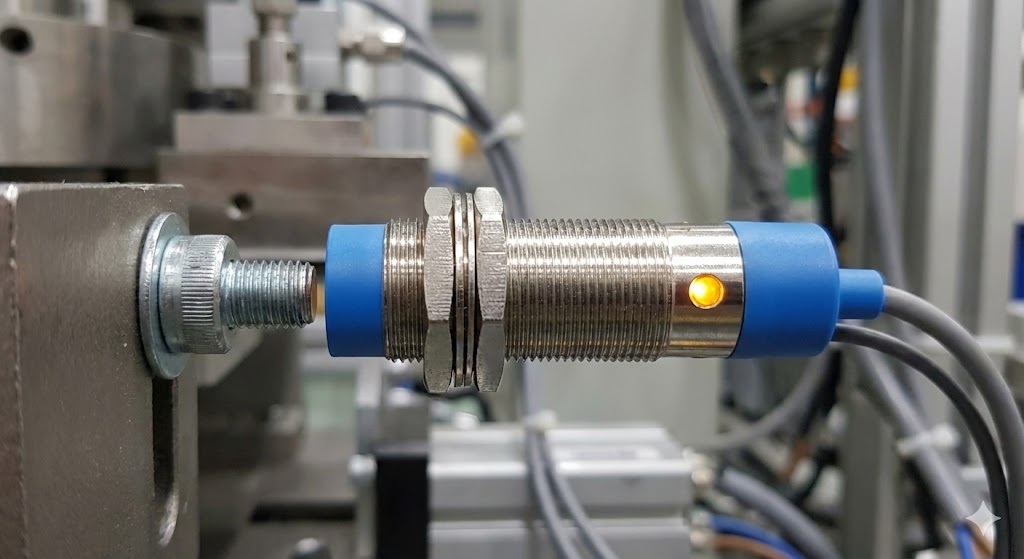
Ultrasonic proximity sensors operate on a principle similar to sonar. They emit high-frequency sound waves (ultrasound) and evaluate the echo received back. The sensor calculates the time interval between sending the signal and receiving the echo to determine the distance to the target. This principle allows them to detect objects of virtually any material, color, or transparency, and they are less affected by environmental factors like dust, smoke, or light interference. They are commonly used for distance measurement, level control, and object detection in challenging environments.
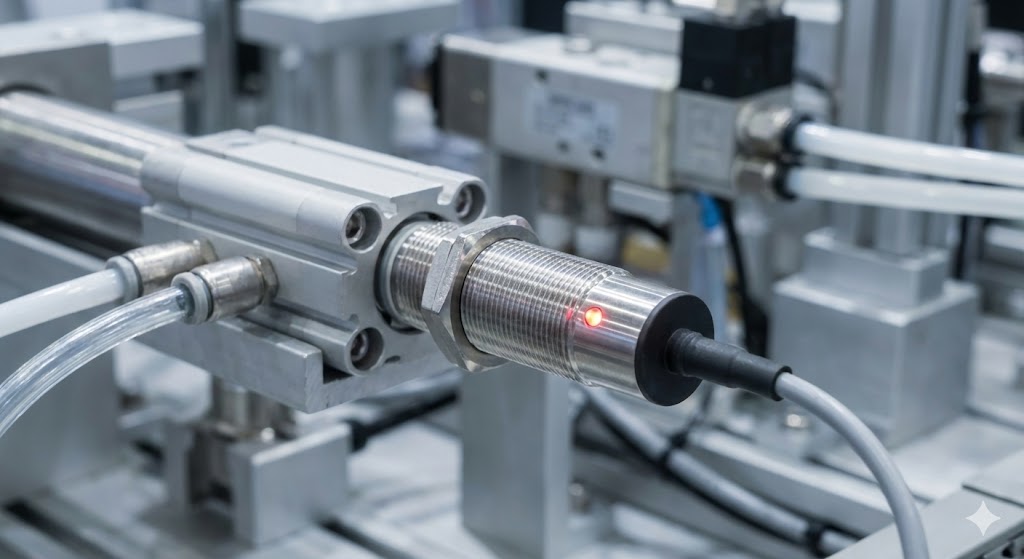
The output from these sensors is typically a simple digital on/off signal, though analog versions exist for distance-proportional output. Key performance parameters include sensing distance, repeatability, response frequency, and environmental robustness (like IP ratings for dust and water resistance).
Applications are vast and critical. In manufacturing, they enable precise robotic assembly, part positioning on CNC machines, and automated packaging. In consumer electronics, they deactivate touchscreens when a phone is held to the ear. In automotive systems, they are the eyes of parking assist and collision avoidance systems. In building automation, they control lighting and doors. The choice of sensor type—inductive, capacitive, photoelectric, or ultrasonic—depends entirely on the target material, required sensing distance, environmental conditions, and the specific application need.
By converting a physical presence into a reliable electrical signal through non-contact means, proximity sensors form a silent, robust, and essential layer of interaction between the physical and digital worlds, driving efficiency, safety, and innovation.