In the world of industrial automation and precision engineering, the ability to detect the presence, absence, or position of an object without physical contact is paramount. Linear proximity sensors, a critical subset of non-contact sensing technology, fulfill this role with remarkable accuracy and reliability. Unlike simple on/off proximity switches, linear sensors provide a continuous, analog output signal that is directly proportional to the distance between the sensor and the target object. This capability makes them indispensable for applications requiring precise measurement, control, and feedback.
The fundamental operating principle of most linear proximity sensors is based on electromagnetic induction, specifically the eddy current effect. The sensor contains an oscillator circuit that generates a high-frequency electromagnetic field at its active face. When a conductive target, typically a metal, enters this field, eddy currents are induced on the target's surface. These currents draw energy from the sensor's oscillator, causing a change in its amplitude. An internal evaluation circuit precisely measures this change and converts it into a linear, analog output signal—commonly 0-10V DC or 4-20mA—that varies consistently with the distance to the target. The sensing range, or standoff, is a key specification, varying from a few millimeters to several tens of millimeters depending on the sensor's size and design.

Several primary types of linear proximity sensors are available, each suited to specific materials and environmental conditions. Inductive sensors, as described, are the most common and are used exclusively for detecting metallic objects. Their performance can vary based on the target metal's properties; for instance, ferrous metals like steel typically provide a longer sensing range than non-ferrous metals like aluminum or copper. For applications involving non-metallic materials—such as glass, plastic, liquid levels, or wood—capacitive linear proximity sensors are employed. These operate by detecting changes in capacitance caused by the target material entering an electrostatic field. Another advanced category is the Linear Variable Differential Transformer (LVDT). While technically a contact sensor, its core principle is magnetic induction, offering exceptionally high precision and resolution for measuring linear displacement in metrology and test equipment.
The selection of a linear proximity sensor for an application involves careful consideration of several technical parameters. The linearity error defines how closely the sensor's output signal follows a straight line relative to the actual distance; a lower percentage indicates higher accuracy. Repeatability refers to the sensor's ability to produce the same output when the target is repeatedly positioned at the same distance. Temperature stability is crucial for environments with thermal fluctuations, as it indicates how much the output drifts with changes in ambient temperature. Furthermore, the target material, size, and shape significantly influence performance. Manufacturers provide correction factors for different metals, and the target should generally be at least as large as the sensor's sensing face for optimal results.
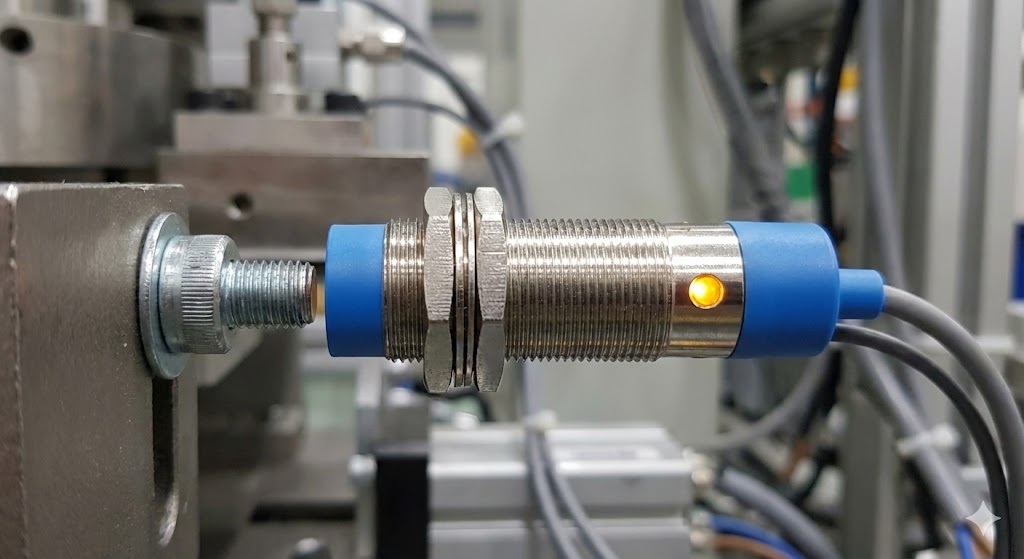
Industrial applications for linear proximity sensors are vast and critical to modern manufacturing. In metalworking and machining, they are used for precise tool wear monitoring, workpiece positioning on CNC machines, and bend angle measurement in press brakes. In automated assembly lines, they verify the precise insertion depth of components or the thickness of applied materials like gaskets or adhesives. The automotive industry relies on them for suspension and ride height measurement, while the semiconductor sector uses them for wafer handling and stage positioning where micron-level accuracy is required. They also play vital roles in vibration monitoring of rotating machinery, controlling roll gaps in paper and steel mills, and managing tension in web processes for films and foils.
When integrating these sensors, proper installation and environmental factors are key to long-term performance. Sensors should be mounted securely to minimize vibration effects. It is essential to ensure that only the intended target material enters the sensing field; nearby metal structures or other sensors can cause electromagnetic interference, necessitating adequate spacing or the use of shielded models. Harsh environments may require sensors with robust housing ratings (e.g., IP67 for dust and water ingress protection) and resistance to coolants, oils, or chemical sprays.
In summary, linear proximity sensors are sophisticated devices that translate physical distance into a precise electrical signal. Their non-contact nature eliminates mechanical wear and allows for high-speed, reliable operation in demanding conditions. By understanding their operating principles, key types, and critical specifications, engineers and technicians can effectively harness their capabilities to enhance quality control, improve process efficiency, and enable advanced automation across a diverse spectrum of industries. Their role as the silent, precise eyes of automated systems continues to grow as the demands for accuracy and repeatability intensify.