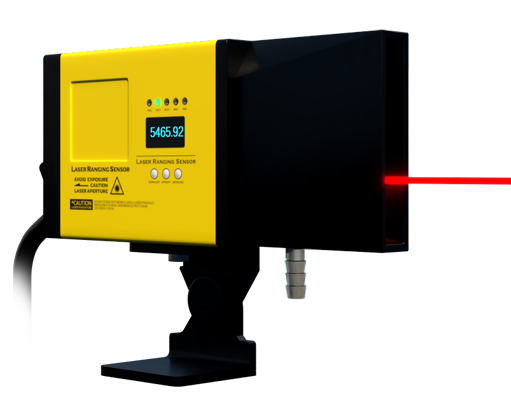
High precision laser cutting has revolutionized the manufacturing of height sensors, enabling unprecedented accuracy and efficiency in industrial applications. Height sensors, critical components in automation, robotics, and quality control systems, require intricate designs and tight tolerances to ensure reliable performance. Laser cutting technology, particularly using fiber and ultrafast lasers, meets these demands by offering micron-level precision, minimal thermal distortion, and the ability to process a wide range of materials, including metals, ceramics, and composites.
The process begins with computer-aided design (CAD) models, which are translated into machine instructions for laser systems. Advanced software allows for real-time adjustments, compensating for material variations and environmental factors. Key techniques include ablative cutting for delicate materials and fusion cutting for metals, each selected based on sensor specifications. For instance, capacitive or inductive height sensors often use thin stainless steel or aluminum components, where laser cutting ensures clean edges and maintains material integrity, crucial for electrical conductivity and mechanical stability.
One significant advantage is non-contact processing, which eliminates tool wear and reduces contamination—a vital factor for sensors used in cleanrooms or medical devices. Additionally, lasers can cut complex geometries, such as fine meshes or micro-apertures, which are common in optical height sensors. This capability supports miniaturization trends, allowing sensors to become smaller without sacrificing functionality.
In automotive manufacturing, height sensors for suspension systems benefit from laser-cut parts that withstand vibration and corrosion. Similarly, in aerospace, sensors monitoring structural deformation require components cut from high-temperature alloys, where laser precision ensures durability under extreme conditions. The technology also facilitates rapid prototyping, accelerating development cycles for next-generation sensors.

However, challenges persist, such as managing heat-affected zones (HAZ) in thermally sensitive materials. Innovations like pulsed lasers and adaptive optics mitigate these issues, enhancing cut quality. Moreover, integrating laser cutting with automated inspection systems, using machine vision, ensures each part meets stringent standards before assembly.
Looking ahead, the convergence of laser cutting with additive manufacturing and IoT-enabled monitoring promises further advancements. Smart factories may employ AI-driven lasers that self-optimize based on sensor feedback, creating a closed-loop production ecosystem. As industries push for higher accuracy and efficiency, laser cutting remains indispensable in height sensor fabrication, driving innovation across sectors from consumer electronics to industrial metrology.

In summary, laser cutting is not merely a tool but a transformative force in height sensor production. Its precision, flexibility, and scalability align with evolving industrial needs, making it a cornerstone of modern manufacturing. By embracing this technology, engineers can develop sensors that enhance system performance, reliability, and sustainability, paving the way for smarter, more responsive automation solutions.