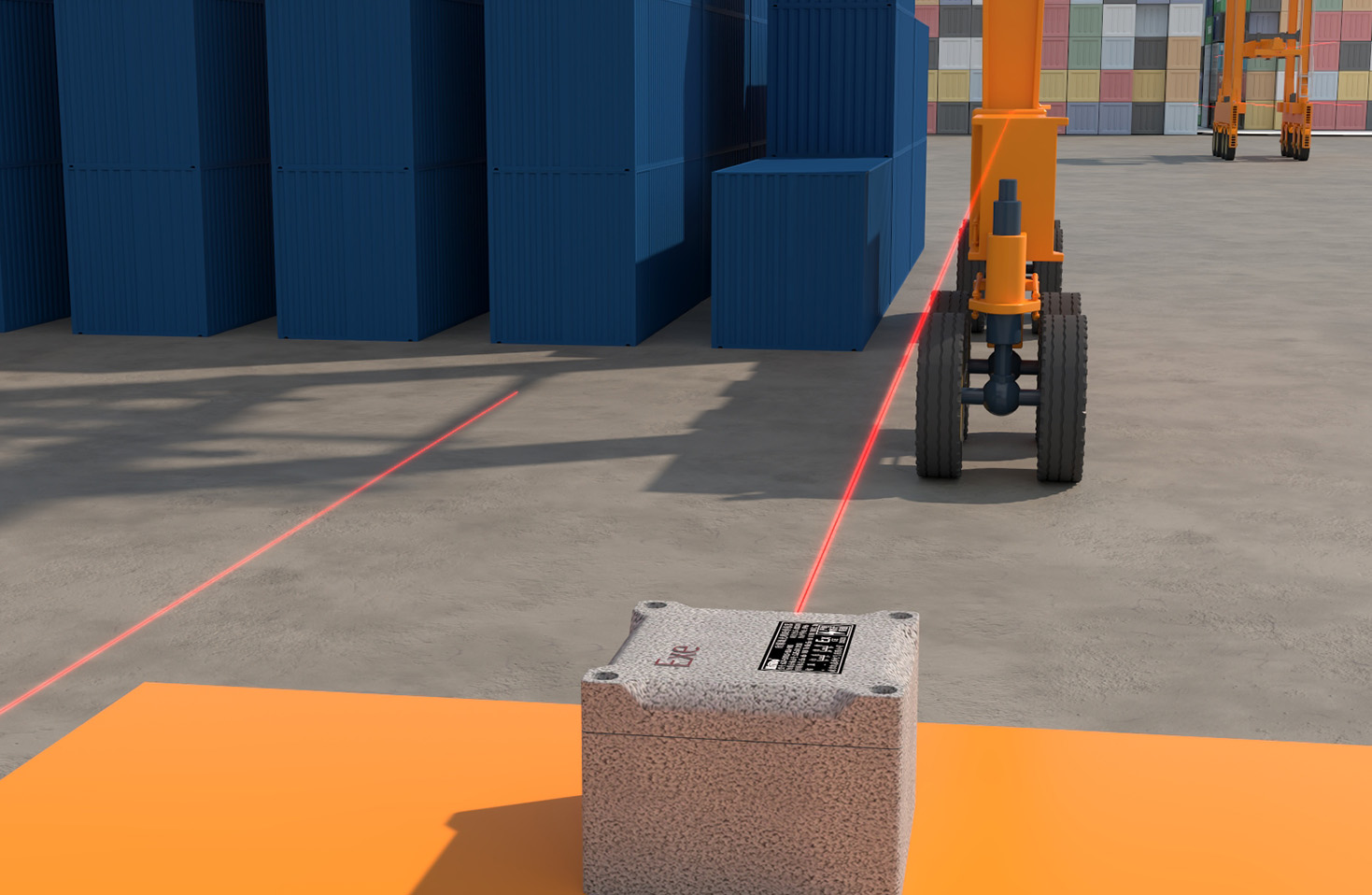
In the realm of industrial automation and quality control, laser thickness sensors have emerged as a pivotal technology, enabling non-contact, high-precision measurement across diverse manufacturing sectors. These sensors operate on the principle of triangulation or time-of-flight, where a laser beam is projected onto the target surface, and the reflected light is captured by a detector to calculate distance variations, thereby determining material thickness with exceptional accuracy. Unlike traditional contact-based methods such as calipers or micrometers, laser sensors eliminate mechanical wear, reduce measurement errors due to operator influence, and allow for real-time monitoring on moving production lines—critical in industries like metal processing, plastics, glass, and semiconductor manufacturing.
The core advantage of laser thickness sensors lies in their ability to deliver micron-level resolution, often achieving tolerances within ±1 µm, even in challenging environments with vibrations, dust, or temperature fluctuations. Advanced models incorporate dual-laser heads or scanning mechanisms to measure multiple points simultaneously, generating comprehensive thickness profiles for rolled metals, extruded polymers, or coated materials. This data is seamlessly integrated into process control systems, facilitating immediate adjustments to production parameters, minimizing material waste, and ensuring consistent product quality. For instance, in steel mills, laser sensors continuously monitor strip thickness during hot rolling, enabling dynamic control of roller gaps to meet stringent ASTM standards. Similarly, in battery manufacturing, they verify the uniformity of electrode coatings, directly impacting energy density and safety.
Despite their robustness, optimal performance requires careful consideration of factors like material reflectivity, surface texture, and environmental interference. Modern sensors address these with adaptive algorithms, automatic calibration, and built-in compensation for ambient light. As Industry 4.0 advances, laser thickness sensors are evolving with IoT connectivity, enabling predictive maintenance and data analytics for smarter factories. Their non-destructive nature also supports sustainable practices by reducing scrap and energy consumption. In summary, laser thickness sensors represent a convergence of optics, electronics, and software, driving efficiency and innovation in precision engineering—a testament to how cutting-edge measurement solutions can transform industrial landscapes.