In the realm of industrial automation, consumer electronics, and robotics, infrared (IR) proximity sensing stands as a cornerstone technology. Its ability to detect the presence, absence, or distance of an object without physical contact is indispensable. At the heart of every reliable IR proximity sensor lies its integrated circuit (IC), the component that dictates performance, efficiency, and application suitability. This article delves into the key specifications, popular model families, and selection criteria for infrared proximity sensor ICs, providing a technical overview for design engineers and procurement specialists.
The fundamental operating principle involves an IR LED emitting infrared light, which is then reflected off a target object. A photodiode or phototransistor receives the reflected signal. The onboard IC processes this signal, typically converting the received IR intensity into a digital output or an analog voltage proportional to distance. Advanced ICs integrate the emitter driver, signal conditioning circuitry, and digital logic into a single package, simplifying design and enhancing noise immunity.
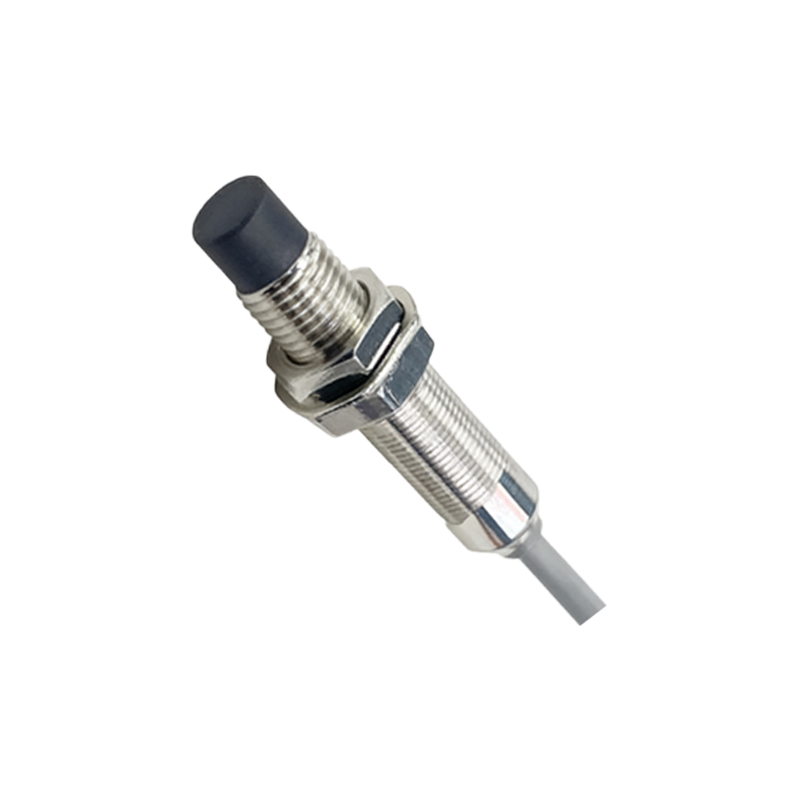
When evaluating IR proximity sensor ICs, several critical parameters must be considered. Sensing Range is paramount, varying from a few centimeters for touchless switches to several meters for industrial applications. Output Type is another key differentiator: digital outputs (I2C, SPI, or simple interrupt-driven) offer easy microcontroller interfacing, while analog outputs provide continuous distance data. Power Consumption is crucial for battery-operated devices, making low-power and sleep-mode features highly desirable. Ambient Light Rejection capability determines the sensor's performance under varying lighting conditions, with sunlight being a significant source of IR interference. Finally, Package Size continues to shrink, enabling integration into ever-smaller end products.
Several leading semiconductor manufacturers offer robust families of IR proximity sensor ICs. Vishay Semiconductors' VCNL series, such as the VCNL4040, is widely recognized for its high integration, combining proximity sensing, ambient light sensing, and a compact footprint. It features excellent ambient light cancellation and offers I2C communication. Another prominent player is STMicroelectronics with its VL53L series of Time-of-Flight (ToF) sensors, like the VL53L0X. While technically a laser-based ToF device, it operates in the IR spectrum and provides highly accurate, absolute distance measurement up to 2 meters, a significant step beyond traditional reflective intensity-based sensing.
For applications demanding very low power, Texas Instruments' OPT3001 (primarily an ambient light sensor often paired with a separate IR LED) and similar specialized proximity chips are common choices. Sharp Microelectronics' GP2Y0A series of analog output distance measuring sensors have been industry staples for years, known for their reliability in specific range brackets, though they often require external components.
Selecting the optimal IC requires a clear understanding of the application's needs. For a smartphone implementing automatic display dimming during a call, a miniaturized, low-power, I2C-based IC like the VCNL4040 is ideal. For a robot requiring precise obstacle avoidance within 1 meter, a ToF sensor like the VL53L0X provides superior accuracy. For a simple, cost-sensitive automatic soap dispenser, a basic analog-output IC or a module built around a dedicated sensor may suffice. Engineers must also consider the optical design—the lensing, aperture, and IR filter—which works in tandem with the IC to define the sensor's field of view and overall performance.
In conclusion, the landscape of infrared proximity sensor ICs is diverse and rapidly evolving. From highly integrated digital sensors to specialized long-range ToF modules, the choice hinges on a careful trade-off between range, accuracy, power, size, and cost. A thorough analysis of the application environment and performance requirements is essential before specifying a particular model. As the demand for smarter, more interactive devices grows, these ICs will continue to advance, offering greater intelligence, lower power, and smaller form factors to the engineering community.