In industrial automation and control systems, sensors are the critical eyes and ears, providing the essential data for process control, safety monitoring, and quality assurance. A common question that arises in plant environments, laboratories, and during equipment demonstrations is the potential impact of using a common handheld laser pointer near these sensitive devices. This article provides a technical analysis of the interaction between laser pointers and various sensor types, outlining the risks, mechanisms of potential damage, and best practices for prevention.
The core of the issue lies in the fundamental operating principle of many sensors, particularly optical ones. Photoelectric sensors, vision cameras, LiDAR units, and even some specialized proximity sensors rely on photodiodes, CCD (Charge-Coupled Device), or CMOS (Complementary Metal-Oxide-Semiconductor) imaging chips to detect light. These semiconductor components are designed to be sensitive to specific wavelengths of light within a certain intensity range. A typical consumer-grade red laser pointer emits light at around 650 nm with a power output usually under 5 milliwatts (mW). A green laser pointer operates near 532 nm and can often be brighter, sometimes ranging from 1 to 5 mW or more for presentation models.
When directed *indirectly* into a sensor's field of view as ambient light, a low-power laser pointer is unlikely to cause immediate harm. However, the risk escalates significantly when the coherent, collimated beam is pointed *directly* into the sensor's aperture or lens. The optics of the sensor are designed to gather and focus incoming light onto the small, sensitive area of the detector. A laser beam, due to its parallel nature, can be focused to an extremely intense point on this detector, creating a power density (measured in watts per square centimeter) thousands of times higher than the sensor is rated to handle in normal operation.
The primary failure modes are thermal and photoelectric. Thermal damage occurs when the concentrated laser energy heats the semiconductor material beyond its melting point, causing permanent physical destruction of the pixel or detector area. This often manifests as a dead pixel or a cluster of them in a camera, or a complete failure in a photoelectric sensor. Photoelectric overload can happen even without immediate melting. The intense light generates a massive surge of charge carriers in the semiconductor, potentially saturating the readout circuitry, causing blooming (where charge spills into adjacent pixels), or leading to latent image persistence. In severe cases, it can degrade the detector's long-term sensitivity or cause irreversible changes in its electrical characteristics.
The vulnerability varies by sensor type:
* Machine Vision Cameras: Highly susceptible. A direct hit can burn pixels onto the sensor, creating permanent bright spots or lines in all subsequent images. Global shutter sensors might be slightly more resilient during very short exposures than rolling shutter models, but the risk remains high.
* Photoelectric Sensors (Through-beam, Retro-reflective, Diffuse): The dedicated receiver element can be damaged, leading to false readings (constant ON or OFF state) or complete failure. Alignment lasers used for setup are low-power and pulsed; a continuous-wave presentation laser is different.
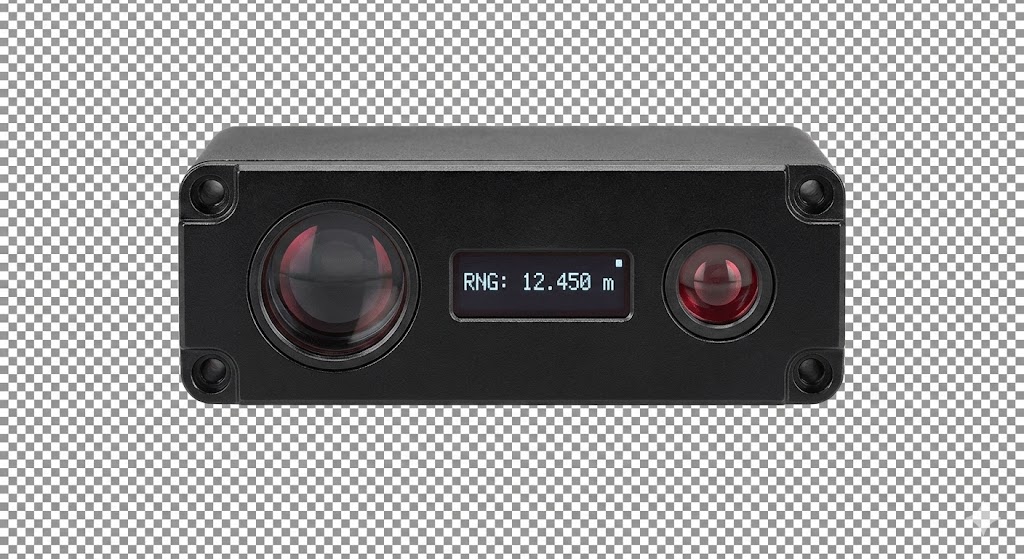
* LiDAR Sensors: These use laser pulses themselves but are calibrated for specific wavelengths and power levels. An external laser at a different wavelength can blind the sensitive receiver, causing temporary or permanent damage.
* Non-Optical Sensors (Inductive, Capacitive, Ultrasonic): Generally immune to laser light, as they operate on different physical principles (magnetic fields, capacitance changes, sound waves).
It is a critical misconception that only high-power industrial lasers are dangerous. The focusing effect of the sensor's own optics is the amplifier. A 5mW laser pointer, harmless to skin, becomes a potent damage tool when focused onto a micron-scale photodiode.
Best Practices for Prevention:
1. Establish Clear Protocols: Enforce strict rules in areas containing sensitive optical equipment. Prohibit the casual use of laser pointers for pointing or demonstration near sensor arrays.
2. Use Alternative Tools: For alignment or pointing purposes during maintenance, use manufacturer-approved alignment tools or low-power, properly regulated guide lights.
3. Implement Physical Barriers: When possible, use protective filters or shrouds around sensor apertures. Some filters can be designed to block specific wavelengths (like common laser lines) while passing the operational light.
4. Training and Labeling: Ensure technicians, operators, and visitors are educated on the risk. Clearly label sensitive sensor locations with warning icons.
5. Power Down During Maintenance: When performing work that requires opening panels or exposing sensor optics, consider powering down the sensor system if feasible, as a powered sensor is most vulnerable.
In conclusion, while not always immediately catastrophic, directing a handheld laser pointer into an industrial sensor poses a real and significant risk of permanent, costly damage. The combination of coherent light and the sensor's optical focusing creates a perfect storm for overloading delicate semiconductor detectors. Adopting a precautionary principle—treating all lasers as potential hazards to optical sensors—is the most reliable engineering practice to ensure system longevity and operational reliability.