In the realm of industrial automation and precision measurement, Z laser sensors have become indispensable tools. Understanding their key parameters is crucial for selecting the right sensor for specific applications, ensuring optimal performance, reliability, and cost-effectiveness. This article delves into the core specifications that define Z laser sensors, providing a technical overview for engineers and procurement specialists.
The term "Z" typically refers to the measurement axis, often indicating distance or displacement along a vertical or depth-oriented plane. Z laser sensors operate primarily on the principle of laser triangulation or time-of-flight (ToF), depending on the required range and accuracy.
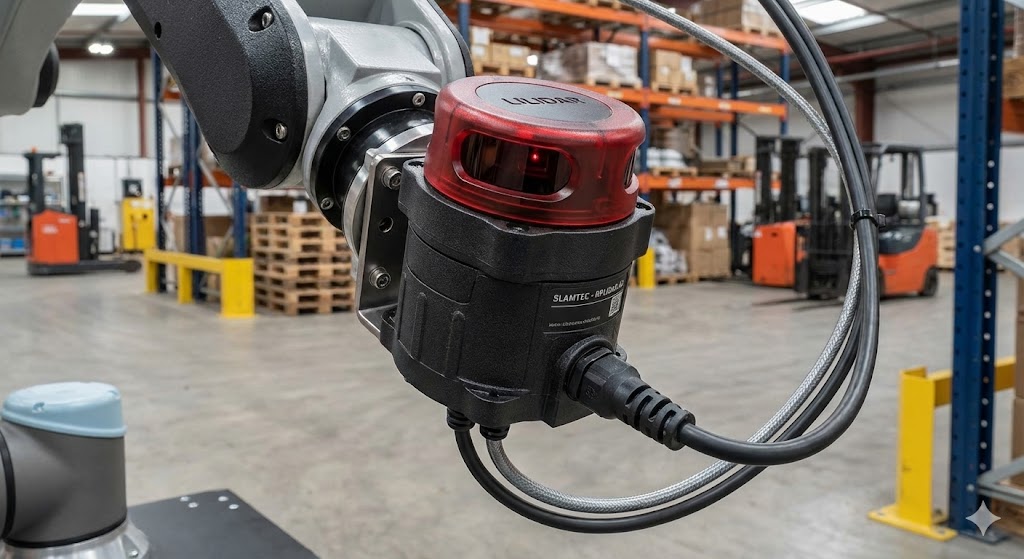
One of the most fundamental parameters is Measurement Range. This defines the minimum and maximum distances from the sensor's reference point within which it can accurately detect an object. For triangulation-based Z sensors, this range is typically limited, offering high precision over short to medium distances (e.g., 10mm to 500mm). ToF-based sensors, conversely, can cover much longer ranges (up to several meters) but often with slightly reduced resolution.
Closely tied to range is Resolution. Resolution specifies the smallest detectable change in distance that the sensor can reliably report. It is usually expressed in micrometers (µm) or millimeters. A sensor with a 1µm resolution can detect changes as minute as one-thousandth of a millimeter, which is vital for applications like wafer inspection, precision assembly, and thickness gauging.
Accuracy and Linearity are distinct yet related specs. Accuracy indicates how close the sensor's reading is to the true value, often given as a percentage of the full-scale reading or a fixed value (e.g., ±0.05% of range or ±10µm). Linearity describes the maximum deviation of the sensor's output from a best-fit straight line across its entire measurement range. High linearity ensures consistent performance regardless of where the target is within the range.
The Spot Size of the laser beam is critical, especially when measuring small features or uneven surfaces. A smaller spot size allows for higher lateral resolution and the ability to measure fine details or steep edges. However, a very small spot can be susceptible to surface finish effects (like speckle) and may require more precise alignment.
Response Time or Sampling Rate determines how quickly the sensor can take and output measurements. This is expressed in Hertz (Hz) or milliseconds. A high sampling rate (e.g., 10 kHz) is essential for dynamic measurements on fast-moving production lines or vibrating targets.
Output Interface defines how the sensor communicates data. Common interfaces include analog (0-10V, 4-20mA), digital (RS-232, RS-485, USB), and industrial fieldbus protocols (EtherCAT, PROFINET, EtherNet/IP). The choice depends on the control system architecture and data processing requirements.
Environmental ratings are non-negotiable for industrial durability. Ingress Protection (IP) Rating (e.g., IP67) indicates resistance to dust and water. Operating Temperature range ensures functionality in harsh conditions, from cold storage to hot factory floors.
Other important considerations include Light Source (typically red or blue laser; blue laser offers better performance on organic materials and shiny surfaces due to its shorter wavelength), Power Supply requirements, and mounting options.
When specifying a Z laser sensor, engineers must balance these parameters against the application's needs. For instance, a high-precision semiconductor application prioritizes resolution, accuracy, and small spot size, potentially sacrificing longer range. A logistics automation system for parcel dimensioning might prioritize long range, fast response, and robust environmental sealing over micron-level resolution.
In conclusion, a thorough understanding of Z laser sensor parameters—measurement range, resolution, accuracy, spot size, response time, and environmental specs—enables informed decision-making. By carefully matching these specifications to the operational demands, industries can enhance quality control, improve efficiency, and drive innovation in automated processes.