In modern industrial automation, laser inductive sensors have emerged as critical components for achieving unparalleled precision, reliability, and efficiency. These sophisticated devices utilize laser beams to detect the presence, position, or displacement of objects without physical contact, making them indispensable in environments where accuracy and speed are paramount. Unlike traditional mechanical or photoelectric sensors, laser inductive sensors combine the principles of laser triangulation and electromagnetic induction, enabling them to operate effectively even in challenging conditions such as dust, vibration, or variable ambient light.
The core mechanism of a laser inductive sensor involves emitting a focused laser beam toward a target. When the beam strikes the surface, it reflects back to a receiver within the sensor. Advanced algorithms then analyze the reflected signal to determine precise measurements, such as distance or thickness, with micron-level accuracy. Simultaneously, the inductive element enhances detection capabilities for metallic objects by generating an electromagnetic field that reacts to conductive materials. This dual-functionality allows for versatile applications across manufacturing, robotics, and quality control systems.
One of the key advantages of laser inductive sensors is their ability to perform non-contact measurements, which minimizes wear and tear while reducing maintenance costs. In automotive assembly lines, for instance, these sensors are deployed to verify component alignment or monitor weld quality in real-time, ensuring compliance with stringent safety standards. Similarly, in the electronics industry, they facilitate the precise placement of microchips on circuit boards, where even minor deviations can lead to product failures. The high response speed—often in the millisecond range—enables seamless integration into high-throughput production processes, boosting overall productivity.
Moreover, laser inductive sensors are designed with robust housing materials, such as stainless steel or IP-rated enclosures, to withstand harsh industrial environments. They can operate in temperature extremes, resist chemical exposure, and maintain stability under mechanical stress. Modern variants also feature programmable settings, allowing engineers to customize sensitivity, output signals (e.g., analog, digital, or IO-Link), and detection ranges via user-friendly interfaces. This adaptability makes them suitable for diverse tasks, from monitoring liquid levels in pharmaceutical tanks to guiding autonomous vehicles in logistics warehouses.
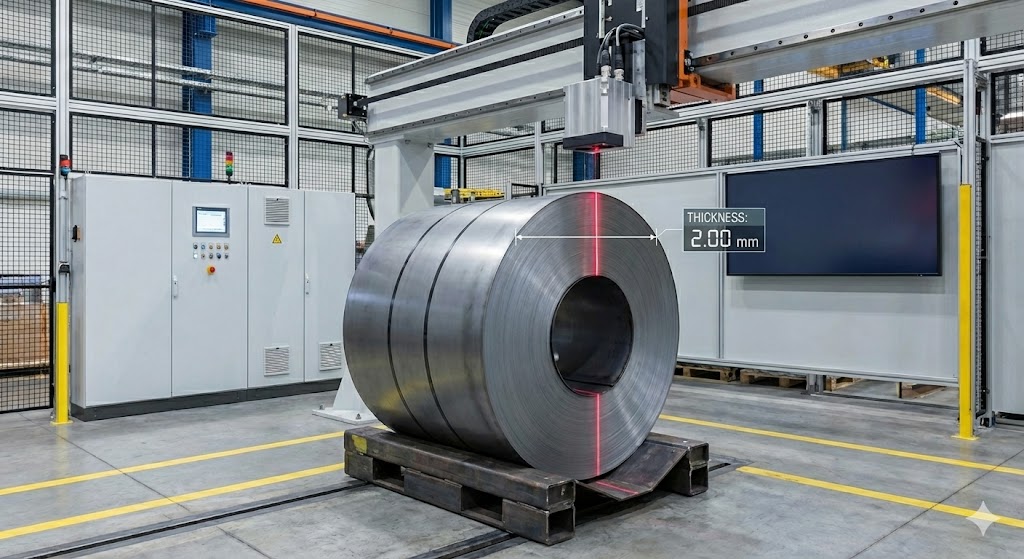
Despite their advanced capabilities, implementing laser inductive sensors requires careful consideration of factors like target material, surface reflectivity, and environmental interference. For optimal performance, it is recommended to conduct regular calibration and align the sensor perpendicular to the target surface. Additionally, integrating these sensors with IoT platforms enables predictive maintenance, where data analytics can forecast potential malfunctions before they disrupt operations.
In conclusion, laser inductive sensors represent a transformative technology in industrial automation, driving innovations in precision measurement and control. As industries increasingly adopt smart manufacturing practices, the demand for these sensors is poised to grow, fueled by advancements in miniaturization, energy efficiency, and wireless connectivity. By leveraging their dual-detection principles, businesses can achieve higher quality standards, reduce operational downtime, and pave the way for fully automated, data-driven production ecosystems.
