In industrial automation and control systems, proximity sensors play a crucial role in detecting the presence or absence of objects without physical contact. Among the various types, the PNP proximity sensor stands out for its specific output configuration and widespread use. Understanding its operation, advantages, and typical applications is essential for engineers and technicians designing or maintaining automated systems.
A PNP proximity sensor is a solid-state electronic device. The term "PNP" refers to the type of transistor used in its output switching circuit. In a PNP configuration, the sensor acts as a sourcing output. This means that when an object is detected within its sensing range, the sensor switches its output signal line to connect to the positive supply voltage (+V). In simpler terms, the output provides a positive voltage to the load. The load (such as a PLC input, relay, or indicator light) is connected between the sensor's output wire and the common negative or ground (0V). When activated, current flows from the sensor's output, through the load, and down to ground.
This is often contrasted with the NPN type, which is a sinking output. The choice between PNP and NPN is fundamentally about the circuit design and the electrical compatibility with the controller's input module. Many regions and industries have common conventions; for instance, PNP sensors (sourcing) are frequently standard in Europe and for many PLC systems that require a positive signal for a logic '1' or 'ON' state.
The core sensing technology within a PNP housing can vary. Inductive PNP sensors are the most common, used to detect metallic objects. They generate an electromagnetic field. When a metal target enters this field, it causes a change in the field's oscillation, which the sensor's circuitry detects, triggering the PNP output transistor to switch. Capacitive PNP sensors can detect both metallic and non-metallic materials (like plastic, wood, or liquids) by sensing changes in capacitance. Ultrasonic and photoelectric sensors also come in PNP output versions, using sound waves or light beams, respectively, for detection.
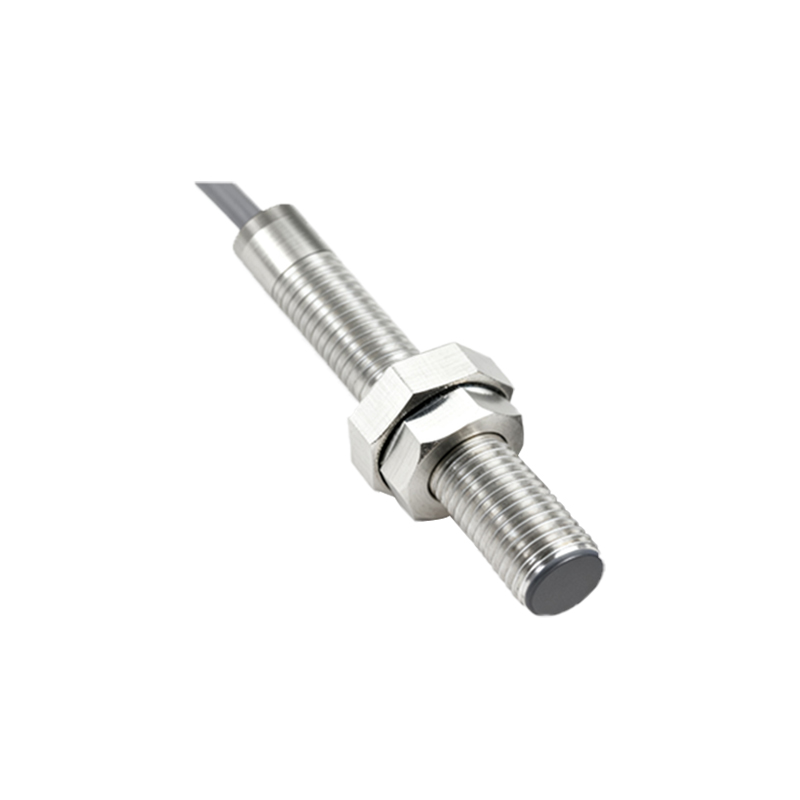
The advantages of using PNP proximity sensors are significant. Their sourcing output configuration often provides a straightforward interface with many programmable logic controllers (PLCs), where a positive voltage is required to register an input. They generally offer high switching speeds, suitable for fast-paced production lines counting objects or detecting part positions. Being solid-state and enclosed, they are highly reliable, resistant to wear and tear, and can operate in harsh industrial environments with dust, moisture, or vibration, provided they have an appropriate IP (Ingress Protection) rating. Installation is simple, typically requiring just a power connection and load connection.
Applications for PNP proximity sensors are vast across manufacturing and processing. They are ubiquitous in assembly lines for part presence verification, ensuring a component is in place before a robotic arm performs an operation. They are used for precise positioning control, such as detecting the end-of-travel of a machine slide or cylinder. In packaging machinery, they count bottles or boxes. On conveyor systems, they detect the position of items for sorting or diverting. Within automated storage and retrieval systems, they ensure precise positioning of lifts and shuttles. In machine tools, they might be used for tool breakage detection or monitoring workpiece position.
Selecting the right PNP sensor requires careful consideration of several parameters. First, identify the sensing object material to choose the correct technology: inductive for metals, capacitive for a wider range. The required sensing distance, or range, must be specified, typically choosing a sensor with a nominal range 10-20% greater than the actual application need to account for tolerances. The supply voltage must match the control system's DC voltage (commonly 10-30V DC). The output current rating must be sufficient to drive the connected load without damage. The housing style (barrel, rectangular, limit-switch style) is chosen based on mounting constraints. Environmental factors dictate the needed IP rating for protection against dust and water. Finally, consider output function: a 3-wire device is standard, but some offer a 4th wire for a separate normally-open (NO) and normally-closed (NC) output or an analog output proportional to distance.
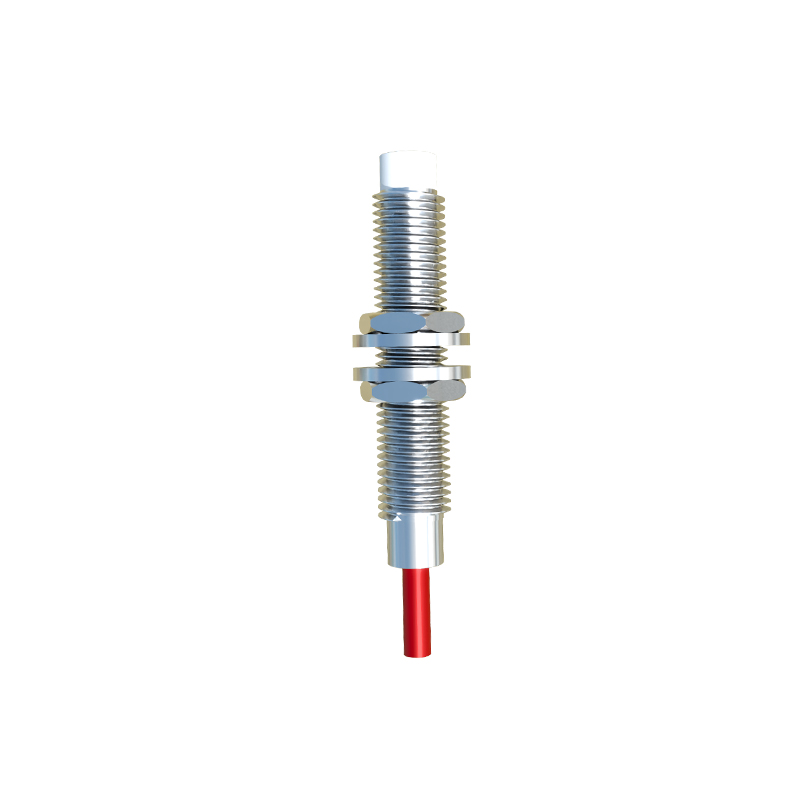
In summary, the PNP proximity sensor is a fundamental component in modern industrial control. Its sourcing output logic provides a compatible and reliable interface for a vast array of control equipment. By carefully matching the sensor's technology, range, electrical specifications, and physical form to the application's demands, engineers can ensure robust, maintenance-free operation, contributing to the efficiency and reliability of automated processes. Proper understanding and selection are key to leveraging their full potential in creating responsive and intelligent automated systems.