In industrial automation and machinery control, proximity sensors play a crucial role in detecting the presence or absence of objects without physical contact. Among the various configurations, the normally open (NO) proximity sensor is a fundamental and widely used type. Understanding its operation, characteristics, and ideal applications is essential for engineers, technicians, and anyone involved in system design.
A normally open proximity sensor, in its resting or non-activated state, maintains an open circuit between its output terminals. This means that when no target object is within its sensing range, the electrical signal path is broken, and no current flows through the output. The output is effectively "off." When a valid target enters the sensor's detection field, the internal switching mechanism closes the circuit. The output terminals become connected, allowing current to flow, and the output signal switches to an "on" state. This change in state is then interpreted by a connected controller, such as a PLC (Programmable Logic Controller), to trigger a subsequent action in the machine or process.
This behavior is defined by the sensor's output configuration. It's critical to distinguish between the sensor's output type (e.g., NPN or PNP for DC sensors) and its output state (normally open or normally closed). An NPN sensor is a current-sinking device, while a PNP is a current-sourcing device. Both can be configured as normally open. For a normally open NPN sensor, the output wire (usually black) is disconnected from the negative (0V) supply when idle and connects to 0V when activated. For a normally open PNP sensor, the output wire is disconnected from the positive supply voltage when idle and connects to it when activated.
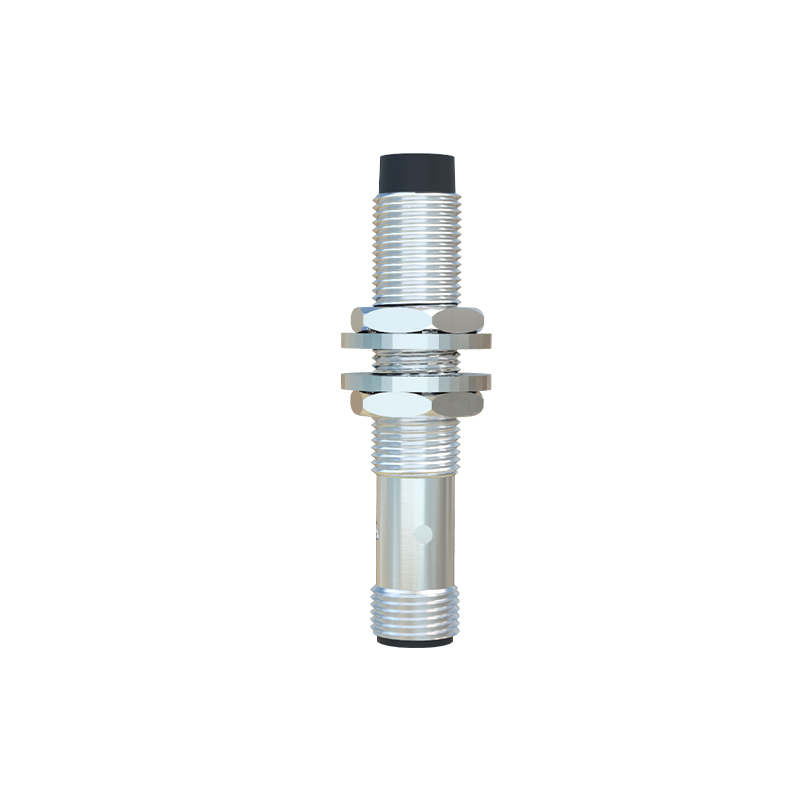
The choice between a normally open and a normally closed (NC) configuration is primarily driven by safety and logic requirements. Normally open sensors are often the default choice for standard detection tasks. A key advantage in many applications is that a wire break or a loss of power in a normally open circuit typically results in an "off" signal. This fail-safe characteristic can be desirable for non-critical monitoring. For instance, in a conveyor system counting boxes, if the sensor fails or a wire is cut, the count stops, which is a safe failure mode for that process. The control logic is often more intuitive: sensor detects object = output on = action taken.
These sensors are indispensable across numerous industries. In material handling and packaging, they are used for object counting, jam detection, and verifying the presence of items on a conveyor. In automotive assembly lines, they confirm the position of parts, tools, or fixtures. Machine tools employ them for tool presence detection and end-of-travel limit sensing. Their robust, non-contact nature makes them ideal for harsh environments where dirt, oil, or vibration are present, unlike mechanical limit switches which can wear out.
When selecting and installing a normally open proximity sensor, several factors must be considered. The sensing range, which is typically shorter than the rated nominal range to ensure reliability, must be appropriate for the application. The target material also matters; inductive sensors detect metals, while capacitive sensors can detect non-metals. The housing style (cylindrical, rectangular, etc.) must suit the mounting constraints. Electrical characteristics like voltage rating, current capacity, and whether to use 2-wire, 3-wire, or 4-wire designs are vital for compatibility with the control system. Always refer to the manufacturer's datasheet for precise specifications regarding mounting, wiring, and environmental ratings (IP, NEMA).
In summary, the normally open proximity sensor is a versatile and reliable component in automation. Its simple principle—closing a circuit upon detection—provides a clear and effective interface between the physical world and control systems. By correctly applying it based on the logic needs of the application and the inherent fail-state behavior, designers can build efficient, dependable, and safe automated operations. Proper selection, installation, and understanding of its normally open function are the keys to leveraging its full potential in any industrial setting.