In the realm of industrial automation and control, inductive proximity sensors are indispensable components for non-contact detection of metallic objects. Among the various configurations available, the 2-wire inductive proximity sensor stands out for its simplicity and widespread use. This article delves into the operational principles, wiring methodologies, advantages, limitations, and typical applications of these robust sensors.
At its core, an inductive proximity sensor generates an electromagnetic field via a coil wound around a ferrite core at its sensing face. When a metallic target enters this oscillating field, eddy currents are induced within the target. This causes a change in the oscillation amplitude or frequency within the sensor's internal circuit. The sensor's electronics detect this change and trigger a switching action. The fundamental distinction of a 2-wire sensor is its integration into the electrical circuit: it requires only two wires for both power supply and load switching, functioning similarly to a conventional switch in series with the load and power source.
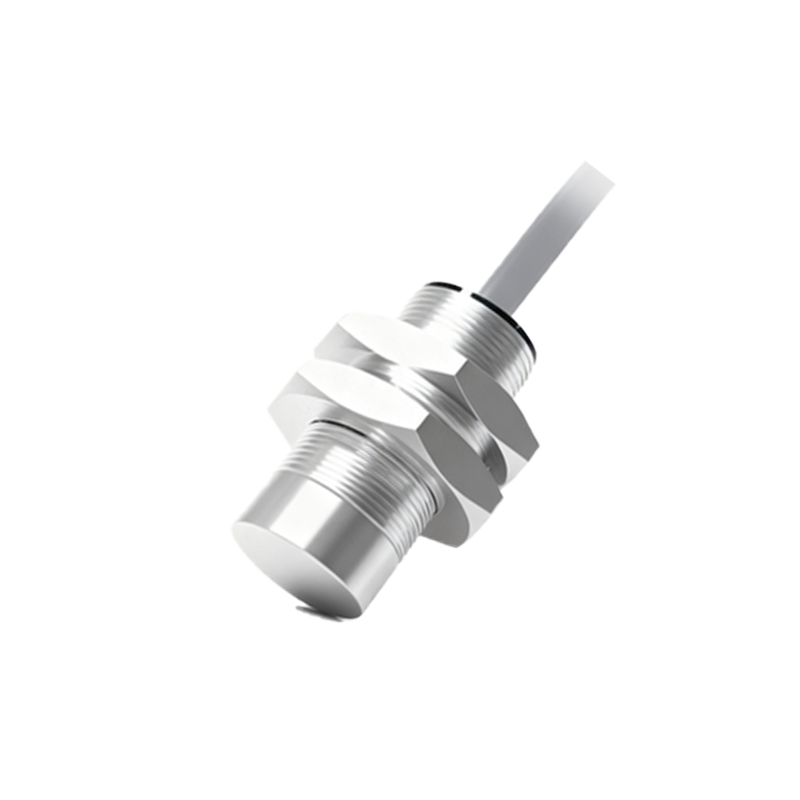
Wiring a 2-wire inductive sensor is notably straightforward. The two wires are typically labeled as brown (or +) and blue (or –), following common international color codes for DC sensors. For a standard DC sensor, the brown wire connects to the positive voltage supply (e.g., 10-30V DC), and the blue wire connects to the load, which is then connected to the negative supply (0V). The sensor itself acts as the switching element. When no target is present, a small leakage current (often under 1.5 mA) flows through the sensor to power its internal electronics. Upon detecting a target, the sensor switches to a low-resistance state, allowing the full load current to flow, thereby activating the connected device such as a PLC input, relay coil, or indicator lamp. It is crucial to ensure the connected load draws a minimum current (the "minimum load current") to keep the sensor's electronics operational when switched on, and does not exceed the sensor's maximum switching current.
The primary advantage of the 2-wire design is its installation simplicity. It directly replaces a mechanical limit switch, requiring no separate third wire for the output signal. This reduces wiring time, minimizes potential connection errors, and lowers material costs. Furthermore, the absence of a separate output wire can enhance reliability in harsh environments with vibration. Many 2-wire sensors also feature short-circuit and overload protection, adding to their durability.
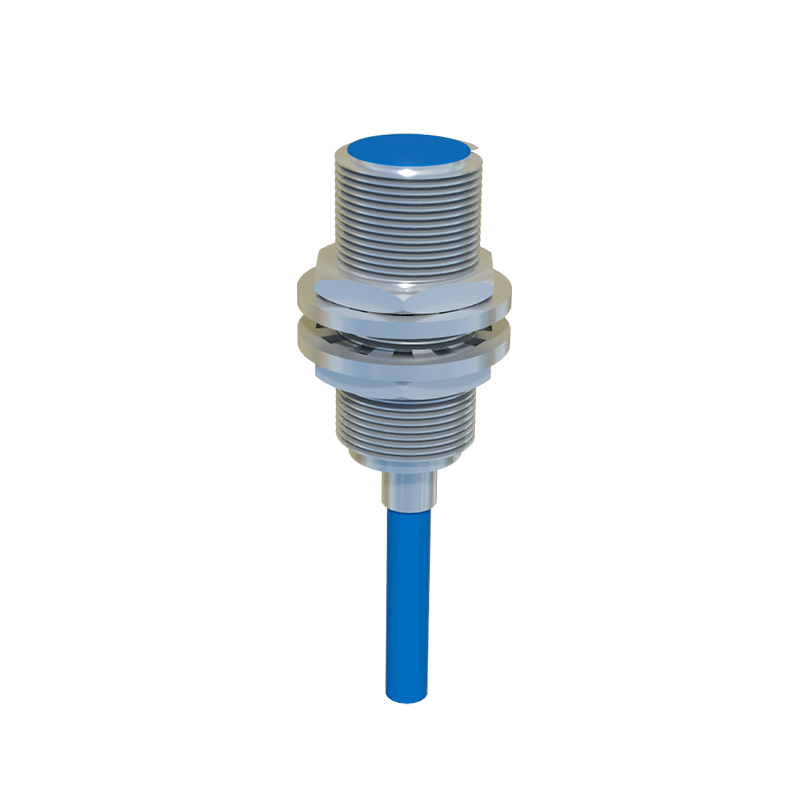
However, certain limitations must be considered. The always-present leakage current means there is a residual voltage drop across the sensor when it is in the "off" state. This residual voltage must be below the threshold level of the connected PLC input or device to prevent false triggering. Additionally, the sensor's power consumption is inherently tied to the load current. Careful consideration of the minimum load current requirement is essential, especially when interfacing with high-impedance PLC inputs, which may require an external "wetting" resistor in parallel to ensure sufficient current flow. Compared to 3-wire or 4-wire counterparts, 2-wire sensors may have slightly slower switching frequencies and are generally limited to AC or DC operation per model, not both.
In practice, 2-wire inductive proximity sensors are ubiquitous in manufacturing. Common applications include position sensing of machine parts (e.g., cylinder end position detection), counting metallic objects on conveyors, monitoring presence of parts in fixtures, and as safety interlock switches. Their robust, often potted construction makes them suitable for environments with coolant, oil, dust, and mild chemical exposure.
When selecting a 2-wire inductive sensor, key parameters to evaluate include: sensing distance (rated and effective), supply voltage range, switching current capacity, leakage current, housing material (e.g., nickel-plated brass or stainless steel), and environmental protection ratings (IP67/IP69K). Proper installation is also vital; maintaining the recommended clearance from metal surfaces prevents false actuation due to side-effects.

In conclusion, the 2-wire inductive proximity sensor offers a perfect blend of reliability, simplicity, and cost-effectiveness for countless metal detection tasks. By understanding its operating principle, wiring requirements, and application boundaries, engineers and technicians can effectively deploy these sensors to create robust and efficient automated systems. Their enduring presence on factory floors is a testament to their fundamental utility in industrial control.