In the realm of industrial automation, inductive proximity sensors stand as a cornerstone technology for non-contact object detection. Their operation, fundamentally rooted in electromagnetic principles, makes them exceptionally reliable for specific applications. However, a critical and often nuanced aspect of their functionality is their interaction with different materials. This article delves into the material sensing capabilities of inductive sensors, explaining the underlying physics and providing practical guidance for optimal application.
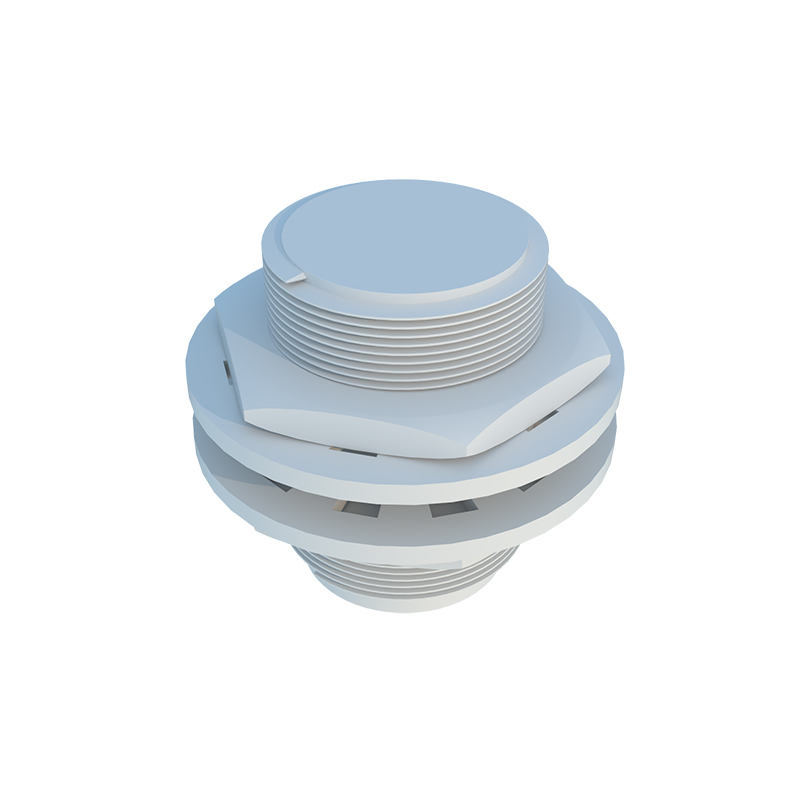
At its core, an inductive proximity sensor generates a high-frequency oscillating electromagnetic field via a coil wound around a ferrite core at its active face. When a conductive material enters this field, eddy currents are induced on the surface of the target. These eddy currents draw energy from the sensor's oscillator circuit, causing a measurable change in its amplitude or frequency. This change is detected by the sensor's internal circuitry, which subsequently triggers a switching signal (ON/OFF). The key takeaway is that the primary mechanism relies on electrical conductivity. Therefore, inductive sensors are inherently designed to detect metallic objects.
The sensing performance, however, is not uniform across all metals. The efficiency of eddy current generation—and thus the effective sensing distance—varies significantly with the material's properties. This variation is typically quantified by a reduction factor (or correction factor) provided in sensor datasheets.
Ferromagnetic Metals (e.g., Mild Steel, Iron): These materials exhibit the highest sensing ranges. Their high magnetic permeability concentrates the sensor's electromagnetic field, and their good conductivity allows for strong eddy current formation. For a standard sensor, mild steel is the reference material, assigned a reduction factor of 1.0.
Non-Ferrous Metals (e.g., Aluminum, Copper, Brass): These materials are conductive but non-magnetic (low permeability). Their sensing range is notably shorter. For instance, aluminum typically has a reduction factor of 0.3 to 0.5, meaning the practical sensing distance is only 30-50% of the nominal range for steel. Copper and brass may have even lower factors (0.2-0.4) due to their specific conductivity and permeability.
Stainless Steel: This is a special case. Austenitic grades (like 304, 316) are generally non-magnetic or weakly magnetic. Their sensing range falls between ferrous and non-ferrous metals, with reduction factors often around 0.6 to 0.8. Martensitic grades are magnetic and behave more like mild steel.
Crucially, inductive proximity sensors cannot reliably detect non-conductive materials. Materials such as plastics, wood, glass, ceramics, and most liquids are essentially "invisible" to the standard inductive sensor because they do not conduct electricity and therefore cannot generate the necessary eddy currents. Attempting to use a standard inductive sensor to detect these materials will result in failure.
This material-specific behavior dictates application selection. Inductive sensors excel in environments where the target is consistently metallic, such as:
Detecting the presence/absence of metal parts on a conveyor.
Counting metal components.
Monitoring the position of machine tool slides or cylinders (via a metal flag).
Providing end-of-travel detection in metal machinery.
For applications requiring detection of non-metallic objects, other sensor technologies must be employed. Capacitive proximity sensors can detect both conductive and non-conductive materials by sensing changes in capacitance. Photoelectric sensors use light beams and are suitable for a vast range of materials based on reflectivity or beam interruption. Ultrasonic sensors measure the time-of-flight of sound waves and are largely material-agnostic.
When selecting an inductive sensor, always consult the manufacturer's datasheet for reduction factors for various materials. The nominal sensing distance (Sn) is always specified for mild steel. To determine the effective sensing distance (Sa) for another material, use the formula: Sa = Sn × Reduction Factor. Furthermore, the target object's size, shape, and approach angle can influence performance. A flat, square target larger than the sensor's active face diameter is ideal. Small or thin targets (like wires) will reduce the effective range.
In conclusion, the material sensing capability of an inductive proximity sensor is its defining characteristic. Its exclusive response to conductive metals is both a strength and a limitation—a strength in harsh, dirty environments where it ignores non-metallic debris, and a limitation where material variety exists. A clear understanding of reduction factors and the physics of eddy currents is essential for engineers and technicians to deploy these robust sensors correctly, ensuring reliable and efficient operation in automated systems.