In modern industrial automation, the detection of small holes presents significant challenges due to stringent precision requirements and harsh environmental conditions. Laser sensor technology has emerged as a premier solution, offering unparalleled accuracy, speed, and reliability for such demanding applications. This article delves into the operational principles, key advantages, and practical implementation strategies of laser sensors in small hole detection.
The core principle of laser-based hole detection involves the emission of a focused laser beam towards the target surface. When the beam encounters a hole, its reflection or transmission characteristics change dramatically. Through-the-beam (or transmission) sensors position a transmitter and receiver opposite each other; the presence of a hole allows the beam to pass through, triggering a detection event. Conversely, reflective or diffuse sensors measure the intensity of light reflected back from the surface. A hole causes a measurable drop in reflected intensity, as the laser light scatters or is absorbed within the cavity. Advanced versions utilize triangulation or time-of-flight measurements to precisely determine hole depth, diameter, and position in three-dimensional space.
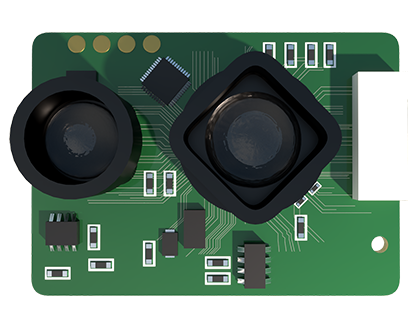
Key advantages of laser sensors for this purpose are manifold. Firstly, they provide non-contact measurement, eliminating mechanical wear and preventing part damage—a critical factor for delicate components. Their high resolution, often down to micron levels, allows for the detection of extremely small apertures, even those below 0.1 mm in diameter. The response time is exceptionally fast, typically in the microsecond range, enabling real-time, in-line inspection in high-speed production lines such as those manufacturing fuel injector nozzles, electronic circuit boards, or medical device components. Furthermore, laser sensors are largely immune to ambient light interference and can function effectively in environments with oil mist, dust, or vibration when properly housed.

Successful implementation requires careful consideration of several factors. Sensor selection must match the hole's specifications: for instance, very small holes demand lasers with extremely fine spot sizes and high-intensity focus. The material and surface finish of the workpiece significantly affect performance; dark or highly reflective surfaces may require sensors with automatic gain control or specialized algorithms. Integration with programmable logic controllers (PLCs) and industrial networks (like Ethernet/IP or PROFINET) is standard, allowing for seamless data logging, statistical process control, and immediate feedback to upstream or downstream machinery. Regular calibration and maintenance, including lens cleaning and verification against master samples, are essential to sustain long-term accuracy.

In conclusion, laser sensors represent a sophisticated, robust, and highly effective technology for the automated detection and measurement of small holes. Their ability to deliver precise, repeatable data at high speeds makes them indispensable in quality-critical industries such as automotive, aerospace, electronics, and precision engineering. As sensor intelligence continues to evolve with features like integrated machine learning for anomaly detection, their role in ensuring manufacturing excellence and zero-defect production will only become more pronounced.