Laser diffraction sensors represent a sophisticated class of measurement devices widely employed in industrial automation and quality control. Operating on the fundamental principle of light diffraction, these sensors offer non-contact, high-precision measurement capabilities for a variety of parameters, including particle size, displacement, and surface profile. The core mechanism involves projecting a collimated laser beam onto a target. When the beam encounters an edge or a particle, it diffracts, creating a characteristic pattern of light and dark fringes. A high-resolution detector array, typically a CCD or CMOS sensor, captures this diffraction pattern. Advanced onboard algorithms then analyze the pattern's characteristics, such as fringe spacing and intensity distribution, to calculate the target's dimensions or position with remarkable accuracy, often in the sub-micron range.
The advantages of laser diffraction sensors are manifold. Their non-contact nature eliminates mechanical wear and prevents damage to delicate targets, ensuring long-term reliability and consistency. They provide exceptionally fast response times, enabling real-time monitoring in high-speed production lines, such as in semiconductor manufacturing or precision machining. Furthermore, they are largely immune to variations in surface color, reflectivity, or material composition, as they measure the physical diffraction effect rather than reflected light intensity. This makes them suitable for challenging applications involving transparent objects, shiny metals, or dark, absorbent materials where traditional optical sensors might fail.
In industrial settings, laser diffraction sensors find diverse and critical applications. A primary use is in online particle size analysis for powders and suspensions in pharmaceutical, chemical, and food processing industries. They provide continuous, real-time data for process control, ensuring product consistency. In precision engineering, they are indispensable for gap and displacement measurement, edge detection, and thickness monitoring of wires, films, and foils. For instance, in battery manufacturing, they precisely measure electrode coating thickness. They also play a vital role in vibration analysis and alignment of rotating machinery by detecting minute positional changes.

When selecting and implementing a laser diffraction sensor, several key factors must be considered. The required measurement range and resolution are paramount; sensors are available for macro-scale measurements down to nanoscale applications. The stand-off distance, or the working distance between the sensor head and the target, must be compatible with the mechanical setup. Environmental robustness is crucial; industrial-grade sensors are housed in rugged enclosures with high ingress protection (IP) ratings to withstand dust, moisture, and temperature fluctuations. Integration with factory control systems via standard industrial communication protocols like EtherCAT, PROFINET, or analog outputs is also essential for seamless data acquisition and process feedback loops.
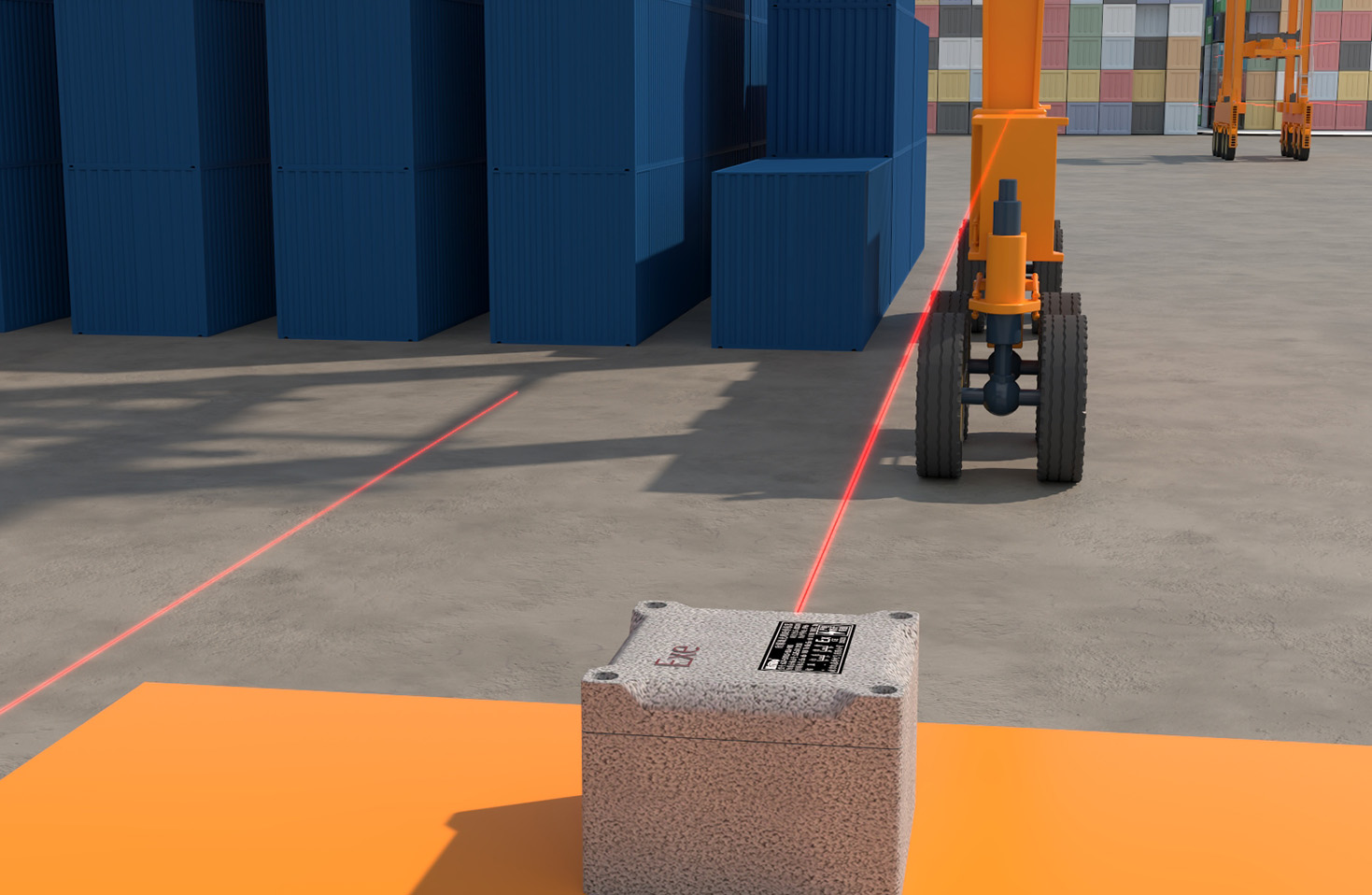
Despite their robustness, optimal performance requires proper installation and calibration. The sensor must be mounted securely to minimize external vibrations. Regular calibration against certified reference standards is necessary to maintain measurement traceability and accuracy over time. Users should also be aware of limitations, such as the need for a clear optical path; excessive airborne dust or oil mist can scatter the laser beam and degrade signal quality. For very small particles near the wavelength of light, Mie scattering theory becomes more relevant than simple Fraunhofer diffraction, requiring more complex optical models in the sensor's software.
The future of laser diffraction sensing is intertwined with advancements in Industry 4.0 and smart manufacturing. The integration of these sensors with IoT platforms and AI-driven analytics is enabling predictive maintenance and more sophisticated adaptive process control. Miniaturization of optical components is leading to more compact sensor designs for integration into tighter spaces. Furthermore, the development of multi-beam and line laser diffraction systems allows for the simultaneous measurement of multiple points or full profiles, enhancing inspection throughput. As demand for higher precision and automated quality assurance grows across sectors from microelectronics to electric vehicle production, laser diffraction sensors will continue to be a cornerstone technology for non-contact metrology, driving efficiency and quality in modern industrial operations.