Cylindrical proximity sensors are indispensable components in modern industrial automation, offering non-contact detection of metallic and non-metallic objects. Their robust cylindrical housing, typically made of stainless steel or nickel-plated brass, provides excellent resistance to mechanical stress, chemicals, and environmental factors such as dust and moisture. This article explores the primary types of cylindrical proximity sensors, their operating principles, and typical applications across various industries.
Inductive Proximity Sensors:
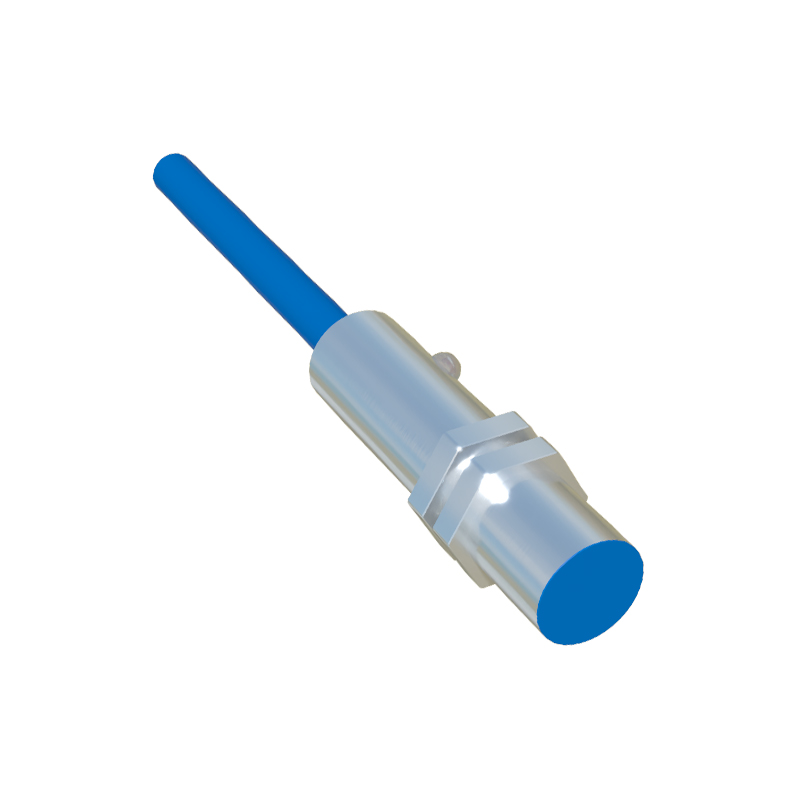
Inductive sensors are the most common type of cylindrical proximity sensors, designed to detect ferrous and non-ferrous metals without physical contact. They operate on the principle of electromagnetic induction. Inside the sensor, an oscillator generates a high-frequency electromagnetic field that radiates from the active face. When a metallic object enters this field, eddy currents are induced on the object's surface, causing a change in the oscillation amplitude. This change is detected by a threshold circuit, which triggers an output signal. Inductive sensors are further categorized based on their sensing range and material compatibility. Standard models detect ferrous metals (like iron and steel) at relatively longer ranges, while specialized versions offer reduced sensing distances for non-ferrous metals (such as aluminum or copper). Key features include high switching frequencies, often up to several kilohertz, and exceptional repeat accuracy, making them ideal for high-speed counting, position verification, and end-position detection in machinery. Common housing diameters range from M4 to M30, with sensing distances varying from 0.8 mm to 40 mm, depending on size and design.
Capacitive Proximity Sensors:
Capacitive cylindrical sensors detect both metallic and non-metallic materials, including liquids, plastics, glass, and wood. They function by measuring changes in capacitance. The sensor forms one plate of a capacitor, with the target object acting as the other plate. As the object approaches the active surface, the dielectric constant between them alters, increasing the capacitance. When this capacitance exceeds a preset threshold, the sensor switches its output state. These sensors often include sensitivity adjustment potentiometers, allowing users to fine-tune the detection range and ignore background interferences. This versatility makes capacitive sensors suitable for level detection of granular materials in silos, presence checking of plastic caps on bottles, or liquid control in tanks. Their cylindrical housings are frequently constructed from materials like PTFE or PBT to resist aggressive media. Typical sensing distances range from 2 mm to 25 mm, with some models offering extended ranges through larger diameters.
Magnetic Proximity Sensors (Reed Switch and Hall Effect Types):
Magnetic cylindrical sensors detect permanent magnets or electromagnetic fields. Two main technologies are prevalent: reed switch and Hall effect sensors. Reed switch sensors contain two ferromagnetic reeds sealed in a glass tube filled with inert gas. When a magnetic field of sufficient strength approaches, the reeds attract each other and close the contact, completing an electrical circuit. They are simple, cost-effective, and capable of handling relatively high voltages and currents. However, they have limited switching speeds and mechanical lifespan. Hall effect sensors, in contrast, use a semiconductor element that generates a voltage difference (Hall voltage) when exposed to a magnetic field. This voltage is processed by integrated electronics to produce a digital or analog output. Hall effect sensors offer faster response times, higher switching frequencies, and virtually infinite operational life, as there are no moving parts. Both types are extensively used in cylinder position feedback, where a magnet embedded in a pneumatic or hydraulic piston indicates extended or retracted positions. They are also employed in safety applications, such as door position monitoring on machinery guards.
Ultrasonic Proximity Sensors:
Although less common in strictly cylindrical form factors, ultrasonic sensors with cylindrical housings are used for precise distance measurement and presence detection. They emit high-frequency sound waves (typically 200 kHz to 400 kHz) and evaluate the time taken for the echo to return from a target. These sensors can detect objects regardless of color, transparency, or material composition, making them effective for challenging environments where optical sensors might fail. Applications include transparent bottle detection on conveyor lines, bulk material level sensing, and robot collision avoidance. Cylindrical ultrasonic sensors often feature threaded barrels for easy mounting and are available in both analog and switching output configurations.
Selection Criteria and Application Considerations:
Choosing the right cylindrical proximity sensor depends on multiple factors. The target material is paramount: inductive sensors for metals, capacitive for diverse materials, and magnetic for magnets. Environmental conditions, such as temperature extremes, exposure to washdown chemicals, or potential mechanical impacts, dictate the required ingress protection (IP) rating and housing material. Electrical requirements include the operating voltage (commonly 10-30 V DC or 90-250 V AC), output type (PNP/NPN, NO/NC), and connection method (pre-wired cables or quick-disconnect connectors).