The journey of proximity sensors is a fascinating tale of technological convergence, driven by the relentless pursuit of automation, safety, and miniaturization. Their development is not the story of a single invention, but rather the evolution of multiple sensing principles, each refined over decades to meet the growing demands of industry and consumer electronics.
The earliest foundations were laid in the late 19th and early 20th centuries with the discovery and application of fundamental physical principles. The Hall effect, discovered by Edwin Hall in 1879, was a scientific curiosity for decades before solid-state electronics made practical Hall-effect sensors possible in the mid-20th century. These magnetic sensors became crucial for detecting the presence of ferrous metals without physical contact. Similarly, the development of capacitive theory provided the groundwork for sensors that could detect any material by measuring changes in an electrical field.
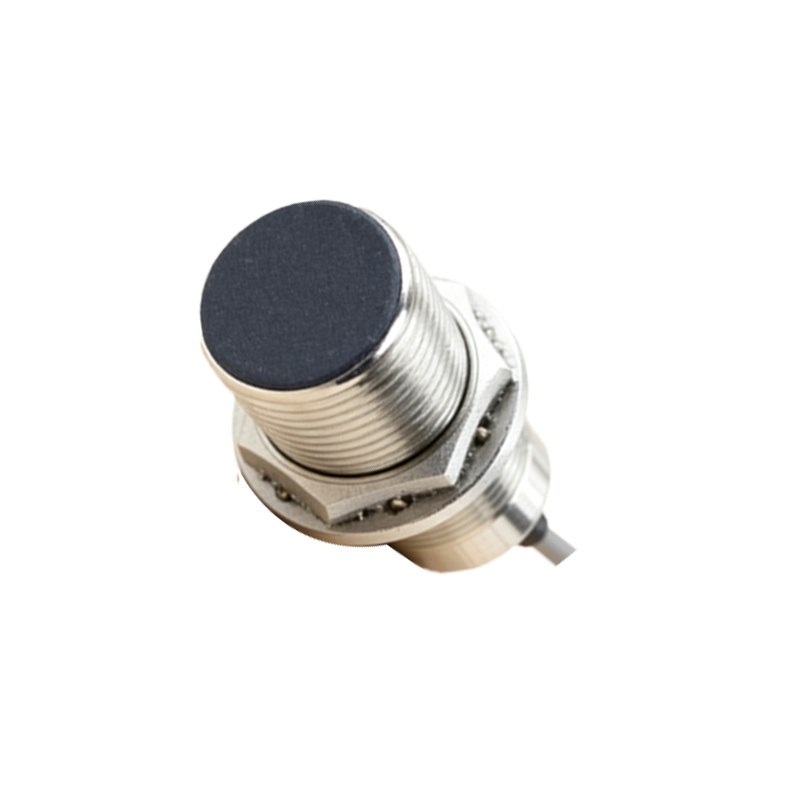
The true catalyst for proliferation was the post-World War II industrial boom. Manufacturing required faster, more reliable, and non-contact methods to count objects, control machinery, and ensure safety. Inductive proximity sensors, which generate an electromagnetic field to detect metallic objects, became a staple on factory floors from the 1950s onward. Their robustness in dirty, oily environments made them indispensable. Shortly after, capacitive sensors emerged to handle non-metallic materials like wood, plastic, and liquids, expanding automation into food processing, chemical, and packaging industries.
The 1970s and 80s marked a period of solid-state revolution and diversification. The invention of the infrared LED and phototransistor enabled the first optoelectronic proximity sensors. These devices used modulated light beams to detect objects, immune to ambient light interference. Ultrasonic sensors, inspired by sonar technology, also found their niche, using sound waves to measure distance and detect objects in challenging conditions involving smoke, dust, or transparent materials.
Miniaturization and integration have been the dominant themes since the 1990s. The drive for smaller, cheaper, and lower-power sensors was fueled by the consumer electronics explosion. A pivotal moment was the integration of infrared proximity sensors into mobile phones in the early 2000s. This simple sensor, which turns off the touchscreen during a call to save power and prevent accidental touches, placed proximity sensing into the hands of billions. This mass adoption spurred further innovation in micro-electromechanical systems (MEMS) and chip-scale packaging.
Today, the landscape is defined by sophistication and fusion. Modern proximity sensors are often "smart," incorporating microcontrollers for digital output, self-diagnostics, and adjustable sensing parameters. Time-of-Flight (ToF) sensors, which measure the round-trip time of a light pulse, provide highly accurate distance measurement for applications from robotics to augmented reality. Furthermore, sensors are rarely standalone; they are fused with accelerometers, gyroscopes, and cameras in devices like smartphones, autonomous vehicles, and collaborative robots (cobots) to create a rich contextual understanding of the environment.
Looking forward, the evolution continues toward greater intelligence, sensitivity, and specialization. Developments in materials science may lead to flexible or transparent sensors. Advances in AI and machine learning will enable sensors to not only detect presence but also classify materials or recognize gestures with higher accuracy. The humble proximity sensor, once a simple switch, has become a fundamental enabler of the interactive and automated world, and its story of adaptation and refinement is far from over.