In the demanding world of modern industry, monitoring and controlling processes often requires equipment to function reliably in conditions that would cripple standard components. Among the most critical of these components are proximity sensors, the silent sentinels that detect the presence or absence of objects without physical contact. When operations involve extreme heat—such as in metal casting, glass manufacturing, cement production, or near turbine engines—a standard inductive or capacitive sensor will quickly fail. This is where the specialized high temperature proximity sensor becomes not just useful, but indispensable.
The core challenge in high-temperature environments is material integrity. Conventional sensors are typically rated for a maximum ambient temperature of around 70-80°C (158-176°F). Beyond this point, several critical failures can occur. The semiconductor electronics within the sensor's oscillator and evaluation circuitry will degrade and ultimately cease to function. Standard potting compounds and cable insulation can melt, crack, or outgas, leading to short circuits and sensor failure. Even the sensing face and housing materials may warp, permanently altering the sensor's detection characteristics.
High temperature proximity sensors are engineered from the ground up to withstand these brutal conditions. Their design philosophy revolves around thermal management and material science. A primary strategy is physical separation. These sensors often feature an elongated, thermally isolated body. The actual sensing coil and sensitive electronics are housed in a "cool zone" at the rear of the sensor, connected to the sensing face at the "hot zone" by long, high-temperature-resistant leads or a specially designed waveguide. This design leverages the sensor's own housing as a heat sink, ensuring the internal electronics remain within their operational temperature range even when the sensing tip is exposed to several hundred degrees Celsius.
Material selection is paramount. Housings are constructed from advanced, heat-resistant stainless steels like 314 or 330, which maintain structural strength and resist oxidation. The sensing face may utilize high-temperature ceramics or specialized PEEK polymers. Internal wiring employs mineral-insulated (MI) cable or wires with PTFE (Teflon) insulation, which can endure temperatures exceeding 250°C. The potting compound is replaced with high-temperature epoxies or ceramic-based fillers that remain stable under thermal stress.
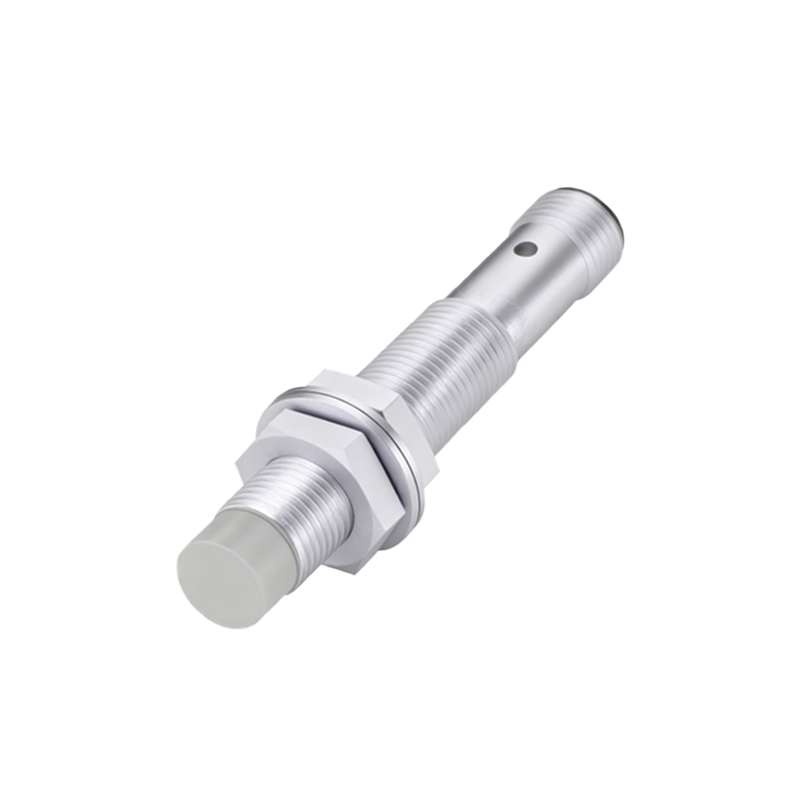
These sensors are not merely "ruggedized" versions of standard models; their operational parameters are also tailored. The sensing distance, for instance, may be slightly reduced compared to a standard sensor due to the different materials and internal geometry. The switching frequency might also be lower. However, reliability and longevity in the target environment are the overriding design goals. Common types include high-temperature inductive sensors for detecting metals and high-temperature capacitive sensors for non-metallic targets like hot glass or plastic, each with its specific material and design adaptations.
The applications are as varied as they are critical. In die-casting and foundries, they monitor the position of molten metal in molds or the presence of hot ingots on conveyors. In glass bottle production, they ensure proper spacing of red-hot parisons on the forming line. Within the automotive industry, they are used near paint-drying ovens and in brake disc manufacturing. In power generation, they monitor turbine blade tip clearance where ambient temperatures are exceptionally high. Their failure in these scenarios can lead to catastrophic production downtime, safety hazards, and significant financial loss.
Selecting the right high temperature proximity sensor requires careful consideration of several parameters. The maximum ambient temperature at the installation point is the most obvious, but one must also consider the target object's temperature and potential radiant heat. The required sensing distance, target material (metal or non-metal), electrical output type (PNP/NPN, analog), and housing size and thread type are all crucial. Furthermore, the sensor's rated temperature must account for continuous exposure, not just brief spikes. Proper installation is equally vital; ensuring adequate clearance from extremely hot surfaces and using high-temperature rated cables and connectors completes a reliable system.
In conclusion, high temperature proximity sensors represent a niche yet vital segment of industrial automation. They bridge the gap between the need for precise, non-contact detection and the harsh realities of high-heat processes. Through intelligent design focused on thermal isolation and advanced materials, they deliver the robustness and reliability that keep critical industrial operations running safely and efficiently, proving that even in the fiercest heat, precision sensing is not only possible but essential.