In the realm of industrial automation and precision engineering, laser sensors have become indispensable tools for distance measurement due to their high accuracy, speed, and non-contact nature. However, achieving stable and reliable measurements in real-world environments presents significant challenges that engineers must address through careful design, calibration, and environmental management. This article explores the key factors influencing laser sensor stability and provides practical strategies for optimizing performance.
Laser sensors operate on principles such as time-of-flight, triangulation, or phase-shift measurement, emitting laser beams toward a target and analyzing reflected signals to calculate distance. While theoretically straightforward, external variables can introduce errors, leading to measurement drift or noise. One primary factor is ambient light interference. Industrial settings often contain diverse light sources—from overhead LEDs to sunlight through windows—that can overwhelm the sensor's receiver, causing false readings. To mitigate this, engineers employ optical filters tuned to the laser's specific wavelength, typically in the near-infrared spectrum, and implement modulated laser signals with synchronous detection to distinguish the intended reflection from background noise.
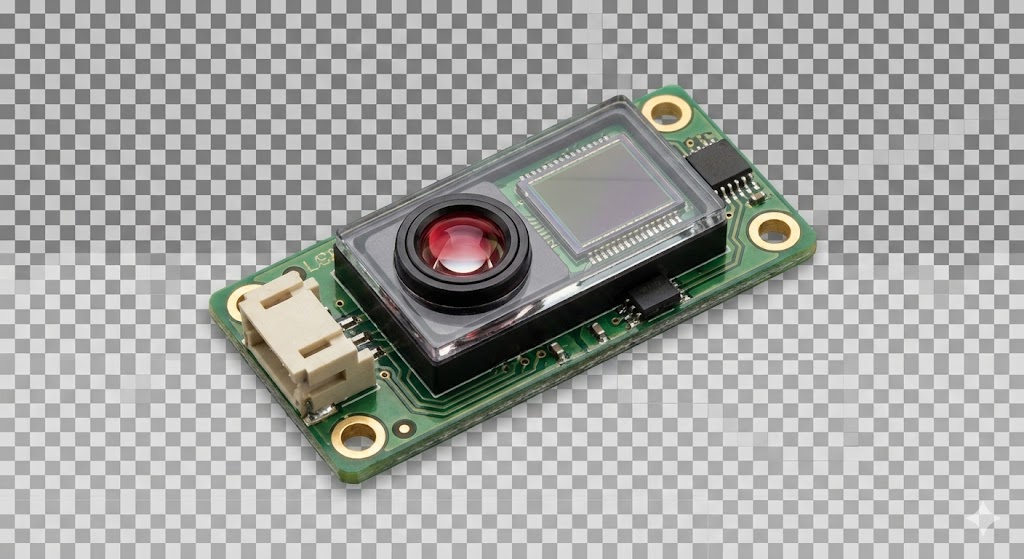
Temperature fluctuations also critically impact stability. Laser diodes and associated electronics are sensitive to thermal changes, which can alter wavelength, output power, and circuit behavior, resulting in measurement shifts. For instance, a sensor operating in an unregulated warehouse might experience temperature swings from 0°C to 40°C, potentially inducing errors of several millimeters. Solutions include integrating internal temperature compensation algorithms that adjust readings based on real-time sensor data, using thermally stable materials in housing, and ensuring adequate ventilation or active cooling in high-heat applications. Additionally, selecting sensors with low temperature coefficients—often specified in datasheets—can minimize inherent thermal drift.
Target surface characteristics pose another challenge. Variations in color, reflectivity, texture, or angle can affect the amount of light returned to the sensor. A glossy black surface, for example, may absorb most laser energy, while a shiny metal surface could create specular reflections that misdirect the beam. Engineers address this by calibrating sensors for specific material types, using diffuse laser modes that scatter light to reduce glare, or installing sensors at optimal angles relative to the target. In dynamic environments, adaptive algorithms that continuously adjust gain settings help maintain consistency across changing surfaces.

Vibration and mechanical shock are common in industrial machinery, potentially misaligning optical components or introducing transient errors. Mounting sensors on rigid, dampened structures and using models with robust housing ratings (e.g., IP67 for dust and water resistance) enhances durability. Regular maintenance checks for loosened fittings or lens contamination—such as dust or oil buildup—are also essential, as even minor obstructions can degrade signal integrity. For high-precision tasks like robotic assembly or quality inspection, implementing redundant sensor arrays or combining laser measurements with complementary technologies like ultrasonic sensors can provide validation and improve overall system reliability.
Calibration and software play pivotal roles in stability. Initial calibration against known reference distances under controlled conditions establishes a baseline, while periodic recalibration compensates for long-term component aging. Advanced sensors now feature embedded diagnostics and self-check routines that alert users to potential issues, such as declining laser power or lens fouling. Data processing techniques, including averaging multiple readings and applying digital filters (e.g., median or low-pass filters), smooth out random noise without sacrificing response speed. For networked systems, ensuring stable power supplies and shielded communication cables prevents electrical interference from skewing results.
In conclusion, laser sensor stability hinges on a holistic approach that considers environmental, mechanical, and electronic factors. By selecting appropriate sensor specifications, implementing protective measures, and leveraging smart calibration, engineers can achieve millimeter-level precision even in demanding industrial applications. As technology advances, innovations like wavelength-stabilized lasers and AI-driven error correction promise to further enhance reliability, solidifying laser sensors' role in the future of automation and measurement.