In the realm of industrial automation and control systems, proximity switch sensors operating on AC 24V power are fundamental components. These non-contact sensors detect the presence or absence of an object without physical contact, making them ideal for harsh environments where durability, reliability, and safety are paramount. Unlike their DC counterparts, AC 24V proximity sensors are often favored in specific industrial settings due to their compatibility with existing AC control circuits and inherent resistance to certain electrical noise types.
The core principle behind an inductive AC 24V proximity sensor involves an oscillator circuit that generates an alternating electromagnetic field from its sensing face. When a metallic target enters this field, eddy currents are induced in the target, causing a change in the oscillation amplitude. This change is detected by the sensor's threshold circuit, which subsequently switches the state of its output. For capacitive types, the principle relies on changes in capacitance when any material, conductive or non-conductive, approaches the sensing area. The AC 24V specification refers to the operating supply voltage, typically ranging from 20V to 30V AC, 50/60Hz, which is a common control voltage standard in many industrial panels, offering a good balance between safety (lower voltage than line AC) and sufficient driving capability.
Key advantages of utilizing AC 24V proximity sensors are numerous. Firstly, they simplify wiring in plants where AC control circuits are predominant, eliminating the need for separate DC power supplies. Their design often allows for direct interfacing with AC loads like contactors, solenoid valves, or AC input modules of Programmable Logic Controllers (PLCs). Secondly, they exhibit excellent performance in environments with substantial vibration or potential physical impact, as the non-contact nature eliminates mechanical wear. Furthermore, modern AC 24V sensors come with robust housings, typically made of nickel-plated brass, stainless steel, or PBT plastic, offering high degrees of ingress protection (e.g., IP67, IP69K) against dust, water, and chemicals. Features like short-circuit protection, overload protection, and reverse polarity protection (for models with integrated rectifiers) enhance their longevity and system safety.
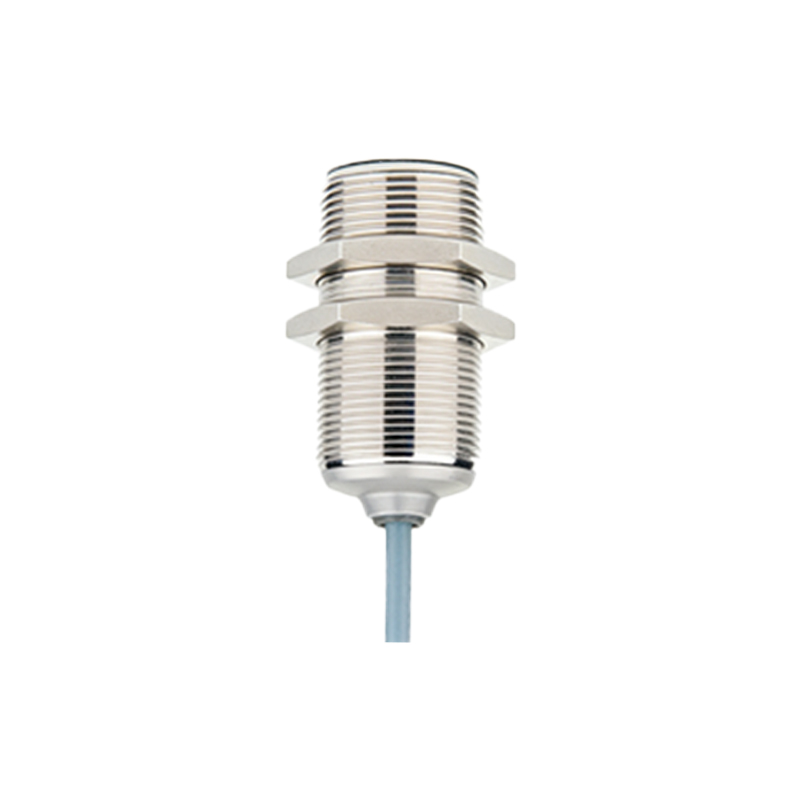
When selecting an AC 24V proximity sensor for an application, several critical parameters must be evaluated. The sensing distance, or nominal range, is specified by manufacturers and should be derated for safe installation to account for temperature fluctuations and supply voltage tolerances. The choice between shielded (flush-mountable) and unshielded (non-flush mountable) types is crucial; shielded sensors can be embedded in metal without affecting their sensing field, while unshielded types offer a longer sensing range. The output configuration is another vital consideration. Two-wire AC sensors are simple to wire in series with the load but require a minimum load current to operate correctly. Three-wire AC sensors, though requiring an additional wire, provide more stable performance with separate power and output lines. The output type, normally open (NO) or normally closed (NC), must match the control logic requirements.
Typical applications for AC 24V proximity switches are widespread across manufacturing. They are extensively used for position detection in conveyor systems, such as verifying the presence of a pallet or counting products. In machine tools, they serve as end-of-travel limit switches for robotic arms or CNC axes. They monitor the position of valves, doors, and guards for safety interlocking. In material handling, they detect the level of bulk solids or liquids. Their robustness makes them suitable for dirty environments like foundries, welding lines, and automotive assembly plants.
Installation and maintenance best practices are straightforward but essential. Ensure the sensor is mounted securely, with proper clearance from surrounding metal as per the manufacturer's guidelines for unshielded models. Wiring should conform to local electrical codes, using appropriate cable glands for environmental protection. Regular maintenance involves checking for physical damage, cleaning the sensing face from accumulated debris, and verifying the operational distance with a target. Troubleshooting common issues often involves checking the supply voltage with a multimeter, ensuring the load is within specifications, and confirming that the target material and size are suitable for the sensor's technology (inductive sensors only detect metals).
In conclusion, AC 24V proximity switch sensors are versatile, robust workhorses in industrial automation. Their integration into AC control systems, combined with high reliability and minimal maintenance needs, makes them a preferred choice for engineers designing machinery and automated processes. Understanding their operating principles, key selection criteria, and application best practices is crucial for optimizing system performance, ensuring operational safety, and maximizing productivity on the factory floor. As Industry 4.0 evolves, these sensors continue to be integral components, often equipped with IO-Link or other connectivity options for advanced diagnostics and data integration into smart factory networks.