In the realm of access control and traffic management, barrier gates serve as critical physical security interfaces. The reliable operation of these gates hinges on precise positional control, a function primarily governed by limit switches. Traditionally, mechanical limit switches have been employed to define the open and closed positions. However, the evolution towards more robust, maintenance-free, and intelligent systems has propelled the adoption of proximity sensors as the superior solution for barrier gate limit switching. This article delves into the technical advantages, implementation considerations, and industry trends surrounding proximity sensors in this application.
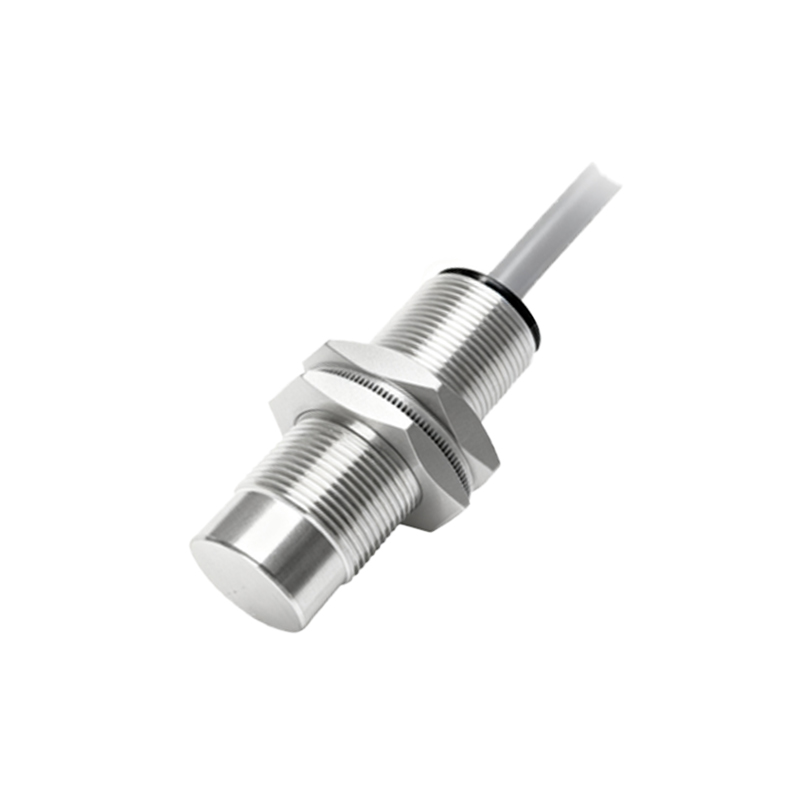
Proximity sensors, specifically inductive and magnetic types, offer non-contact detection of the gate arm's position. Unlike mechanical switches that require physical actuation through a lever or roller, proximity sensors detect the presence of a metal target (for inductive sensors) or a magnetic field (for reed or Hall-effect sensors) without any direct touch. This fundamental difference eliminates mechanical wear, a primary failure mode of traditional limit switches. In environments exposed to dust, moisture, and temperature fluctuations—common around gate installations—the sealed, solid-state construction of proximity sensors provides exceptional durability and longevity. The absence of moving parts translates to significantly reduced maintenance intervals and higher mean time between failures (MTBF), a crucial metric for critical infrastructure.
The implementation of a proximity sensor-based limit system involves careful selection and placement. For defining the fully closed (down) position, a sensor is typically mounted on the gate housing, aligned with a metal target on the gate arm. Similarly, a sensor for the fully open (up) position is installed to detect the arm at its apex. The choice between inductive and magnetic sensors depends on the gate material and environmental factors. Inductive sensors are ideal for detecting ferrous metal targets and are highly resistant to environmental contaminants. Magnetic sensors, particularly ruggedized Hall-effect sensors, are excellent for applications requiring very precise repeatability or where the target might be non-ferrous.
A key technical benefit is the programmability and integration capability of modern proximity sensors. Many models feature programmable switching points, LED status indicators, and short-circuit protection. They can interface directly with the gate's programmable logic controller (PLC) or dedicated motor control unit, providing a clean, digital signal. This facilitates easier diagnostics and integration into broader building management or intelligent transportation systems (ITS). For instance, sensor feedback can be used not only to stop the motor but also to trigger alerts for obstructions or to log operational data for predictive maintenance analytics.
Safety and reliability are paramount. Proximity sensors enhance safety by providing a more consistent and fail-safe signal. Mechanical switches can fail in a "stuck closed" state, falsely indicating a limit position and potentially causing the gate motor to over-torque and damage itself or the gate arm. High-quality proximity sensors are designed with fail-safe outputs and can be configured in redundant pairs for safety-critical applications. Furthermore, their fast response time ensures the gate stops precisely at the intended position, preventing overtravel and reducing stress on the mechanical drive components.
The industry is moving towards smarter, networked gate systems. Proximity sensors with IO-Link or other industrial communication protocols are becoming increasingly relevant. These "smart sensors" can transmit not just a simple on/off signal but also diagnostic data like operating temperature, signal strength, and device health. This enables condition-based monitoring, where maintenance can be scheduled based on actual sensor performance rather than fixed intervals, pushing operational efficiency to new heights.
In conclusion, the transition from mechanical limit switches to proximity sensors in barrier gate systems represents a significant technological upgrade. The advantages in durability, precision, reduced maintenance, and integration potential make proximity sensors the definitive choice for modern, reliable access control. As gate systems become more integrated into IoT frameworks, the role of intelligent sensing will only grow, ensuring smoother, safer, and more manageable traffic and perimeter access control. Engineers and specifiers should prioritize sensor quality, environmental ratings, and compatibility with control systems to fully leverage these benefits in their next gate installation or retrofit project.