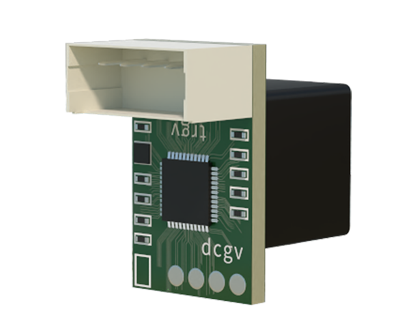
In modern industrial environments, precision measurement is a cornerstone of quality control, process optimization, and automation. Among the various technologies available, laser width sensors have emerged as a critical tool for non-contact, high-accuracy dimensional inspection. These sensors operate on the principle of laser triangulation or time-of-flight measurement, projecting a focused laser beam onto a target object. The reflected light is captured by a high-resolution receiver, and sophisticated onboard algorithms calculate the object's width with exceptional precision, often down to the micron level.
The core advantage of laser width sensors lies in their non-contact nature. Unlike mechanical gauges or contact probes, they eliminate the risk of damaging delicate materials or surfaces, such as thin films, hot metals, extruded plastics, or sensitive electronic components. This makes them indispensable in continuous production lines like steel rolling mills, paper manufacturing, textile production, and plastic extrusion. In these settings, the sensor can be mounted at a fixed point, continuously monitoring the product width in real-time without interrupting the flow. Any deviation from the specified tolerance triggers an immediate alert or an automated adjustment to the machinery, ensuring consistent product quality and minimizing material waste.
Furthermore, laser width sensors are renowned for their high speed and stability. They can perform thousands of measurements per second, capturing even rapid fluctuations in material dimensions that would be invisible to the human eye or slower measurement systems. This capability is vital for dynamic processes where speed is paramount. Modern sensors are equipped with advanced features to handle challenging environmental conditions commonly found in factories. These include insensitivity to ambient light, compensation for vibration, and robust housings rated for IP67 or higher to withstand dust, moisture, and temperature variations. The integration of digital interfaces, such as Ethernet/IP, PROFINET, or EtherCAT, allows for seamless data communication with Programmable Logic Controllers (PLCs) and Supervisory Control and Data Acquisition (SCADA) systems, enabling comprehensive data logging and analysis for predictive maintenance and process improvement.
When selecting a laser width sensor for a specific application, several key parameters must be considered. The measurement range, resolution, and repeatability are primary technical specifications. The type of material surface also plays a crucial role; for instance, dark, matte, or transparent surfaces may require sensors with specific laser wavelengths or receiver sensitivities to ensure a reliable signal. The installation environment, including available space, potential obstructions, and ambient temperature, dictates the required sensor housing and cooling options. Ultimately, the correct implementation of a laser width sensor system leads to significant operational benefits: enhanced product uniformity, reduced scrap rates, lower operational costs, and full traceability of production data. As Industry 4.0 and smart manufacturing initiatives advance, the role of these precise, reliable, and connected sensors will only become more central to achieving operational excellence and maintaining a competitive edge in the global market.