Laser welding displacement sensors represent a pivotal innovation in the field of industrial automation and precision manufacturing. These advanced devices utilize laser triangulation or time-of-flight principles to measure the distance between the sensor head and the workpiece surface with exceptional accuracy, typically within micrometer ranges. By emitting a focused laser beam onto the target and analyzing the reflected light, these sensors provide real-time feedback on positional deviations during welding processes. This capability is crucial for maintaining consistent weld quality, especially in high-speed robotic welding applications where even minor misalignments can lead to defects such as porosity, undercut, or incomplete fusion.
The core technology behind laser welding displacement sensors involves sophisticated optical components and signal processing algorithms. For instance, in triangulation-based sensors, a laser diode projects a spot or line onto the welding surface, and a CMOS or CCD camera captures the reflected light at a specific angle. Displacement changes cause shifts in the laser spot position on the camera sensor, which are then calculated into precise distance measurements. This non-contact measurement method eliminates mechanical wear and allows for high-frequency data acquisition, often exceeding several kilohertz. Consequently, manufacturers can monitor weld seam tracking, joint gap variations, and thermal distortion dynamically, enabling adaptive control systems to adjust welding parameters like torch height, speed, or power on-the-fly.

In practical applications, laser welding displacement sensors are integral to industries such as automotive, aerospace, and electronics. In automotive production, they ensure precise alignment for body-in-white welding, where multiple sheet metal components are joined with minimal tolerances. For example, in battery manufacturing for electric vehicles, these sensors verify the integrity of cell-to-busbar welds, preventing potential failures due to misplacement. Aerospace sectors leverage them for welding critical components like turbine blades or fuel tanks, where material thickness and alignment are paramount for safety. Additionally, in micro-welding for electronics, sensors facilitate the assembly of miniature parts, such as connectors or sensors, by detecting sub-micron displacements that could compromise functionality.
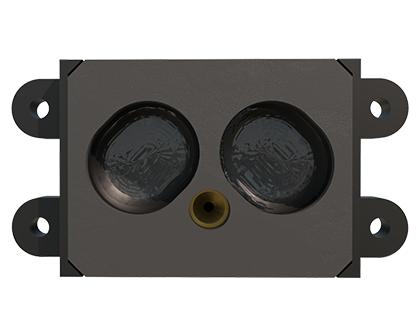
Recent advancements have further enhanced the performance of these sensors. The integration of blue or green lasers improves measurement stability on reflective surfaces common in welding, such as aluminum or stainless steel, by reducing speckle noise. Multi-axis sensor arrays now allow for 3D profiling of weld seams, providing comprehensive data on bead geometry and penetration depth. Moreover, the adoption of fiber-optic laser sensors enables measurements in confined spaces or harsh environments with high temperatures and spatter, extending their usability in challenging welding setups. Machine learning algorithms are also being incorporated to predict weld defects based on displacement patterns, shifting from reactive to proactive quality assurance.
Despite their benefits, implementing laser welding displacement sensors requires careful consideration. Factors like ambient light interference, surface reflectivity variations, and sensor calibration must be managed to ensure reliability. Regular maintenance, such as lens cleaning to prevent contamination from welding fumes, is essential for sustained accuracy. However, with proper integration into automated welding systems, these sensors significantly reduce scrap rates, enhance productivity, and support Industry 4.0 initiatives by enabling data-driven manufacturing. As laser welding continues to evolve with trends like remote welding or additive manufacturing, displacement sensors will remain a cornerstone technology, driving precision and efficiency in modern industrial processes.