Laser welding represents a pinnacle of precision manufacturing, enabling high-speed, high-quality joins in industries ranging from automotive to aerospace. At the heart of ensuring this precision lies a suite of sophisticated sensors. These systems monitor the welding process in real-time, detecting deviations and ensuring consistent weld integrity. Understanding their operational principles is crucial for engineers and technicians aiming to optimize production lines and maintain stringent quality standards.
The fundamental principle of laser welding involves focusing a high-energy laser beam onto a small spot on the workpiece, creating a localized melt pool. Sensors in this environment are tasked with monitoring three primary phenomena: the laser beam itself, the melt pool, and the emitted radiation/plume. The core challenge is extracting meaningful data from an extremely intense, dynamic, and often optically noisy process.
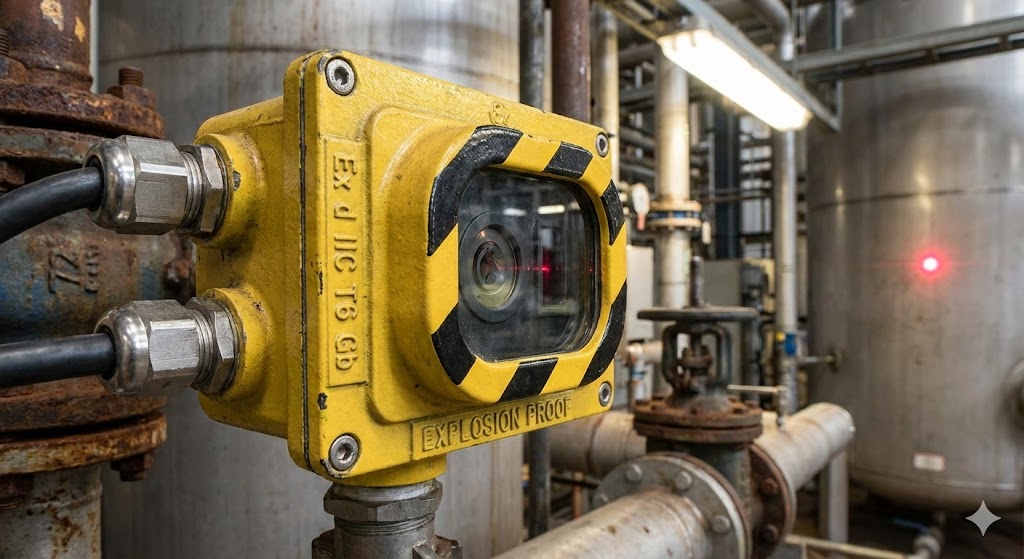
One of the most established sensor technologies is based on photodiodes and photodetectors. These devices are sensitive to specific wavelengths of light. In a typical setup, a coaxial or off-axis sensor collects optical emissions from the process zone. By using optical filters, the sensor can isolate specific spectral bands. For instance, a sensor might be tuned to detect the infrared (IR) radiation from the hot melt pool or the visible light from the plasma plume above it. The intensity of this detected signal correlates directly with process stability. A sudden drop in IR emission might indicate a lack of penetration (a "cold" weld), while an erratic plasma signal can suggest spatter or instability. These analog signals are processed to provide immediate feedback for closed-loop control of laser power or welding speed.
A more advanced category is imaging-based sensors, particularly high-speed cameras and CMOS/CCD sensors. These provide two-dimensional spatial information, offering a visual representation of the melt pool geometry, keyhole stability, and plume dynamics. High-speed cameras, often coupled with laser illumination at a specific wavelength (like 808 nm for aluminum) or narrow-band filters, can capture images at thousands of frames per second. Image processing algorithms then analyze these frames in real-time, measuring parameters such as melt pool length, width, and area. Deviations from a predefined "golden" image template can trigger an alarm or a control adjustment. This visual feedback is invaluable for complex joint geometries or materials prone to thermal distortion.
Spectroscopic sensors represent the cutting edge of process diagnostics. Instead of just measuring intensity, they analyze the full spectrum of light emitted by the welding plasma. Each element in the workpiece or shielding gas emits light at characteristic wavelengths when excited by the laser. A spectrometer disperses this light, and sophisticated software performs real-time compositional analysis. This allows for the detection of contaminants, monitoring of alloying element evaporation, and even indirect assessment of penetration depth based on the presence of vaporized material from the bottom of the keyhole. While complex and costly, spectroscopic monitoring offers unparalleled insight into the physicochemical processes occurring during the weld.
Another critical sensor type is the seam tracking sensor, often based on laser triangulation or vision. Operating before or during the weld, these sensors project a laser line or pattern onto the joint (e.g., a butt or fillet joint). A camera views this line from an offset angle. Any deviation in the joint's position causes a distortion in the projected line's image. This geometric data is processed to calculate the exact offset, and the robot or CNC path is corrected in real-time to ensure the laser beam stays precisely on the joint centerline. This is essential for compensating for part fit-up tolerances or thermal drift during welding.
Finally, acoustic emission (AE) sensors are gaining traction. The rapid vaporization and plasma formation during laser welding generate specific sound waves. A piezoelectric AE sensor, acoustically coupled to the workpiece, detects these high-frequency stress waves. The acoustic signature is highly sensitive to process defects like porosity, cracking, or changes in penetration. By analyzing the frequency spectrum and amplitude of the acoustic signal, the system can identify anomalies that might be invisible to optical methods.
Integrating these sensors into a cohesive control system is the ultimate goal. Modern laser welding cells often employ sensor fusion, combining data from photodiodes, a high-speed camera, and a seam tracker into a single control algorithm. This multi-modal approach compensates for the limitations of any single technology, providing robust, reliable process assurance. For the practicing engineer, selecting the right sensor depends on the key performance indicator: whether it's ensuring full penetration, eliminating porosity, maintaining seam tracking accuracy, or maximizing throughput. A deep understanding of these underlying principles empowers professionals to deploy sensor technology effectively, pushing the boundaries of what is possible in automated, precision laser welding.