Capacitive proximity sensors, particularly the widely adopted M30 housing size, represent a cornerstone of non-contact object detection in modern industrial automation. The M30 designation refers to the sensor's cylindrical housing with a 30mm diameter, a standard size offering an optimal balance between sensing performance, mechanical robustness, and installation flexibility. Unlike their inductive counterparts which detect only metals, capacitive sensors can detect a vast array of materials including liquids, powders, granules, plastics, wood, and glass, making them exceptionally versatile.
The core operating principle of a capacitive M30 sensor involves generating an electrostatic field. The sensor face and its surrounding guard ring act as electrodes, forming a capacitor. When any material with a dielectric constant different from air enters this electrostatic field, it causes a change in the circuit's capacitance. An internal oscillator circuit detects this change, triggering the sensor's solid-state output to switch states. This allows for the detection of objects through non-metallic container walls, a key advantage for level sensing applications.
Key technical parameters define the performance and suitability of an M30 capacitive sensor for a given task. The sensing range, or nominal sensing distance (Sn), is a critical specification. For a standard M30 capacitive sensor, this typically ranges from 5mm to 15mm, depending on the model and material being detected. It is crucial to note that the effective sensing distance is influenced by the target material's dielectric constant (εr). For instance, water (εr ~80) can be detected at the full nominal range, while a plastic like PVC (εr ~3) may require a reduced effective distance. Manufacturers provide correction factors for different materials.
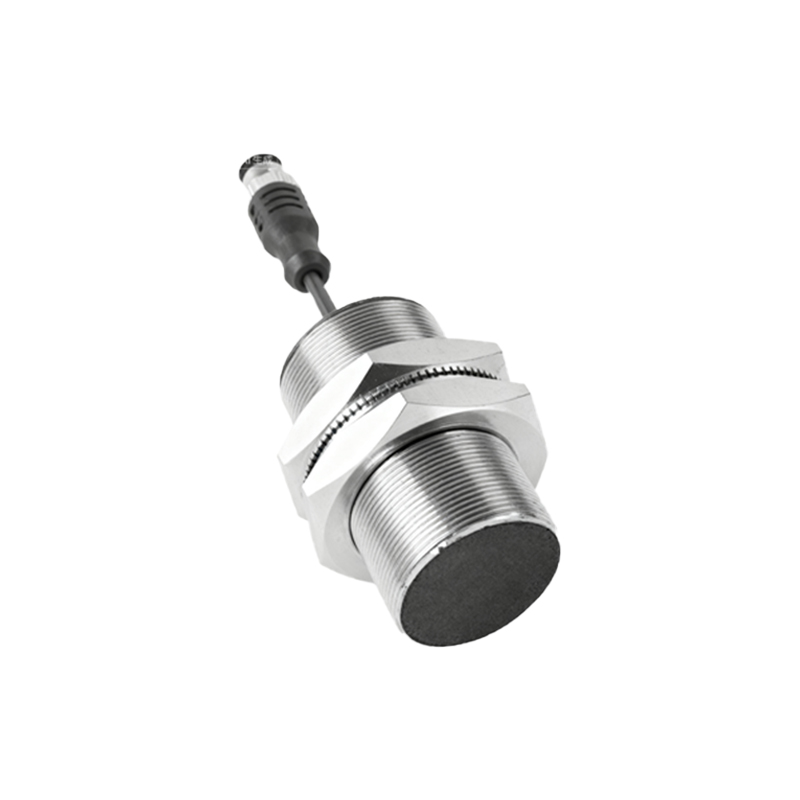
Another vital parameter is the hysteresis. This is the difference between the switch-on point (as the target approaches) and the switch-off point (as the target recedes). Hysteresis, typically expressed as a percentage of the sensing range (e.g., 3-10% Sn), prevents output chatter when a target is positioned at the exact sensing limit, ensuring stable switching even in the presence of vibration or minor target movement.
Output configuration is a fundamental selection criterion. M30 capacitive sensors are commonly available in three-wire DC configurations (PNP sourcing or NPN sinking) and two-wire AC/DC versions. DC models, operating at 10-30V DC, are prevalent for their compatibility with programmable logic controllers (PLCs). The output type can be normally open (NO) or normally closed (NC). The switching frequency, indicating how quickly the sensor can respond to targets passing by, is typically in the range of 10Hz to 50Hz for standard models, sufficient for most conveying and counting applications.
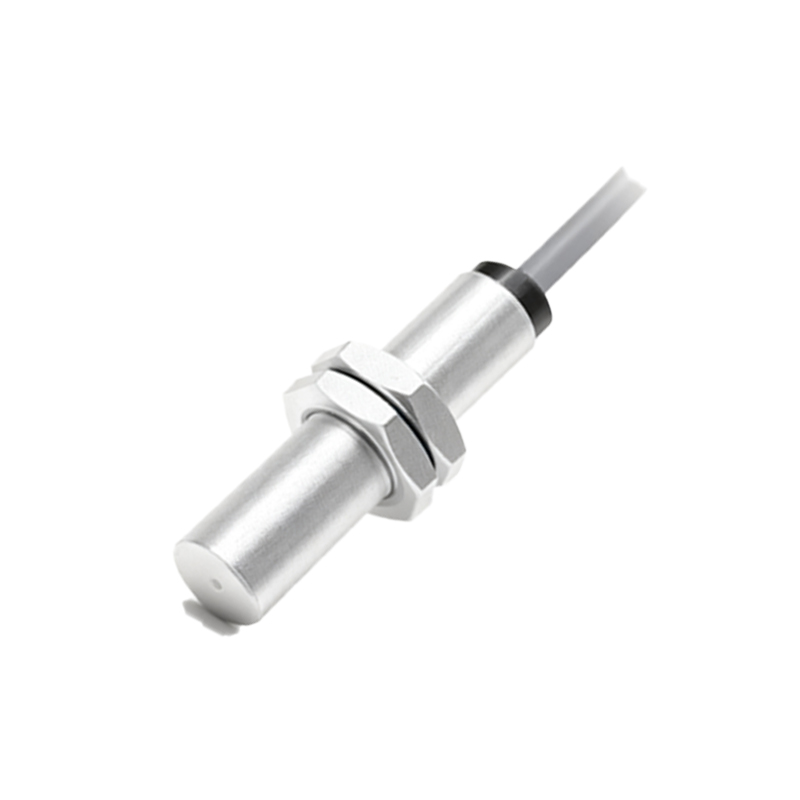
Environmental ratings are paramount for industrial durability. Most M30 capacitive sensors feature an Ingress Protection (IP) rating of IP67, which guarantees protection against dust ingress and temporary immersion in water up to 1 meter for 30 minutes. Some offer IP69K for high-pressure, high-temperature washdown environments common in food and beverage or pharmaceutical industries. The housing is usually constructed from nickel-plated brass, stainless steel (V4A/AISI 316), or PBT plastic, chosen for corrosion resistance. Operating temperature ranges are typically from -25°C to +70°C.
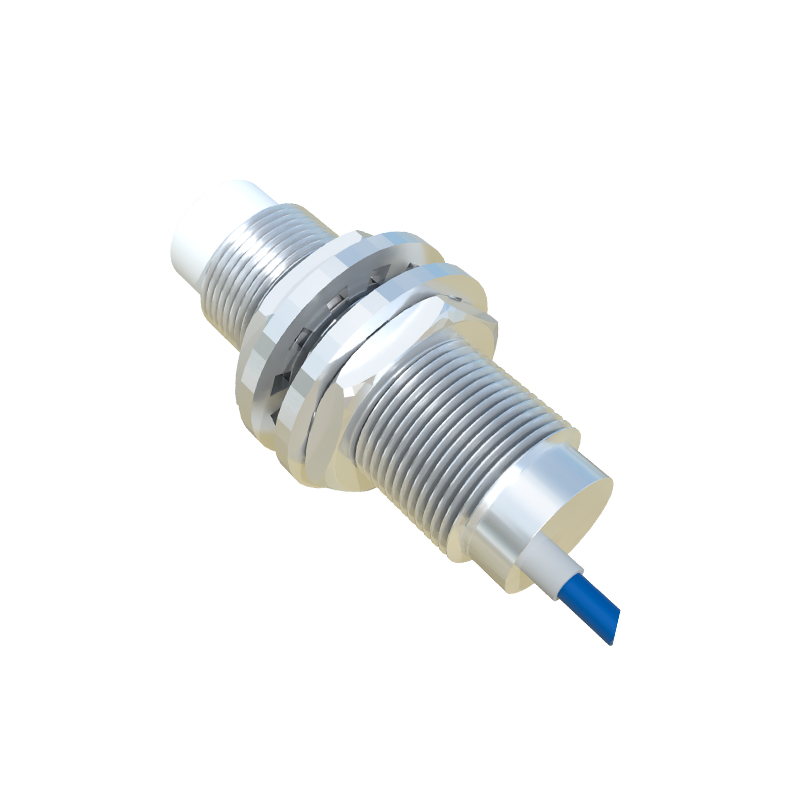
Installation considerations are equally important. M30 sensors require mounting in a 30mm diameter hole. Flush-mounted sensors (non-shielded) have a reduced sensing range but are immune to interference from surrounding metal. Non-flush mounted sensors (shielded) can be embedded in metal without issue and offer a longer sensing range. Proper attention must be paid to the installation environment to avoid false triggering from conductive dust, aggressive chemicals, or excessive humidity, though many models feature sensitivity adjustment potentiometers to fine-tune for the specific application and mitigate environmental effects.
Typical applications for M30 capacitive sensors are diverse. They are extensively used for liquid level control in tanks (detecting the presence of water, chemicals, or beverages through plastic or glass walls), bulk solid level detection in silos (for grains, powders, or pellets), and presence detection of non-metallic objects on conveyor belts (bottles, cardboard boxes, wood panels). They also serve in assembly lines to verify the presence of plastic components or gaskets.
In summary, the M30 capacitive proximity sensor is a highly adaptable solution for material detection beyond metals. Successful implementation hinges on a clear understanding of its parameters: sensing range relative to the target material, required output type, environmental durability, and correct installation method. By carefully matching these specifications to the application's demands, engineers can ensure reliable, long-term operation in complex and demanding industrial settings.