The Q5MC1Z proximity sensor represents a significant advancement in industrial automation, offering high precision and reliability in object detection. As a non-contact sensing device, it operates on the principle of electromagnetic field generation, allowing it to detect metallic objects without physical interaction. This sensor is engineered to withstand harsh industrial environments, featuring a robust housing that provides resistance to dust, moisture, and mechanical impacts. Its compact design facilitates easy integration into existing machinery, making it a versatile component in various automation systems.
One of the key technical specifications of the Q5MC1Z is its sensing range, which typically extends up to 5 millimeters, depending on the target material. This range is optimized for applications requiring precise positioning, such as in assembly lines or robotic arms. The sensor utilizes a DC voltage supply, commonly 12-24V DC, ensuring compatibility with standard industrial power systems. Additionally, it incorporates a short-circuit protection mechanism and reverse polarity protection, enhancing its durability and safety in operation. The output signal is typically in the form of a digital switch, either NPN or PNP configuration, allowing seamless connection to programmable logic controllers (PLCs) and other control units.
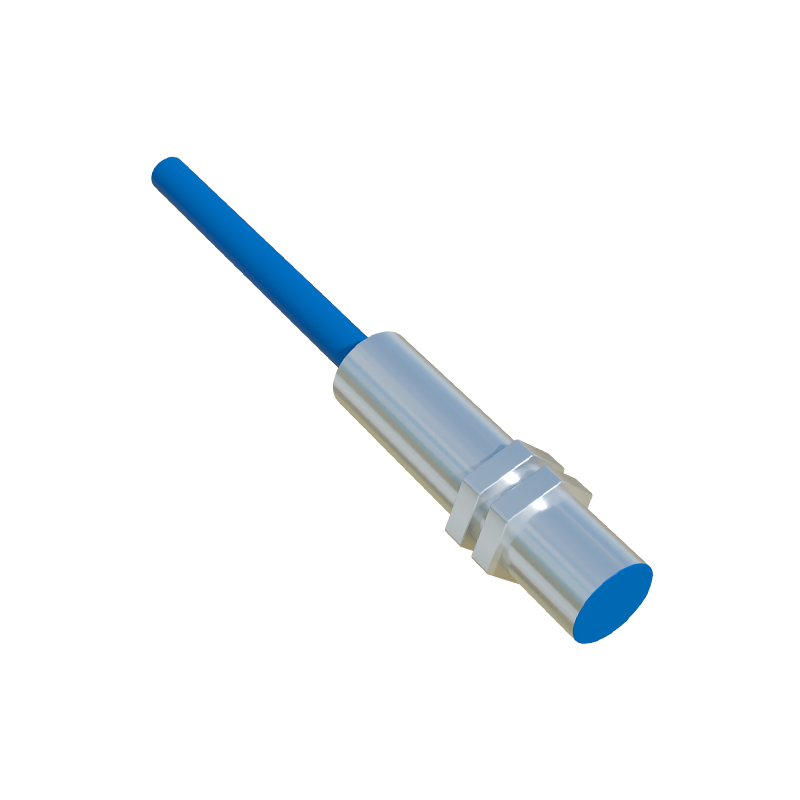
In terms of performance, the Q5MC1Z boasts a high switching frequency, enabling rapid detection cycles that are crucial for high-speed manufacturing processes. Its response time is minimal, often in the microsecond range, which reduces latency in automated systems. The sensor also exhibits excellent temperature stability, functioning reliably in temperatures ranging from -25°C to 70°C. This makes it suitable for use in diverse settings, from cold storage facilities to heated production areas. Furthermore, its low power consumption contributes to energy efficiency, aligning with modern industrial sustainability goals.
Applications of the Q5MC1Z are widespread across multiple sectors. In automotive manufacturing, it is employed for part presence verification, ensuring that components are correctly positioned before welding or assembly. In packaging industries, the sensor monitors material flow, detecting jams or shortages to prevent downtime. It also plays a critical role in material handling systems, where it identifies the position of pallets or containers on conveyor belts. Beyond traditional manufacturing, the Q5MC1Z is utilized in renewable energy setups, such as wind turbines, for monitoring mechanical movements and ensuring operational safety.
Installation and maintenance of the Q5MC1Z are straightforward, thanks to its user-friendly design. Mounting brackets and adjustable settings allow for quick calibration, minimizing setup time. Regular maintenance involves simple cleaning of the sensing face to avoid false triggers from debris accumulation. For optimal performance, it is recommended to avoid placing the sensor near strong electromagnetic interference sources, such as motors or transformers, which could affect its accuracy.
In conclusion, the Q5MC1Z proximity sensor stands out as a reliable and efficient solution for modern industrial automation. Its combination of durability, precision, and adaptability makes it an indispensable tool for enhancing productivity and safety in automated processes. As industries continue to evolve towards smarter manufacturing, sensors like the Q5MC1Z will remain at the forefront, driving innovation and operational excellence.