Hall effect proximity sensors represent a critical component in modern industrial automation, offering non-contact detection capabilities for various metallic objects. These sensors operate based on the Hall effect principle, where a voltage difference is generated across an electrical conductor when exposed to a magnetic field. This fundamental mechanism enables reliable sensing without physical contact, making them ideal for harsh environments where dust, moisture, or mechanical wear could compromise traditional switches.
The supply chain for Hall effect proximity sensors has evolved significantly, with manufacturers now providing diverse options tailored to specific industrial needs. Key variations include unipolar and bipolar sensors, which differ in their response to magnetic pole orientations. Unipolar sensors activate when exposed to a single magnetic pole (typically south pole) and deactivate when the magnet is removed. Bipolar sensors require alternating magnetic poles for switching states, offering inherent noise immunity in applications with fluctuating magnetic fields.
Industrial applications span multiple sectors. In automotive manufacturing, these sensors monitor position in throttle valves, seat adjustments, and transmission systems. The food processing industry utilizes stainless steel housed variants for conveyor belt monitoring and packaging equipment, where hygiene and washdown resistance are paramount. Robotics integrators employ miniature Hall sensors for joint angle measurement and end-effector positioning, benefiting from their precision and durability.
When sourcing Hall effect proximity sensors, engineers must evaluate several technical parameters. Sensing distance, typically ranging from 1mm to 25mm, should be selected with a 20-30% safety margin to account for mechanical tolerances. Output configurations include NPN (sinking) and PNP (sourcing) transistor outputs, with 2-wire AC/DC and 3-wire DC versions available. Operating voltage ranges generally span 5-30V DC, though specialized models support wider ranges for automotive or battery-powered applications.
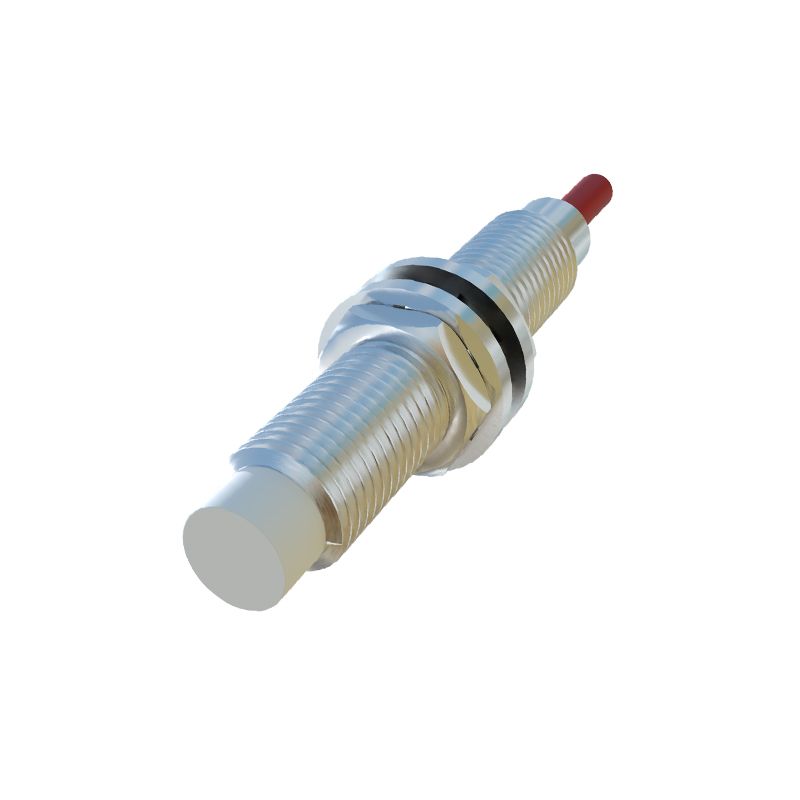
Environmental specifications demand careful consideration. Industrial grade sensors feature IP67 or IP69K ratings for dust and water resistance, with operating temperatures from -40°C to 125°C for extreme conditions. Electromagnetic compatibility (EMC) protection is crucial in facilities with variable frequency drives or welding equipment, where electrical noise could trigger false signals.
Recent advancements include IO-Link enabled sensors that provide diagnostic data and parameter adjustment capabilities through digital communication. Smart sensors can monitor their own performance, detecting issues like mounting misalignment or target material variations before they cause production downtime. Some suppliers now offer programmable sensors where sensitivity, hysteresis, and output behavior can be customized via software interfaces.
Global supply considerations involve lead times, certification compliance, and technical support. Reputable manufacturers provide CE, UL, and RoHS certifications as standard, with some offering ATEX versions for hazardous locations. Regional distribution networks ensure availability, while engineering support teams assist with integration challenges.
The market offers both standardized and customized solutions. Standard sensors suit most applications with cost-effective pricing and immediate availability. Customized versions accommodate unique requirements like specialized housings, connector types, or sensing characteristics for rare metals. Volume procurement typically yields cost advantages, though prototype quantities are readily accessible through distributor networks.
Maintenance aspects include periodic verification of sensing distances and output signals. Unlike mechanical switches, Hall sensors have no moving parts to wear out, but their electronic components can degrade under extreme thermal cycling or voltage surges. Most quality sensors provide MTBF (Mean Time Between Failures) ratings exceeding 100,000 hours under normal operating conditions.
Integration best practices involve proper shielding of signal cables, especially in high-noise environments. Ferrous metal targets generally provide the strongest response, while aluminum and copper require reduced sensing distances. Mounting configurations should avoid vibration-induced position changes, with many sensors featuring LED indicators for visual status confirmation during setup and troubleshooting.
As Industry 4.0 initiatives expand, Hall effect proximity sensors increasingly incorporate connectivity features for predictive maintenance systems. Their ability to provide consistent performance across temperature variations and contamination-prone environments ensures continued relevance in automated systems. Proper selection from qualified suppliers guarantees optimal performance, with technical documentation and application notes available to support implementation across diverse industrial scenarios.