Proximity sensors are indispensable components in modern industrial automation, robotics, and countless electronic devices. Their primary function is to detect the presence or absence of an object within a specified range without any physical contact. This non-contact detection capability is the cornerstone of their value, leading to enhanced reliability, reduced mechanical wear, and the ability to operate in challenging environments. Understanding the core characteristics that define their performance is crucial for engineers and designers when selecting the appropriate sensor for a specific application.
The fundamental operating principle varies by type, which directly influences key characteristics. Inductive proximity sensors are designed to detect metallic objects. They generate an electromagnetic field, and when a metal target enters this field, it causes a change in the oscillation amplitude, triggering the sensor's output switch. A defining characteristic of inductive sensors is their insensitivity to non-metallic materials like plastic, wood, or liquids, making them ideal for metal detection tasks in machining, automotive assembly, and material handling. Their sensing range is typically limited, often from a few millimeters to about 60 millimeters, and is highly dependent on the target metal's properties, with factors like the material's permeability (e.g., steel vs. aluminum) affecting the effective sensing distance.
Capacitive proximity sensors, in contrast, can detect both metallic and non-metallic materials, including liquids, powders, plastics, and glass. They operate by generating an electrostatic field. Any object that enters this field alters the sensor's capacitance, leading to a state change. A key characteristic here is their sensitivity to a wide range of materials and their ability to sense through certain non-metallic barriers, which is useful for level detection in tanks or presence detection of packaged goods. However, they can be susceptible to environmental factors like humidity or contaminants that might alter the dielectric constant in the sensing area, requiring careful installation and tuning.
Photoelectric sensors utilize light beams (visible, infrared, or laser) for detection. Their characteristics are defined by long sensing ranges, high speed, and exceptional precision. They can detect objects of virtually any material, as long as the object affects the light beam (through reflection, interruption, or retro-reflection). Key sub-types include through-beam (offering the longest range and highest reliability), retro-reflective, and diffuse reflective sensors. A critical performance characteristic is their immunity to electrical noise and ability to detect small or fast-moving objects. However, their performance can be compromised by environmental factors like dust, fog, intense ambient light, or the color and reflectivity of the target object.
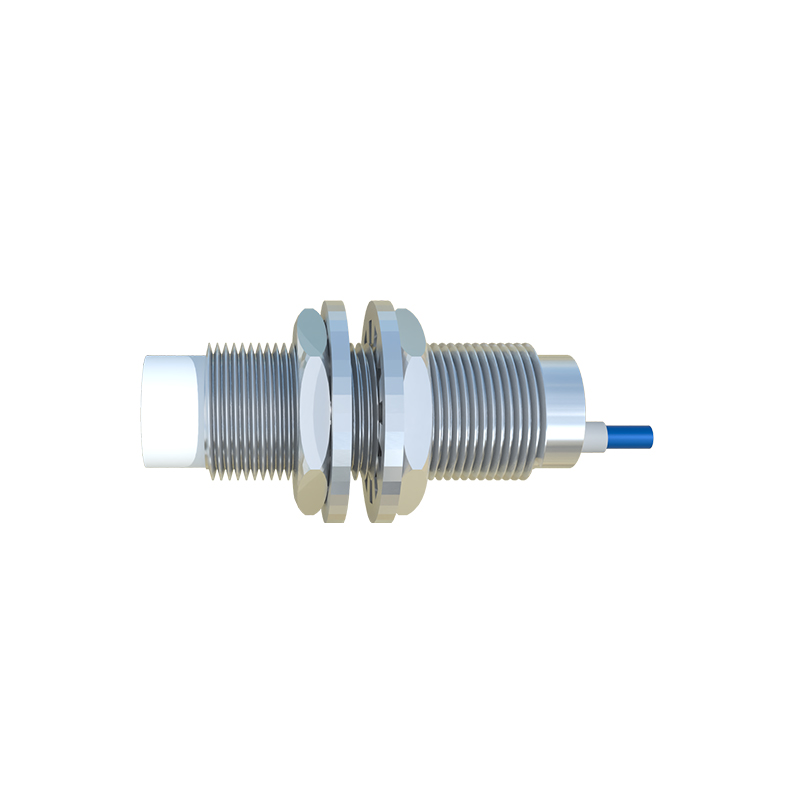
Ultrasonic sensors use sound waves beyond the human hearing range. They measure the time taken for an emitted sound pulse to reflect off a target and return. A major characteristic is their exceptional versatility in detecting objects regardless of color, transparency, or material, making them superb for distance measurement, level sensing of liquids or bulk solids, and presence detection in dirty or dusty environments where optical sensors might fail. Their drawbacks can include a slower response time compared to photoelectric sensors and potential inaccuracies due to temperature variations affecting the speed of sound or interference from soft, sound-absorbing materials.
Beyond the type-specific traits, several universal characteristics are critical for evaluation:
Sensing Distance: The nominal or rated operating distance under defined conditions. Engineers must consider the effective sensing distance, which can be less than the nominal for non-ideal targets.
Repeatability: The sensor's ability to consistently detect an object at the same point. High repeatability is vital for precision applications.
Response Time: The speed at which the sensor can detect an object and change its output state. This is paramount in high-speed automation lines.
Output Type: Typically digital (PNP/NPN transistor) or analog (4-20 mA, 0-10V). The choice depends on the required interface with the controller (PLC, microcontroller).
Environmental Robustness: Key ratings include Ingress Protection (IP) codes for dust and water resistance, temperature range, and resistance to chemicals, vibration, and shock. Many industrial proximity sensors feature rugged, often stainless steel housings.
Hysteresis: This characteristic prevents output chattering when an object is at the exact sensing point. It creates a small difference between the switch-on and switch-off points, ensuring stable operation.
In conclusion, the "characteristics" of a proximity sensor form a detailed profile encompassing its physical operating principle, performance specifications, and environmental tolerances. There is no universally superior sensor. The selection process is an exercise in matching these characteristics—sensing principle, range, speed, target material, output signal, and environmental durability—to the precise demands of the application. Whether ensuring a robotic gripper picks up a component, counting bottles on a high-speed conveyor, or preventing a machine door from closing on an operator, the right proximity sensor, chosen for its appropriate set of characteristics,