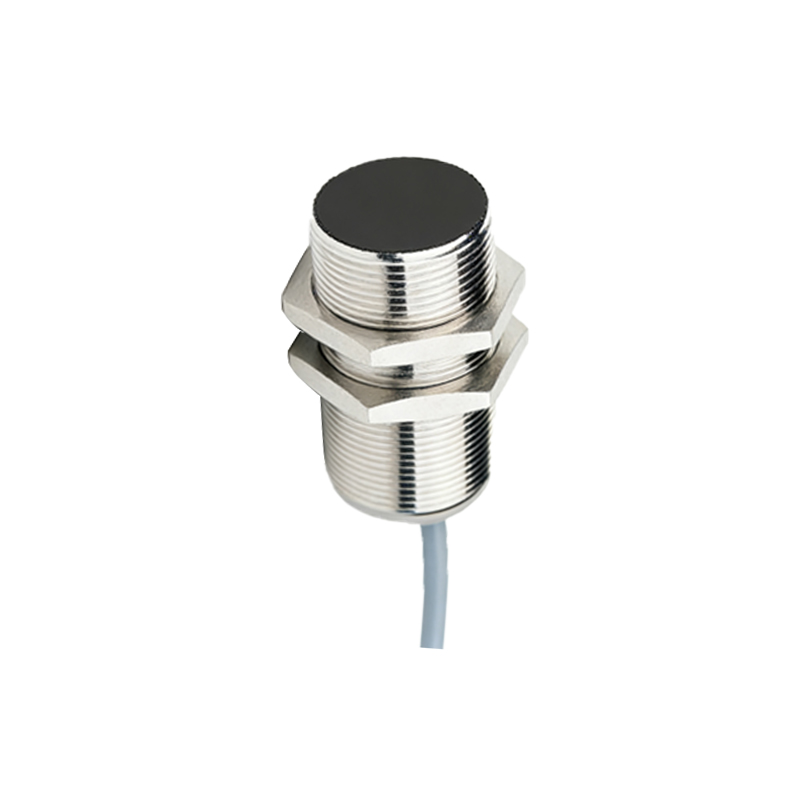
In the realm of industrial automation and process control, capacitive proximity sensors have established themselves as indispensable tools for non-contact detection of a vast array of materials. While their digital (on/off) counterparts are widely known, capacitive proximity sensors with analog output offer a significantly more nuanced and data-rich solution. This article delves into the operational principles, key advantages, diverse applications, and critical selection criteria for these sophisticated sensing devices.
At their core, capacitive sensors operate by generating an electrostatic field. The sensor's active face, along with a connected ground electrode, forms a capacitor. When an object enters this electrostatic field, it alters the dielectric constant and thus the capacitance of the system. A digital sensor triggers a simple switch when this capacitance change exceeds a preset threshold. An analog capacitive sensor, however, continuously measures this change in capacitance and converts it into a proportional, linearly varying output signal.
The analog output is typically a standard industrial signal, most commonly 0-10V DC or 4-20mA. The magnitude of this signal is directly proportional to the distance between the target object and the sensor's sensing face, or in some configurations, to a material property like density or moisture content. This provides a continuous stream of data, enabling precise monitoring of position, level, thickness, or even the composition of a material.
The advantages of utilizing analog-output capacitive sensors are substantial. Firstly, they enable continuous measurement and control. Instead of merely detecting presence or absence, they provide exact positional feedback, which is crucial for applications like fill level control in tanks or precise positioning in assembly lines. Secondly, they offer exceptional resolution and repeatability. Modern analog sensors can detect minute changes in distance or material properties, ensuring highly consistent process results. Thirdly, their versatility is a key strength. A single analog sensor can often replace multiple digital sensors set at different thresholds, simplifying system design and reducing hardware costs. Finally, their ability to detect non-metallic objects—liquids, plastics, wood, glass, granules, and powders—through non-metallic container walls makes them uniquely suited for many packaging, food & beverage, and chemical industry applications.
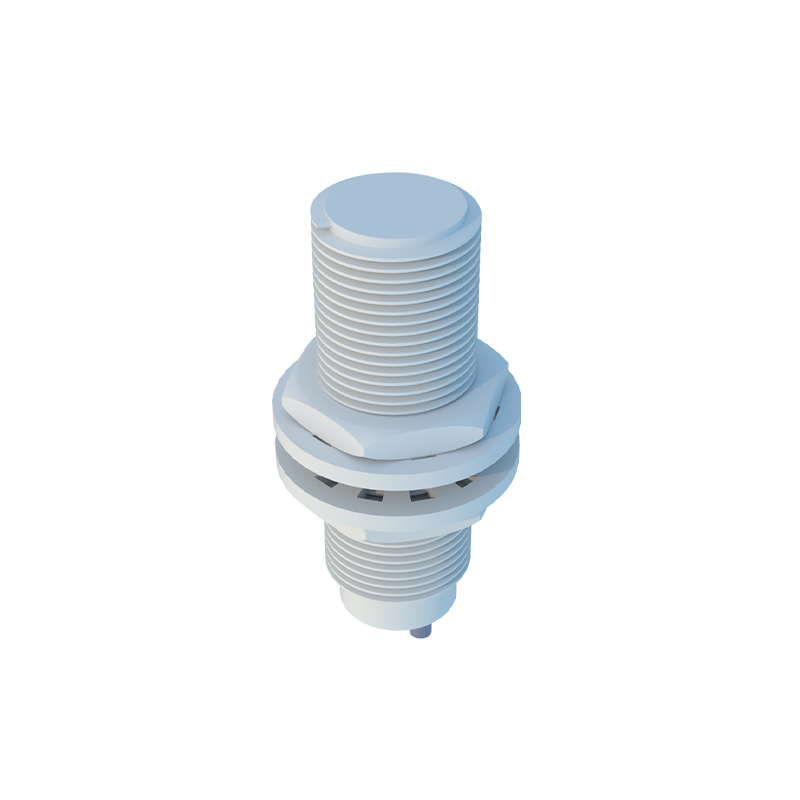
Practical applications are numerous and span across industries. In level sensing, they are ideal for monitoring the continuous level of liquids, pastes, or bulk solids in silos, hoppers, or tanks, even when the container is made of plastic or glass. In position control, they provide feedback for the precise positioning of machine parts, robotic arms, or actuators. They are used for thickness measurement of materials like paper, plastic films, or glass sheets on production lines. Furthermore, their sensitivity to material composition allows for material discrimination, such as distinguishing between different types of plastic or detecting foreign bodies in a product stream. They are also employed in moisture detection applications for certain materials.
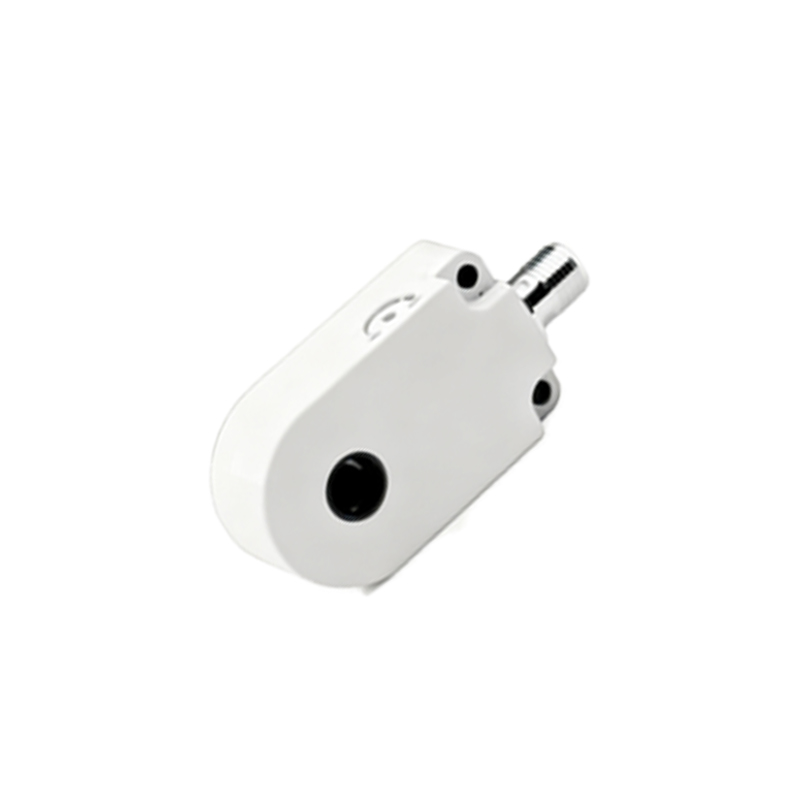
Selecting the right analog capacitive proximity sensor requires careful consideration of several parameters. The sensing range is fundamental and must be chosen with the application's maximum and minimum detection distances in mind, noting that the effective range can be influenced by the target material's dielectric constant. The output type (voltage or current) must be compatible with the controller (PLC, DCS) or data acquisition system. Linearity and repeatability specifications determine the sensor's accuracy. The response time is critical for high-speed processes. Environmental factors such as temperature extremes, potential for condensation, dust, or chemical exposure dictate the required housing material (often PBT or stainless steel) and Ingress Protection (IP) rating. Finally, the mounting style (flush, non-flush, threaded barrel) affects the sensing field characteristics and must be selected appropriately to avoid false triggers from the surrounding metal.
In conclusion, capacitive proximity sensors with analog output represent a powerful fusion of robust proximity sensing technology with the precision of continuous analog signaling. They unlock capabilities far beyond simple detection, enabling sophisticated measurement, control, and monitoring tasks that are essential for modern, efficient, and data-driven industrial operations. By understanding their operating principles and carefully matching their specifications to the application requirements, engineers can leverage these sensors to enhance system performance, improve product quality, and increase operational intelligence.